

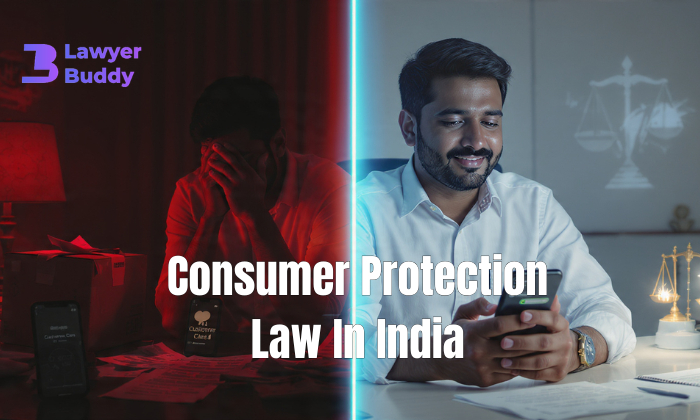
You bought a phone online. It arrived damaged. The seller stopped responding. The brand’s customer care put you on hold for the fourth time this week.
Sound familiar?
Every day, millions of Indians face situations just like this one. And while most people quietly give up, the truth is that the law is actually on your side. Consumer protection law in India gives you powerful rights, and today, using those rights has never been more accessible.
What Is Consumer Protection Law?
Consumer protection law is a set of legal rules designed to protect buyers of goods and services from unfair business practices, fraud, defective products, and poor service. In India, the primary legislation governing this area is the Consumer Protection Act, 2019, which replaced the older 1986 version and brought in significantly stronger protections for buyers.
Under this law, you are considered a consumer if you purchase goods or services for personal use. This covers everything from a bag of groceries to a real estate transaction, from a hospital visit to an online subscription.
The law recognizes six core rights for consumers:
- The right to safety
- The right to be informed
- The right to choose
- The right to be heard
- The right to seek redressal
- The right to consumer education
These are not just symbolic. They are enforceable rights you can use to file complaints, seek refunds, claim compensation, and even take companies to court.
Common Situations Where Consumer Protection Law Applies
Many people do not realize how wide the net of consumer protection law actually is. Here are some everyday situations where it can protect you:
E-commerce purchases gone wrong. If you receive a defective product, a wrong item, or nothing at all, you have the right to file a complaint against the seller and the platform under the Consumer Protection (E-Commerce) Rules, 2020.
Medical negligence. Healthcare services are covered under the consumer protection law. If you or a family member has suffered due to a doctor’s or hospital’s negligence, you may have a valid consumer complaint.
Banking and financial services. Unauthorized charges, mis-sold insurance policies, or false promises made by a financial advisor can all be grounds for a consumer complaint.
Real estate delays. Builders who delay possession or fail to deliver what was promised in the agreement can be held accountable before consumer forums and the RERA authority.
Defective goods. Products that fail to meet quality or safety standards, or that do not match their advertised description, fall squarely under consumer protection law.
Unfair trade practices. False advertising, misleading product claims, and hidden charges are actionable under this law.
How to File a Consumer Complaint in India

Depending on the value of your claim, your complaint goes to one of three tiers of consumer courts:
- District Consumer Disputes Redressal Commission (up to Rs. 50 lakh)
- State Consumer Disputes Redressal Commission (Rs. 50 lakh to Rs. 2 crore)
- National Consumer Disputes Redressal Commission (above Rs. 2 crore)
You can also file complaints online through the National Consumer Helpline (1800-11-4000) or the online portal at consumerhelpline.gov.in.
To file a complaint, you will typically need the following: proof of purchase, the details of your complaint, any communication you have had with the seller or service provider, and a clear statement of what remedy you are seeking (refund, replacement, compensation, etc.).
One of the key improvements under the 2019 Act is that you no longer need to hire a lawyer to appear before consumer forums. You can represent yourself. That said, having legal guidance still makes a significant difference in how strong your case is and how quickly it moves forward.
Why Most People Do Not Exercise Their Consumer Rights
Here is an honest reality: most people who have valid consumer complaints never act on them.
The reasons are understandable. Legal processes feel intimidating. There is a fear of wasting time on something that may not lead anywhere. Many people simply do not know what their rights are or how the process works. And for smaller claims, the cost of hiring a lawyer can feel disproportionate.
This is exactly why AI-powered legal assistance is changing the game.
How AI Is Transforming Consumer Protection
AI for consumer protection is not just a buzzword. It represents a genuine shift in how ordinary people can access legal information, understand their rights, and take action.
An AI lawyer does not replace a human attorney. What it does is dramatically lower the barrier to entry. It helps you understand whether your situation qualifies as a consumer complaint, explains the relevant laws in plain language, and can help you review a notice or document before you respond. And it can guide you on your next practical steps without the cost of a formal consultation.
This is particularly valuable in India, where legal services have historically been expensive and difficult to access for middle-class and lower-income consumers. When someone living in a Tier 2 city receives an unfair rental notice or a suspicious insurance document, they should not have to rely on luck or knowing the right people to understand their rights.
AI-powered legal assistance makes that knowledge available to everyone, in their own language, at any time of the day.
Meet LawyerBuddy: Your AI Powered Legal Assistance Platform
This is where LawyerBuddy comes in.
LawyerBuddy is built for everyday Indians who need real legal guidance without the complexity or cost of traditional legal consultations. Whether you are dealing with a consumer complaint, reviewing a rental agreement, or trying to understand a notice you just received, LawyerBuddy gives you clear, actionable answers in Hindi, Tamil, Telugu, and more.
Here is what you can do on LawyerBuddy:
Ask Legal Questions. Get straightforward answers to your legal questions in your own language, with practical next steps you can actually follow. You get 3 free questions every day, so you can get help when you need it most.
Review Documents. Upload notices, contracts, rental papers, tax documents, and more. LawyerBuddy analyzes them and helps you understand what you are agreeing to or what is being demanded of you. You get 2 free document reviews daily.
Continue the Same Case. Legal situations are rarely resolved in a single conversation. LawyerBuddy lets you pick up exactly where you left off, with up to 2 follow-up questions in the same thread, so your situation is understood in context.
For consumer protection specifically, LawyerBuddy can help you understand whether you have a valid complaint, what evidence to gather, how to draft a consumer complaint letter, and what to expect from the process.
Practical Tips for Protecting Your Consumer Rights
Whether or not you use an AI tool, here are some habits that will put you in a stronger position as a consumer:
Always keep your receipts and invoices. Digital or physical, these are your primary proof of purchase and are essential if you need to file a complaint later.
Document every interaction. When you contact a company about a problem, keep records of emails, chat transcripts, and call details. Screenshot anything you might need later.
Know the time limit. Under the Consumer Protection Act, you generally need to file your complaint within two years of the cause of action. Do not wait too long.
Send a written complaint first. Before going to a consumer forum, send a formal written complaint to the company. This creates a paper trail and sometimes resolves the issue faster than you would expect.
Use the National Consumer Helpline. The number 1800-11-4000 is a free helpline that can guide you through the complaint process and sometimes mediate disputes directly.
Frequently Asked Questions
What is consumer protection law in simple terms?
Consumer protection law is a set of rules that protects buyers from unfair practices, defective goods, and poor services. In India, the Consumer Protection Act, 2019 is the main law, and it gives you the right to seek refunds, compensation, and legal action against businesses that treat you unfairly.
Can I file a consumer complaint without a lawyer?
Yes. The Consumer Protection Act allows you to file and represent your own complaint before consumer forums without hiring a lawyer. However, getting legal guidance through tools like LawyerBuddy can significantly improve the quality and strength of your case.
What is the time limit for filing a consumer complaint in India?
Generally, you need to file within two years from the date on which the cause of action arose. In some cases, the court may allow a delayed filing if you can show sufficient cause for the delay.