

Imagine spending years building a brand: designing a logo, earning customer trust, and growing your reputation, only to discover that another business is already using a confusingly similar name—or worse, has legally secured it before you did because you didn’t register trademark in time. This is not a rare scenario; it happens more often than most entrepreneurs expect.
In India, tens of thousands of trademark applications are filed every year, yet many businesses still operate without proper protection. Many rely on the ™ symbol, assuming it offers legal security, when in reality, only the registered trademark symbol (®) provides enforceable rights.
Understanding this distinction is not just a legal detail; it can determine whether you truly own your brand or risk losing it altogether.
What Is a Trademark and Why Does It Matter?
A trademark is any unique identifier that distinguishes your business from others and is a key form of Intellectual Property. This can include your brand name, logo, slogan, product packaging, sound, or even a specific color combination. But a trademark is more than just a visual identity; it represents trust, quality, and reputation, making it one of your most valuable business assets.
Here’s where many businesses get confused between the difference between trademark and registered trademark. Using ™ indicates that you are claiming ownership of a mark, even if it is not officially registered.
However, to register trademark rights and secure full legal protection under the Trade Marks Act, 1999, formal registration is essential. Without it, your ability to enforce rights is limited; with it, you gain exclusive ownership and strong legal backing.
Why Trademark Law Is a Minefield for Businesses
Trademark law is not as straightforward as filing a form. Several hidden complexities can derail your application to register trademark or expose your business to risk:
- Similarity Disputes
Even minor phonetic similarities between two brand names can trigger opposition proceedings, leading to delays and legal costs. - Class Classification Confusion
Trademarks are categorized under 45 classes. Filing under the wrong class can leave your brand unprotected in your actual business category. - Prior Art and Conflicting Marks
If an existing mark is deemed “deceptively similar,” your application may be rejected outright. - Opposition Window
After acceptance, your mark is published for four months, during which any third party can oppose it. - Geographical Limitations
Protection in India does not extend globally. Separate filings or international systems are required. - Honest Concurrent Use
Two businesses may independently use similar marks in good faith, creating complex legal disputes.
These challenges highlight a simple truth: trademark registration is not just procedural; it requires strategic and legal insight. Now, let’s understand the legal gap between trademark (™) vs registered trademark (®).
Difference Between Trademark and Registered Trademark
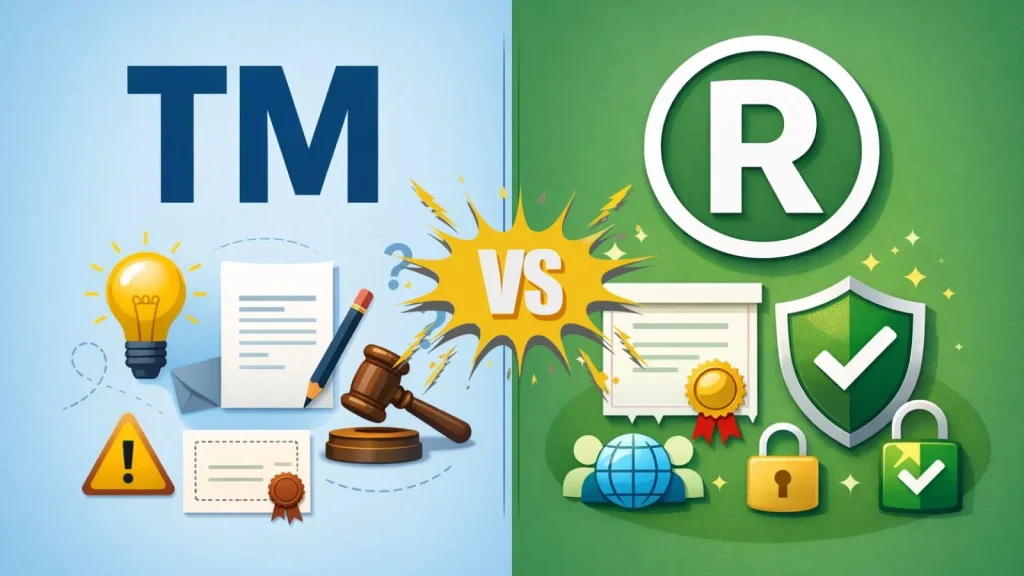
The distinction between ™ and ® is crucial for understanding trademark protection. The ™ symbol indicates that a business claims rights over a mark, even without registration, but it offers only limited protection based on common law and requires proof of prior use, reputation, and likelihood of confusion in disputes. In contrast, the ® symbol can be used only after registration under the Trade Marks Act, 1999, granting stronger, statutory protection and clear ownership rights.
Key differences include:
- Legal status: ™ is a claim; ® is a legally recognized right
- Protection scope: ™ offers limited, local protection; ® provides nationwide rights
- Enforcement: ™ requires extensive proof; ® allows quicker legal action
- Business value: ® enables licensing, franchising, and brand monetization
- Compliance: Misusing ® without registration is illegal in India
In simple terms, ™ shows intent to protect a brand, while ® ensures that protection is legally enforceable.
How to Register a Trademark in India: Step by Step
If you’re wondering how to register trademark in India, the process involves several structured steps:
- Conduct a Trademark Search:
Search the IP India database to check if similar or identical marks already exist, reducing the risk of rejection or future legal disputes. - Determine the Correct Class:
Select the appropriate class under the Nice Classification based on your goods or services to ensure accurate protection coverage. - Prepare the Application:
Draft Form TM-A includes applicant details, trademark representation, class, and usage status (proposed or existing use). - File the Application:
Submit the application online via the IP India portal or physically at a Trademark Registry office with the prescribed government fee. - Examination by the Registrar:
The Registrar reviews your application for compliance and may issue objections regarding similarity, descriptiveness, or legal restrictions. - Respond to Objections:
File a reply within 30 days addressing concerns. A hearing may be scheduled if the registrar requires further clarification. - Publication in the Trademark Journal:
The accepted mark is published, allowing third parties four months to oppose registration if they believe it conflicts with their rights. - Registration Certificate Issued:
If unopposed or successfully defended, the trademark is registered, granting exclusive legal rights and permission to use the ® symbol. - Renewal Every 10 Years:
A registered trademark remains valid for 10 years and must be renewed periodically to retain continuous legal protection and ownership rights.
Typically, an uncontested application takes 18–24 months for completion. Understanding how to register a trademark properly can save significant time and legal complications.
Legal Concerns and Risks Around Trademark Registration
Even after filing, several legal risks may arise:
- Examination Objections:
Based on absolute or relative grounds under Sections 9 and 11 of the Trade Marks Act. - Third-Party Opposition:
Competitors can challenge your application during the publication stage. - Infringement Actions:
Unauthorized use of your registered trademark can lead to legal remedies such as injunctions and damages. - Passing Off:
Even without registration, businesses can claim protection if they establish goodwill. - Trademark Dilution:
Well-known marks receive broader protection against misuse. - Counterfeiting and Online Misuse:
Digital platforms have increased risks through domain names and social media impersonation.
Being aware of these risks helps you act proactively rather than reactively.
How AI Legal Assistants Are Transforming Trademark Protection
Technology is reshaping how businesses approach trademark protection. AI legal assistants are making the process more accessible and efficient by solving key challenges:
Automated Trademark Search
AI tools can scan thousands of records instantly, identifying phonetic and visual similarities.
Class Identification Support
They help businesses choose the correct classification, reducing filing errors.
Document Drafting Assistance
From applications to objection replies, AI can generate legally structured drafts.
Continuous Monitoring
AI systems track new filings, domains, and social media for potential infringement.
Simplified Legal Understanding
Complex laws are translated into plain language for non-lawyers.
Litigation Support
AI can analyze past cases and suggest strategic arguments.
Rather than replacing lawyers, AI empowers businesses to act faster and more confidently, especially startups and SMEs with limited resources. Tools like LawyerBuddy take this a step further by offering AI-powered legal and tax help tailored for India. With it, you can ask legal questions, upload notices or contracts for review as per the law, and receive practical guidance in regional languages like Hindi, Tamil, Telugu, and more.
Why Choose LawyerBuddy For Smarter Legal Support
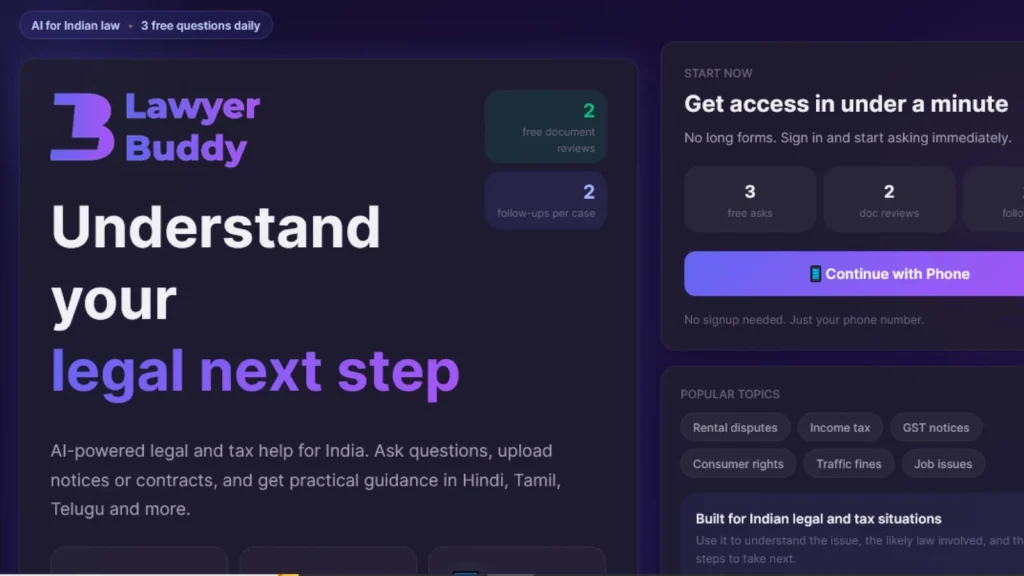
When navigating trademarks and legal processes, having the right support system can make all the difference. Here’s why tools like LawyerBuddy are worth considering:
- Accessible Legal Help Anytime
Get instant answers to legal and tax queries without waiting for consultations or appointments. - Cost-Effective for Startups & SMEs
Reduces dependency on expensive legal services for routine tasks and basic guidance. - Multi-Language Support
Understand complex legal matters in regional languages like Hindi, Tamil, and Telugu for better clarity. - Quick Document Review
Upload contracts or notices and receive simplified, law-aligned insights within minutes. - User-Friendly Experience
Designed for non-lawyers, making legal processes easier to understand and act upon. - Faster Decision-Making
Helps businesses respond quickly to legal issues, reducing delays and risks.
Why Early Trademark Registration Is a Business Strategy, Not Just a Legal Formality
A registered trademark is not just legal protection—it’s a powerful business asset. When you register trademark, it enhances brand credibility, increases valuation, and creates opportunities for licensing and franchising.
For businesses planning to expand globally, international protection can be pursued through systems like the Madrid Protocol.
Delaying the decision to register trademark can be costly, as the expense of securing it is minimal compared to the financial and reputational damage caused by potential disputes or brand conflicts.
Conclusion
Trademarks are the foundation of brand ownership. Understanding the gap between ™ and ®, navigating the registration process, and preparing for legal challenges are essential steps for any business.
Choosing to register trademark rights is not just a legal move; it’s a strategic decision that gives you the power to protect, scale, and build long-term brand value.
With AI legal assistants simplifying the process, securing your brand is now faster, clearer, and far more accessible than before.
Start with a trademark search today, and take the first step toward protecting what you’ve built.
FAQs
1. Can I use a trademark before I register trademark in India?
Yes, you can use a trademark before you register trademark rights and mark it with ™. However, without formal registration, your legal protection is limited, especially when it comes to enforcing rights against infringement.
2. Can I register trademark in multiple classes for the same brand?
Yes, you can register trademark under multiple classes if your business operates across different categories (for example, clothing and retail services). Each class requires a separate application and fee.
3. Is it mandatory to hire a lawyer to register trademark in India?
No, it is not mandatory to hire a lawyer to register trademark. However, due to legal complexities like objections, classification, and oppositions, expert or AI-assisted guidance can significantly reduce errors and delays.