


Law firms are under pressure from every direction. Clients expect faster responses, tighter billing, and better outcomes, while legal teams face growing caseloads and stricter deadlines. That shift has pushed the legal assistant role into the spotlight again, but this time for a different reason.
The job is no longer limited to filing paperwork or scheduling court dates. Modern legal help now works alongside artificial intelligence legal tools that can research cases, draft documents, and organize workflows in minutes instead of hours. The role has evolved from support work into operational strategy.
For firms trying to stay competitive, understanding this change matters. Not because AI is replacing legal professionals, but because the firms using legal artificial intelligence software effectively are creating faster and more efficient systems around their teams.
Read Aloud!
The Quick Answer: What a Legal Assistant Actually Does

A legal assistant helps attorneys manage the daily operational, administrative, and research-related work involved in legal cases. Their job is to keep legal workflows organized so lawyers can focus on legal strategy, client representation, and courtroom work.
Depending on the firm, practice area, and jurisdiction, an assistant may handle:
- Drafting legal documents and correspondence
- Managing case files and legal records
- Conducting legal research
- Tracking court deadlines and filings
- Communicating with clients and court staff
- Preparing attorneys for hearings, depositions, and trials
Some firms use the terms “legal assistant” and “paralegal” interchangeably. In practice, the responsibilities often overlap, but the distinction still matters, especially as artificial intelligence legal research tools become more common inside legal teams.
Legal Assistant vs. Paralegal: Why the Distinction Actually Matters
This confusion has existed for years. Ask five law firms to define the difference, and you will probably hear five slightly different answers.
Still, there is a practical distinction. A paralegal typically performs more substantive legal work under an attorney’s supervision. An assistant usually focuses on organization, communication, scheduling, and workflow coordination.
Here is the simplest way to think about it:
| Legal Assistant | Paralegal |
| Administrative and operational support | Substantive legal work |
| Manages scheduling and case organization | Assists with legal analysis and case preparation |
| Handles client communication and filing | Conducts deeper legal research |
| Often, no formal certification is required | Certification may be preferred |
| Lower level of legal authority | Greater involvement in legal strategy support |
The American Bar Association formally separated the definitions in 2020, but many firms still blend the titles. What matters most is the actual scope of work inside the role.
Neither position can practice law or give legal advice independently. That responsibility still belongs to licensed attorneys.
The Core Duties of a Legal Assistant: Broken Down by What AI Can Now Handle
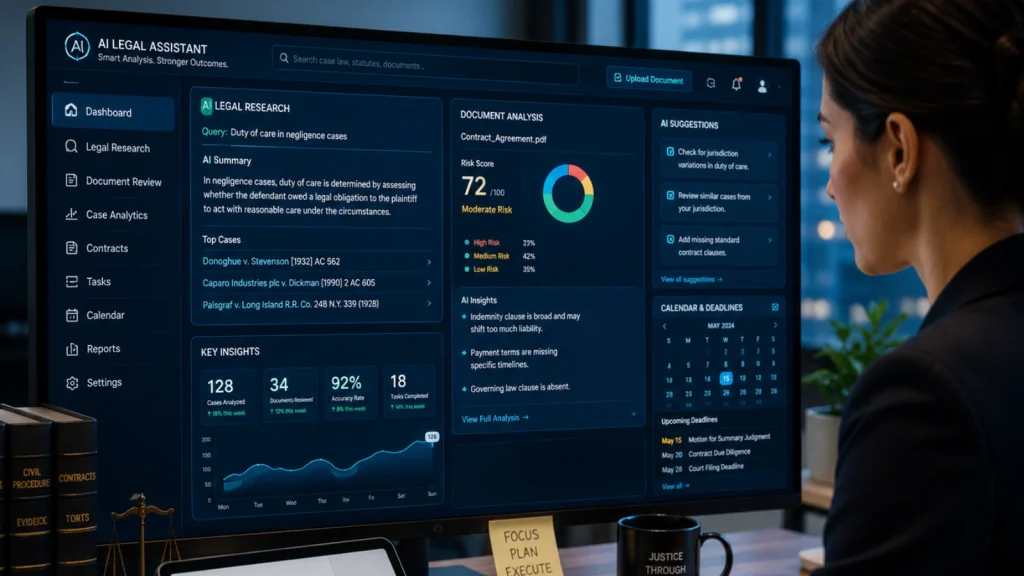
The biggest shift in the profession is not the disappearance of legal help. It is the redistribution of their workload.
Tasks that once consumed entire afternoons can now be completed in minutes using legal artificial intelligence software. Yet the human side of legal work remains difficult to automate fully.
Legal Research
Traditional legal research required long hours inside case law databases, reviewing precedents, statutes, and court opinions manually.
Now, artificial intelligence legal research platforms can summarize cases, identify relevant precedents, and surface jurisdiction-specific rulings almost instantly.
That speed changes workflows dramatically. A legal assistant can prepare a research foundation far faster than before.
Still, AI has limits.
Legal nuance matters. Context matters. One missed jurisdictional detail can completely change the relevance of a case. Human review remains essential, especially when attorneys rely on those findings in active litigation.
Document Drafting and Review
Drafting contracts, pleadings, motions, and engagement letters used to involve repetitive template work.
AI systems can now generate first drafts quickly. Some platforms also flag missing clauses, inconsistent terms, or risky contract language automatically.
That sounds efficient because it is. But speed is not accuracy.
A strong legal assistant still plays a critical role by reviewing formatting, verifying facts, tailoring documents to clients, and catching mistakes AI may overlook.
This is where artificial intelligence legal tools work best: accelerating repetitive drafting while leaving final judgment to humans.
Case and Calendar Management
Missed deadlines can damage cases, client relationships, and firm reputation.
Legal assistants traditionally managed calendars manually, coordinated filings, and tracked hearing schedules across multiple systems.
Today, AI-integrated practice management tools automate reminders, identify scheduling conflicts, and organize timelines automatically.
Even with automation, firms still need someone who understands urgency and legal priorities. Software can recognize a deadline. It cannot fully understand which issue deserves immediate escalation inside a high-stakes case.
Client Communication and Intake
Many firms now use AI chat systems for intake forms and early-stage communication.
These tools collect case details, summarize documents, and route inquiries efficiently. That reduces administrative workload significantly.
But legal matters are personal. Clients dealing with divorce, criminal charges, employment disputes, or lawsuits usually want reassurance from a real person.
A legal assistant often becomes the human bridge between the client and the legal system. AI can organize information. Trust still comes from people.
The Skills a Modern Legal Assistant Needs: Including the Ones That Didn’t Exist Five Years Ago
The foundation of the role has not disappeared. The position still requires strong organizational skills, clear communication, and close attention to detail.
What changed is the technical layer surrounding the work.
Today’s assistant also benefits from understanding:
- AI-assisted legal research tools
- Workflow automation systems
- Document verification processes
- Prompt writing for legal AI platforms
- Data privacy and confidentiality standards
Verification has become especially important.
Courts have already sanctioned attorneys for submitting AI-generated citations that did not exist. That risk shifted part of the quality-control process onto legal support staff as well.
A modern legal assistant is no longer just completing tasks. They are validating outputs generated by artificial intelligence legal systems before those outputs move further into the legal process.
That distinction matters more than many firms realize.
Where Most Law Firms Get This Wrong
The biggest mistake firms make is assuming AI automatically reduces the need for support staff.
Usually, the opposite happens.
Firms that remove legal assistants too quickly often create workflow gaps. Attorneys end up reviewing unverified AI outputs themselves, handling scheduling manually again, or fixing avoidable document errors late in the process.
Another common issue is using generic AI chatbots for legal work.
General-purpose AI tools can sound convincing while producing inaccurate legal information. Specialized artificial intelligence legal research systems typically perform far better because they are trained on legal data and citation structures.
Training is another overlooked problem.
Many firms introduce AI tools without teaching staff how to verify results properly. That creates operational risk, especially when teams assume AI-generated work is automatically reliable.
There is also a client experience issue.
Over-automating communication can make firms feel cold and transactional. Clients dealing with stressful legal situations usually expect empathy, responsiveness, and human interaction at key moments.
Technology should support relationships, not replace them.
How LawerBuddy Fits Into the Modern Legal Assistant Workflow
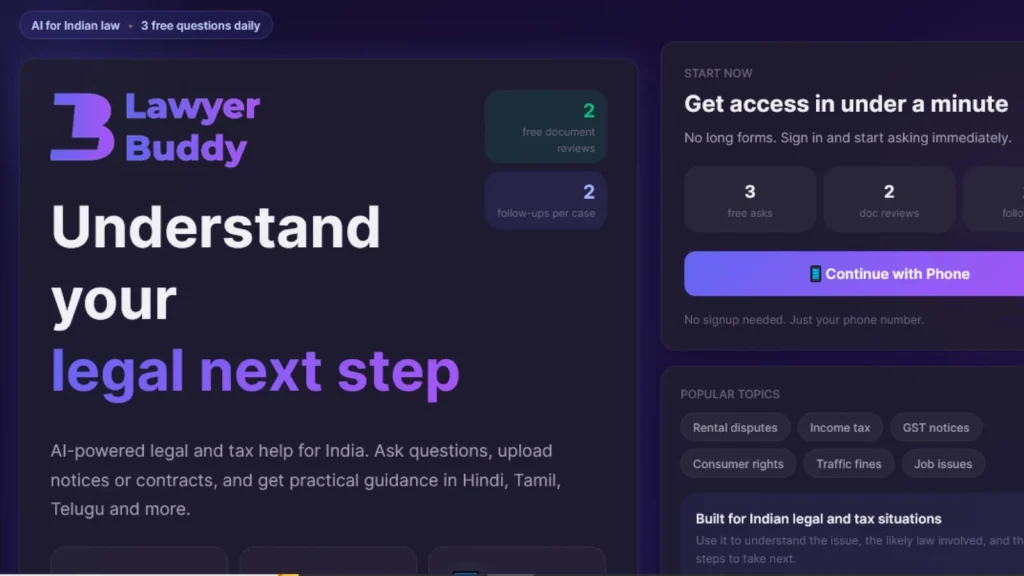
As legal workflows become more AI-driven, legal teams need tools designed specifically for legal work rather than generic automation platforms.
That is where LawerBuddy fits naturally into the process.
Instead of replacing support staff, the platform helps teams work faster while maintaining oversight and accuracy across daily tasks.
Key capabilities include:
- AI-powered legal research with source verification
- Drafting assistance for contracts and legal documents
- Automated contract review and risk detection
- Case summarization and timeline organization
- Secure document handling and confidentiality protections
- Integration with existing legal workflow systems
For firms managing growing workloads, this creates a practical advantage. Teams can handle more operational complexity without sacrificing quality control.
The result is not just faster work. It is more reliable work.
The Bigger Picture: Why the Legal Assistant Role Is Actually Growing, Not Shrinking

There is a common fear that AI will eliminate legal support roles. Current trends suggest something more nuanced is happening instead.
As AI adoption rises, legal work itself is expanding.
Regulatory complexity keeps increasing. Businesses face more compliance obligations. Litigation volumes continue to grow across many practice areas. Faster legal workflows also make services accessible to more clients.
That creates additional demand for organized legal operations.
The professionals who thrive in this environment will likely be the ones who understand both workflow management and artificial intelligence legal systems.
The role is becoming less about administrative support and more about coordinating operations between attorneys, clients, and AI-powered processes.
That shift increases strategic value inside firms.
Tech fluency is already becoming a premium skill in legal hiring. Firms increasingly want team members who can supervise AI-assisted workflows confidently instead of simply following instructions manually.
The role is evolving upward, not disappearing.
Also Read!
Top 7 Benefits of Using an AI Lawyer Free Tool
AI Advocate: The Ultimate Guide to Navigating AI Legal Frameworks
The Bottom Line: What Every Law Firm Should Do This Week
The legal assistant role is not fading away. It is becoming one of the most operationally important positions inside modern legal teams.
Firms that adapt early will likely move faster, reduce administrative strain, and improve client experience at the same time.
A good starting point looks simple:
- Identify which support tasks are still completely manual
- Create verification procedures for AI-generated work
- Invest in legal-specific AI tools instead of generic platforms
- Train support staff to supervise and validate AI outputs effectively
The firms gaining an advantage right now are not replacing people with AI.
They are building smarter systems around skilled legal professionals who know how to use them well.
Frequently Asked Questions
What is the difference between a legal assistant and a paralegal?
A paralegal typically handles more substantive legal work under attorney supervision, while this role focuses more on administrative coordination and workflow support.
Can AI replace this role?
AI can automate repetitive tasks like scheduling, drafting, and legal research, but it cannot replace human judgment, communication, or legal oversight.
What does a legal assistant do daily?
Daily responsibilities often include document drafting, legal research, case management, scheduling, client communication, and deadline tracking.
What skills are needed in 2026?
Modern professionals in this field need traditional legal support skills along with familiarity with AI tools, document verification, and workflow automation systems.
What is an AI-powered support role in law firms?
The term may describe AI software used in legal workflows or a support professional who manages AI-assisted processes inside a law firm.