

**Get free trademark help today →
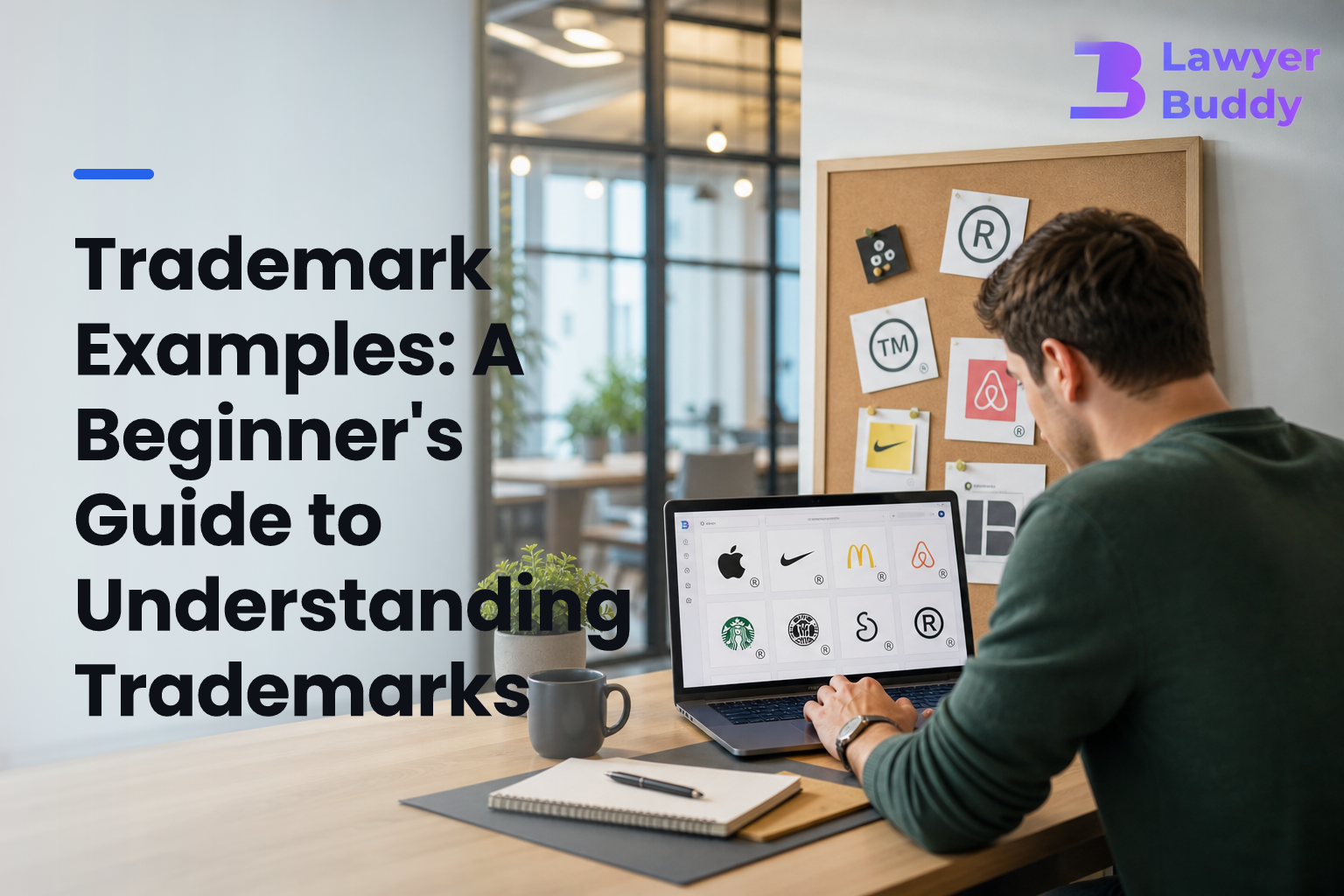
Your logo isn’t your brand; it’s the sign that points to it. A trademark is that sign, the proof that a product or service comes from you, not a copycat. This trademark examples beginner guide gives you clear definitions, easy examples, and practical steps you can use in 2026. In short, a trademark helps buyers know the source of what they’re getting, and that clarity builds trust and value.
Moreover, you’ll see why examples matter. For instance, the Nike swoosh, the McDonald’s golden arches, and the Intel five-note chime each tells your brain, fast, who made what you’re about to buy. Therefore, good trademarks cut through noise and protect your effort to stand out. As a result, you avoid mix-ups, and you gain legal tools to stop lookalikes.

What Is a Trademark and Why Do Examples Matter?
A trademark is any sign, words, logos, sounds, colors, or product looks, that tells buyers the source of goods or services. In plain words, it answers, “Who made this?” That core “source ID” job is why the law protects trademarks. If buyers rely on your sign to find you again, you should be able to stop others from using a mark that confuses them. This trademark examples beginner guide keeps that function front and center.
For example, you already know several marks by heart:
- Nike’s swoosh signals sport gear from one company, not a random seller.
- McDonald’s golden arches point to a global chain you can spot from a highway.
- Intel’s five-note chime says the chip inside your laptop comes from Intel.
Everyday Symbols, Real Legal Meaning
These are not just cool designs. Instead, they work because buyers link them to a single source. If a rival used a near-twin swoosh on shoes, buyers could think those shoes came from Nike. That risk of confusion is the legal test you’ll hear about most.
In addition, examples help you judge your own idea. Ask: Does my sign quickly point to me? Does it look or sound unlike what my rivals use? If yes, you’re on the right track. If not, you may need to tweak your mark before you file.
Furthermore, in 2026, brands live across screens, stores, and speakers. So, your mark might show up on an app tile, a box, a jingle, and a storefront. Strong examples show how one clear sign can work in all those spots without losing punch.
Think of a trademark as your store’s front door on every shelf and screen. It’s how people find you, fast.
Types of Trademarks with Real-World Examples
Trademarks come in several types. Each still does the same job, identify source, but in different forms. Seeing examples helps you map your idea to the right type and avoid weak picks. This trademark examples beginner guide walks each type with 2–3 simple illustrations you already know.
Word Marks (Just Text)
A word mark protects the text itself, no matter the font or style.
- Google: The word “Google” stands on its own as a brand name.
- Amazon: The name marks the source, even without the smile arrow.
- Netflix: The word alone signals streaming services from one source.
Word marks can be strong if the word is unique for the goods or services. Therefore, coined or made-up words tend to do well.
Design Marks (Logos and Stylized Text)
A design mark covers the stylized look of a logo or word.
- Apple logo: The bitten apple icon works even without the word “Apple.
- Adidas trefoil or three stripes: Simple shapes tied to one seller.
- Starbucks siren: The round siren mark reads “coffee” from that chain.
Design marks shine on packaging and signs. However, they can be narrower than word marks if others use similar shapes for different goods.
Sound Marks (Audio Logos)
Sounds can also point to source when they are distinct and well known.
- Netflix “ta‑dum”: The two-beat hit before shows.
- Intel chime: The five-note tone you can hum from memory.
- MGM lion roar: The opening roar that cues a classic film brand.
Sound marks help in video, podcasts, and ads. In addition, they stand out where screens are small or eyes are busy.
Color Marks (Single Color as Source)
A single color, used in a specific way, can mark source if buyers link it to one seller.
- Tiffany Blue: The robin’s egg blue on boxes and bags from a single jeweler.
- UPS Brown: The deep brown for trucks and uniforms.
- Home Depot Orange: The bright orange square in store signs and aprons.
Specifically, color can work when used on key touchpoints and promoted for years. However, you must define the color and show that buyers see it as a brand sign, not just decoration.
Trade Dress (Look and Feel of Products or Stores)
Trade dress protects the overall look that points to source.
- Coca‑Cola bottle shape: The contour glass bottle form.
- Apple Store layout: Clean tables, wide glass, and light wood themes.
- Toblerone bar shape: The triangular peaks inside the wrapper.
Moreover, trade dress can cover packaging, product shapes, or store design. To work, it must be non-functional and distinctive, so it points to you, not to a useful feature every maker needs.

Also Read!
Common Mistakes People Make About Trademarks
First, people mix up IP types. Patents protect inventions and how things work. Copyrights protect creative works like photos, code, books, and music. Trademarks protect signs that point to source. Therefore, a logo is a trademark issue, a new engine is a patent issue, and a song is a copyright issue.
Second, many think any word can be a mark. Generic terms, like “Milk” for milk, can’t function as trademarks for those goods. Descriptive words, like “Fresh Bakes” for bread, are weak and may need proof that buyers now link them to one source. As a result, picking a coined or suggestive name is safer.
Third, folks file without a search. Skipping a search risks a refusal or a legal fight.
You should run a quick screen and then a deeper search for lookalikes, soundalikes, and translations in the same class of goods or services. For a step-by-step, see this guide on how to do a trademark search before filing.
The Risk of Genericide
Fourth, people let brands turn into generic terms. “Escalator” started as a brand but became the common name for moving stairs. The same risk hit “Aspirin” in some countries. If you don’t police use, your mark can lose legal force. Therefore, say “Brand X tissues” instead of letting the brand name become the product name.
- Use your mark as an adjective (“Nike shoes”), not a noun or verb.
- Correct partners and press when they misuse your mark.
- Watch the market and act on confusing uses early.
Furthermore, do not assume small markets are safe. Online stores make even niche brands global on day one. In 2026, that reach cuts both ways, great for sales, risky for conflicts.
Tools and Resources for Trademark Research
Good tools help you spot and avoid conflicts. This trademark examples beginner guide points you to three reliable databases and one way to get human help fast.
- USPTO TESS (United States): Search pending and registered U.S. marks. Start with USPTO TESS.
- WIPO Global Brand Database: Search Madrid System filings across many countries (mention only; check WIPO’s site).
- IP India (Government of India): Search Indian marks at the IP India portal.
When You Want Guidance, Not Just Data
Sometimes you need more than a search box. Tools like LawyerBuddy can connect you with IP lawyers across India for tailored advice. The platform offers “AI-powered legal and tax help for India,” and its “100% Bar Council verified panel” adds confidence that you’re getting counsel from enrolled advocates.
In addition, it uses a secured escrow payment system ensuring payment after a regulatory cooldown, so both sides know funds are safe. It’s free to register with no subscription fee, which lowers your risk if you’re just exploring options.
For individuals seeking legal and tax advice in India, that blend of data plus human help can save weeks.
- Map your shortlist of marks.
- Ask for a distinctiveness check.
- Get a filing plan for the classes that matter.
Tip: Save your search reports. They help you refine your mark and speed up the talk with your lawyer in 2026.
Also Read!
What to Do Next If You Want to Protect a Trademark
You can move from idea to action in a tight loop. This section turns the lessons from this trademark examples beginner guide into a short plan you can use right now.
Step-by-Step Plan
- Define your goods/services: Write one clear sentence for each thing you sell. Keep it concrete.
- Screen for uniqueness: Search exact matches and close calls. Run both word and design searches. A second pass saves pain later. For deeper background, here’s a handy brand search checklist.
- Score distinctiveness: Coined or suggestive names score higher than descriptive ones. If your pick feels bland, brainstorm a twist.
- Decide where to file: Choose the countries where you sell now or will sell within 6–12 months. Start with your home market if budget is tight.
- Prepare specimens: Gather proof of use (labels, screenshots, ads) if your country needs it. Keep dates and channels noted.
- File or get counsel: File your application online or engage an IP attorney for a stronger class description and faster fixes to office actions.
- Watch and enforce: Set alerts for new filings that are close to yours. Send polite notices early to prevent drift.
Moreover, document each step. A tidy paper trail helps you explain your choices if an examiner asks. Therefore, you stay on schedule and avoid rework.
Finally, budget for upkeep. Renewals and new markets come with growth. Plan small, steady moves in 2026 instead of one big bet later.
Key Takeaways
Before you move on, pause and lock in the core ideas. This section sums up the lessons you can reuse and share with your team. It also anchors the must-dos that protect the time and money you put into your brand.
- Trademarks point to source: A mark is a sign — words, logos, sounds, colors, or product look — that tells buyers who made the goods or services. This is why examples like the Intel chime or Tiffany Blue work so well.
- Types and examples matter: Word marks protect text (Google), design marks cover stylized looks (Apple logo), sound marks guard audio cues (Netflix “ta‑dum”), color marks cover single colors in context (UPS brown), and trade dress protects overall look (Coca‑Cola bottle).
- Avoid the big traps: Don’t confuse trademarks with patents or copyrights, don’t pick generic terms, don’t skip searches, and don’t let your brand become the product name (the “escalator” problem).
- Use the right tools: Search at USPTO TESS and IP India, and mention WIPO’s Global Brand Database in your notes. When you need human help, platforms with a 100% Bar Council verified panel and secured escrow cut risk.
- Act in sequence: Define your goods/services, search, assess distinctiveness, choose where to file, prepare proof, file or hire counsel, then monitor and enforce. Small, steady steps in 2026 beat big, late fixes.
Furthermore, share this trademark examples beginner guide with anyone who names products or designs packaging on your team. As a result, you’ll make fewer last-minute changes and ship with confidence.
 vs risky marks (generic, unsearched, verbification); bright, readable design)
What to Do This Week
Days 1–3
Day 1: List three mark ideas for your top product or service. Write one sentence that names what you sell and who it’s for. Keep it sharp and plain.
Day 2: Run a quick screen. Search exact and near matches in USPTO TESS and IP India. Save the results as PDFs with dates. Note design lookalikes as well as soundalikes.
Day 3: Rate distinctiveness on a 1–5 scale. Favor coined or suggestive names over descriptive ones. If all three are weak, brainstorm five more and rescore.
Days 4–7
Day 4: Draft a short goods/services list for each idea. Use buyer-facing words they would say in a store or search bar. Avoid vague terms.
Day 5: Pick a lead mark and one backup. Decide your first filing country. If you’re in India, note that filings and enforcement can touch many states at once, so clarity up front saves you rounds of edits.
Day 6: Prep use proof if needed. Grab clean screenshots of your site, app, or store pages where the mark appears next to the goods or services. Label each file with a date.
Day 7: Choose your path. File the application yourself or book time with an IP attorney. If you’re an advocate reading this, there’s demand for clear, fast IP help nationwide.
As you move, keep this trademark examples beginner guide handy. It keeps you focused on the source-identification test, which is the heart of a strong mark. Then, log renewals and watch new filings so you don’t get blindsided next quarter.
**Join India’s verified panel →
For a deeper dive on screening, return to the article on how to do a trademark search before filing. If you need a refresher on fundamentals, you can also read more about the concept at Wikipedia’s Trademark page and search live records at USPTO TESS.