

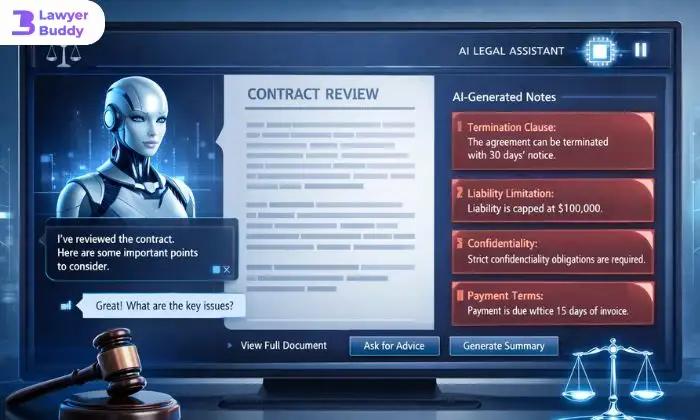
Legal help has traditionally been expensive, time-consuming, and often intimidating. But that’s starting to change. Today, more people are turning to digital solutions where they can ask AI lawyer tools for quick answers to legal questions without scheduling appointments or paying hefty consultation fees.
From reviewing contracts to explaining legal jargon in simple terms, these tools are designed to make legal information more accessible. Whether you’re dealing with a rental issue, a workplace concern, or just want clarity on a legal topic, the idea of being able to ask an AI lawyer anytime feels incredibly convenient.
But convenience comes with questions. How accurate are these tools? Can they replace real lawyers? And most importantly, what actually happens when you rely on them for legal advice?
What Does It Mean to Ask AI Lawyer Tools?
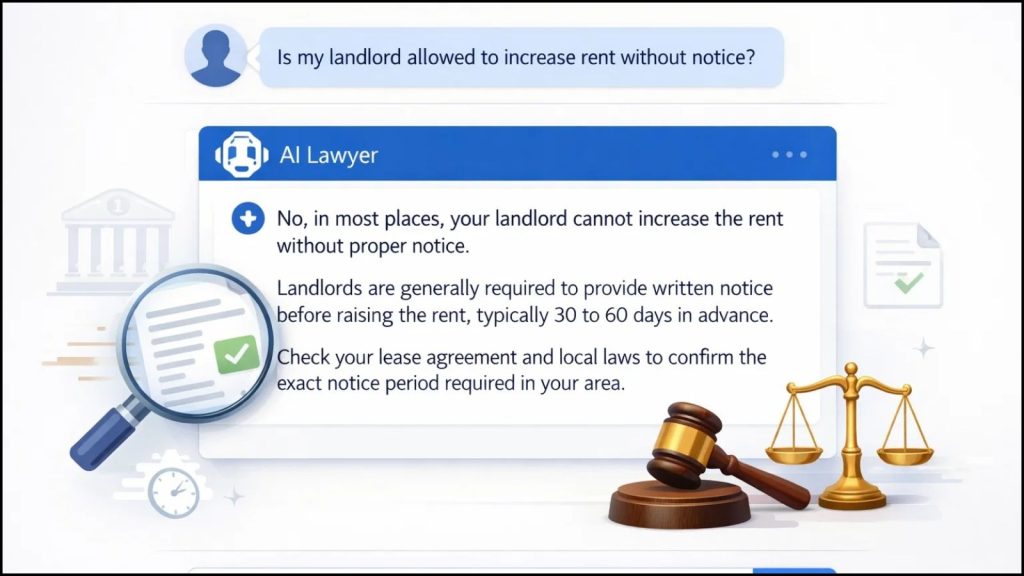
When you ask AI lawyer tools a question, you’re essentially interacting with an AI system trained on vast amounts of legal data. These tools are designed to understand your query, process relevant legal information, and generate a response that mimics how a legal professional might explain things.
Unlike traditional legal consultations, where advice is tailored through in-depth discussions, AI tools work instantly. You type your question, something like “Is my landlord allowed to increase rent without notice?” and within seconds, the system provides a structured answer based on general legal principles.
This process typically involves:
- Interpreting your question using natural language processing
- Matching it with relevant laws, cases, or guidelines
- Delivering a simplified explanation
The appeal lies in speed and accessibility. Instead of waiting days for an appointment, users can get immediate insights. This is why searches like “ask lawyer AI” and “best free AI lawyer” are rapidly growing.
However, it’s important to understand that these tools provide general guidance, not legally binding advice. They don’t know the full context of your situation unless you provide it, and even then, their understanding has limits.
How Do AI Lawyer Tools Actually Work Behind the Scenes?
When you ask AI lawyer tools a question, the response you see in seconds is the result of multiple layers of advanced technology working together. While it may feel like you’re chatting with a real legal expert, what’s happening behind the scenes is quite different.
At the core, these tools rely on large language models trained on vast datasets that include legal documents, case law summaries, regulations, and publicly available legal content. This training allows the system to recognize patterns in how legal questions are asked and how they’re typically answered.
Here’s a simplified breakdown of the process:
First, the AI analyzes your query using natural language processing. It identifies key elements such as the legal issue, jurisdiction (if mentioned), and intent behind the question. For example, if you ask lawyer AI about a contract dispute, the system tries to detect whether you’re asking about enforceability, breach, or obligations.
Next, it retrieves and connects relevant legal concepts from its training data. Instead of “searching the internet” in real time, it generates responses based on patterns and knowledge it has already learned.
Finally, it constructs a clear, human-like answer. This is why responses often feel conversational rather than technical, even when dealing with complex legal topics.
Some advanced platforms, including tools like Lawyerbuddy.io, go a step further. They are designed specifically for legal use cases, which means:
- Better structuring of legal responses
- More relevant examples
- Improved clarity for non-legal users
Still, no matter how advanced the system is, it doesn’t truly “understand” your situation the way a human lawyer would. It predicts the most likely helpful answer; it doesn’t verify facts or assess real-world consequences.
What Kind of Legal Questions Can AI Actually Handle?
When you ask AI lawyer tools, they work best for simple and general legal questions rather than for complex disputes.
You can use them to:
- Understand basic legal terms in simple language
- Get summaries of contracts or policies
- Learn about tenant, work, or consumer rights
- Draft basic documents like notices or agreements
This is why tools like Lawyerbuddy.io are useful; they turn complex legal info into easy explanations.
Many people also ask an AI lawyer for quick clarity before deciding if they need a real attorney.
However, AI is not suitable for:
- Complex or high-risk legal cases
- Situations needing jurisdiction-specific advice
- Legal strategy or courtroom decisions
In short, AI helps with basic understanding but not final legal judgment.
Benefits of Using AI Lawyer Tools
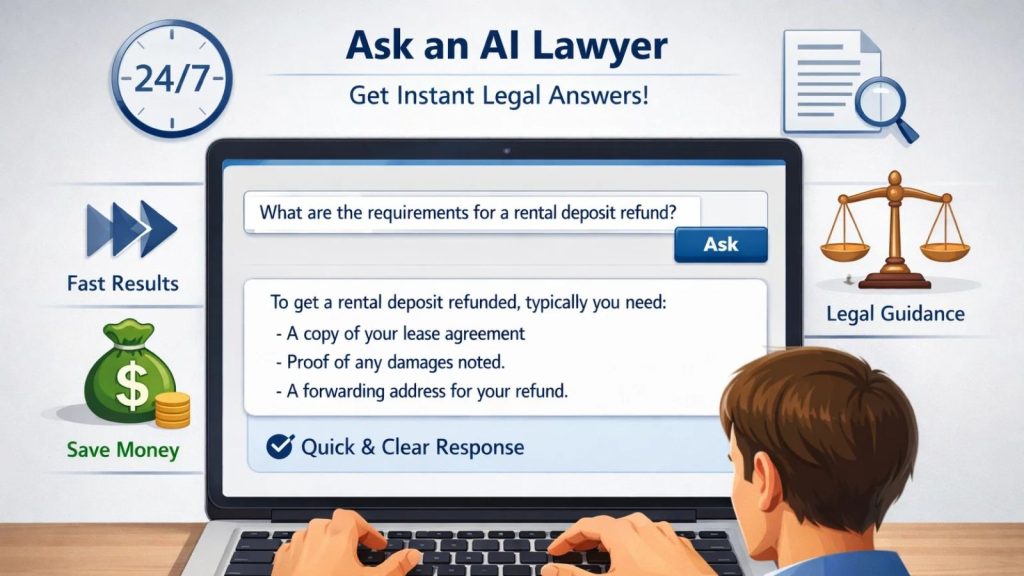
When you ask AI lawyer tools for help, the biggest advantage is instant access to legal information without delays or high consultation costs.
One major benefit is speed. Instead of waiting days for a lawyer, you get immediate answers to basic legal questions. This is especially useful for urgent situations like tenancy doubts or contract confusion.
Another advantage is cost-effectiveness. Many users look for the best free AI lawyer because traditional legal advice can be expensive, especially for minor issues.
AI tools also make legal information easier to understand. Complex terms are broken down into simple explanations, which helps non-lawyers quickly grasp their situation.
Platforms like Lawyerbuddy.io are designed to improve this experience by offering structured, user-friendly responses tailored for everyday legal needs.
Other key benefits include:
- 24/7 availability
- No appointment scheduling
- Easy document explanations
- Quick first-level legal guidance
This is why more people now prefer to ask lawyer AI tools before taking further legal steps.
However, while these benefits are strong, they don’t eliminate the need for professional legal advice in serious cases.
Limitations and Risks of AI Lawyer Tools
When you ask AI lawyer tools, it’s important to understand that they are not a replacement for real legal professionals. While they’re helpful for basic guidance, they come with clear limitations.
One major limitation is the lack of real legal authority. AI responses are not legally binding and should never be treated as final legal advice.
Another issue is accuracy risk. Even if you ask an AI lawyer a well-structured question, the answer may miss important legal nuances or jurisdiction-specific rules that can change the outcome of a case.
Key risks include:
- Misinterpretation of laws or policies
- Outdated or generalized information
- No accountability for incorrect guidance
- Lack of context about your personal situation
This becomes especially risky in complex matters like contracts, disputes, or financial claims, where small details can make a big difference.
Even tools positioned as the best free AI lawyer cannot fully replace human judgment, especially when legal consequences are serious.
Platforms like LawyerBuddy can help simplify legal understanding, but users should still verify critical decisions with a qualified attorney.
Try Lawyerbuddy for Smarter Legal Help
If you want a faster and simpler way to ask AI lawyer questions, platforms like LawyerBuddy are designed exactly for that.
Instead of spending time searching through complex legal websites, Lawyerbuddy.io helps you get clear, easy-to-understand answers in seconds. It’s built for everyday users who need quick legal clarity without the confusion of legal jargon.
Whether you’re trying to ask lawyer AI about a contract, a rental issue, or a workplace concern, Lawyerbuddy.io acts as a helpful starting point before you take any formal legal steps.
Why users prefer Lawyerbuddy:
- Instant answers to basic legal questions
- Simple explanations of complex legal terms
- Easy-to-use interface for non-lawyers
- Helpful for early legal research and guidance
It’s especially useful if you’re looking for the best free AI lawyer experience to understand your situation before consulting a professional.
While it doesn’t replace a human attorney, it makes legal information far more accessible and less intimidating for everyone.
Conclusion
The ability to ask AI lawyer tools has made legal information more accessible than ever before. Instead of relying only on expensive consultations or complicated legal documents, users can now get quick explanations and basic guidance within seconds.
However, while these tools are helpful for understanding general legal concepts, they are not a substitute for professional legal advice. You can ask an AI lawyer for clarity, summaries, and direction, but important decisions should always be verified by a qualified attorney.
This is where platforms like Lawyerbuddy.io fit in well, acting as a support tool that simplifies legal knowledge and helps users take the first step with confidence.
In the end, AI lawyer tools are best seen as a starting point, not the final authority. They save time, reduce confusion, and make legal information easier to access, but human expertise is still essential when it truly matters.
Also read,
AI Advocate: The Ultimate Guide to Navigating AI Legal Frameworks
FAQs
1. What does it mean to ask AI lawyer?
It means using AI tools to get quick, general answers to legal questions in simple language.
2. Can I fully rely on AI lawyer tools for legal advice?
No, they are helpful for guidance but not legally binding or fully reliable for complex cases.
3. Is there a best free AI lawyer available?
Some platforms offer free basic tools, but they should only be used for general understanding.
4. How does Lawyerbuddy.io help users?
It simplifies legal information and provides easy-to-understand answers for everyday legal questions.
5. When should I consult a real lawyer?
For serious disputes, contracts, or any situation with legal or financial risk, always consult a licensed attorney.