


The Moment Most People Realize IP Law Was Always Their Problem
You spend months building a brand. Then one day, someone else is using your name and selling a similar product. That’s usually when an intellectual property lawyer enters the picture.
Intellectual property law doesn’t just belong to big corporations. It applies to founders, designers, developers, writers, and even small business owners. If you create something original, you’re already in its territory.
This guide breaks down what an intellectual property lawyer actually does, when you might need one, and how to decide what kind of protection fits your situation.
Read Aloud!
What Does an IP Lawyer Do? (In Plain English)
An intellectual property lawyer helps protect things you create, like inventions, brand names, creative work, and business ideas.
They typically work across four areas:
- Patents, trademarks, copyrights, and trade secrets
- Filing and registering legal protections
- Handling disputes and infringement cases
- Advising on how to use IP strategically
Think of them as both a shield and a strategist for your ideas.
The Four Pillars of Intellectual Property Law – And Who They Actually Protect
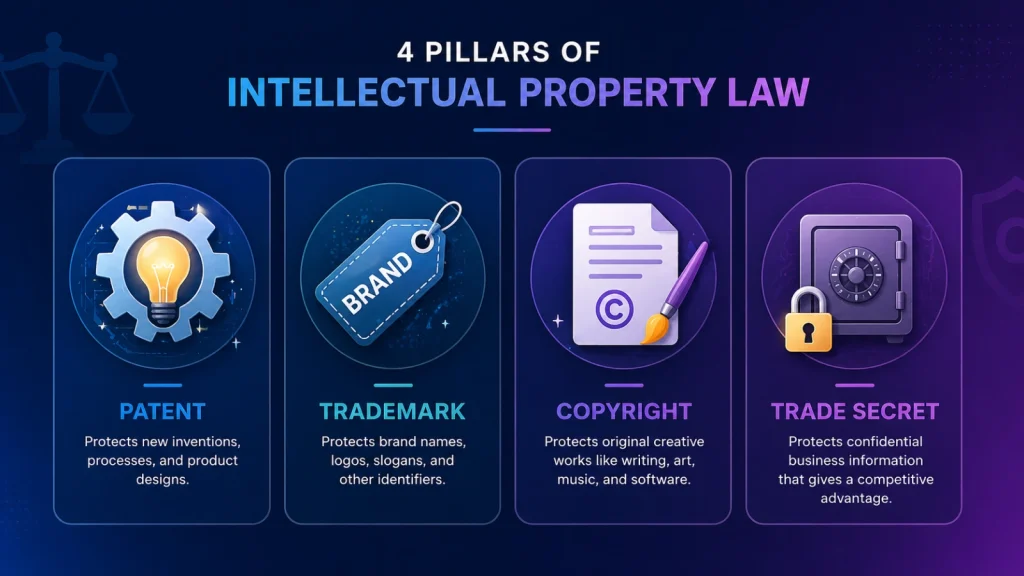
Understanding intellectual property law starts with knowing what exactly gets protected. Each category serves a different type of creator or business.
Patents – Protecting the Inventor in You
Patents cover inventions, processes, and product designs. If you’ve built something new, this is where an intellectual property lawyer becomes critical.
A patent typically lasts 20 years from the filing date. That window gives you exclusive rights to your invention.
Imagine a startup developing a new medical device. If they present it publicly before filing, they risk losing protection. Timing matters more than most people realize.
Trademarks – Your Brand Is an Asset, Treat It Like One
Trademarks protect names, logos, slogans, and even distinctive colors. If people recognize your brand, it has value worth protecting under intellectual property law.
Unlike patents, trademarks can last forever if actively used and renewed.
Picture two businesses using similar names in the same industry. Without registration, proving ownership becomes messy. An intellectual property lawyer helps secure stronger rights early on.
Copyrights – The Protection That Kicks In Automatically
Copyright protects creative work like writing, music, design, and software. The moment you create something original, you already have basic rights.
However, formal registration strengthens your ability to enforce those rights.
For example, a freelance designer might find their work used without permission. Without registration, legal action becomes harder. This is where intellectual property law adds structure to ownership.
One important detail often misunderstood: copyright protects expression, not ideas.
Trade Secrets – The IP No One Talks About
Trade secrets cover confidential business information. This could be formulas, customer lists, or internal processes.
There’s no registration here. Protection depends on how well you keep things secret.
Think of a company’s algorithm or recipe. Once it becomes public, protection disappears permanently. An intellectual property lawyer often helps set up safeguards like NDAs and internal controls.
What an IP Lawyer Actually Does All Day (Beyond the Courtroom)

Most people imagine legal battles. In reality, much of intellectual property law happens behind the scenes.
Filing applications is a major part of the job. An intellectual property lawyer works with government offices, handles objections, and ensures rights are properly secured. This matters because small errors can weaken protection.
They also manage IP portfolios. This includes tracking deadlines, renewals, and new filings. Without this, valuable rights can quietly expire.
Another key role is drafting licensing agreements. If someone wants to use your brand or product, the terms need to be clear. A poorly written agreement can cost far more later.
IP audits are often overlooked. Businesses regularly discover unprotected assets or unclear ownership during these reviews. Intellectual property law becomes especially relevant before funding rounds or acquisitions.
Enforcement is another area. When someone copies your work, a lawyer sends notices, negotiates settlements, or handles disputes. Not every issue goes to court, but every situation needs a strategy.
Finally, there’s advisory work. An intellectual property lawyer helps you decide what to protect, when to act, and when to hold back.
The IP Protection Decision Map – Which Type of Lawyer Do You Need?
Not all intellectual property law professionals do the same work. Choosing the right type matters.
Here’s a simple way to think about it:
- Built a new product or technology → Patent → Patent attorney
- Launching a brand or logo → Trademark → Trademark lawyer
- Created content, software, or design → Copyright → IP lawyer
- Protecting confidential business processes → Trade secret → Business/IP lawyer
- Facing a legal dispute → Litigation → IP litigator
- Licensing your work → Contracts → IP transactions lawyer
One important distinction stands out. Patent attorneys are a specialized group within intellectual property law. They need both legal and technical qualifications.
Read More!
AI Tools for Lawyers: Everything You Need to Know (Top Tools)
Why Every Law Firm Needs a Legal Document Management System
When You’re Already Late – Signs You Needed an IP Lawyer Yesterday
Many people only explore intellectual property law after a problem appears.
You might notice someone selling a product that looks identical to yours. That’s a clear signal.
Investors asking about IP ownership is another moment. If you don’t have answers ready, it raises concerns quickly.
Sometimes the issue starts with contracts. If you hired a freelancer without defining ownership, you may not legally own what you paid for.
Employees leaving and starting similar businesses can also trigger disputes. Without proper agreements, protecting your position becomes difficult.
Content takedowns are another common situation. Platforms often act quickly when copyright claims arise, whether valid or not.
If any of these sound familiar, you’re not alone. These are exactly the moments when people turn to an intellectual property lawyer.
The Cost Question: What Does an IP Lawyer Actually Charge?
Cost is often the biggest hesitation around intellectual property law.
Patent filings tend to be the most expensive. Legal fees can range from $5,000 to $15,000 or more, depending on complexity.
Trademark registration is more affordable. Most filings cost between $1,500 and $3,000 with legal assistance.
Copyright registration is usually the least expensive. Filing fees are low, and the process is simpler.
Hourly rates vary widely. Many intellectual property lawyers charge between $300 and $700 per hour.
Some work on a project basis, especially for smaller clients. Larger businesses often retain ongoing legal support.
Costs also differ by region. In India, filings under the Patents Act, 1970, or the Trade Marks Act, 1999, follow different fee structures.
Budget options exist, too. Some individuals start with basic filings or use legal clinics before scaling up their protection.
Three Mistakes That Cost People Their IP Rights
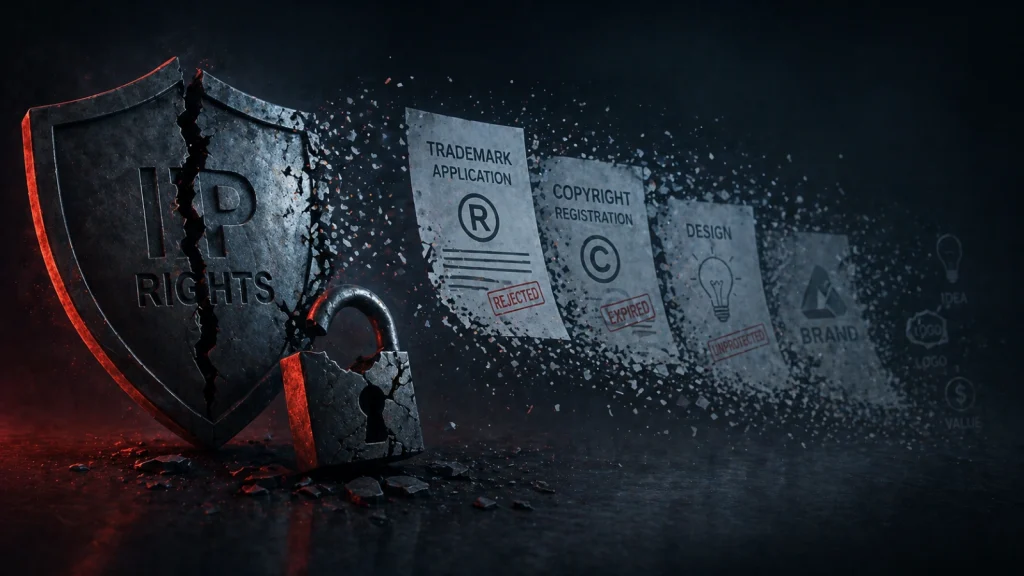
Mistakes in intellectual property law are often irreversible. A small decision can lead to permanent loss of rights, which is why consulting an intellectual property lawyer early can make a big difference.
Mistake 1: Waiting Until After You Go Public
Many assume they can file later. In reality, public disclosure can destroy patent eligibility in several countries.
Even pitching to investors without protection can be risky.
The safer approach is filing early, even with a provisional application.
Mistake 2: Assuming Contractor Work Belongs to You
This one surprises many business owners.
By default, the creator owns the work, not the person paying for it.
Without proper agreements, you may not own your own logo, website, or product design.
Mistake 3: Ignoring IP Until Funding
Investors look closely at intellectual property law during due diligence.
If ownership is unclear or registrations are missing, deals can stall or collapse.
Fixing issues under pressure is costly and stressful. A simple annual review avoids most of these problems.
How LawyerBuddy Makes IP Guidance Accessible for Everyone
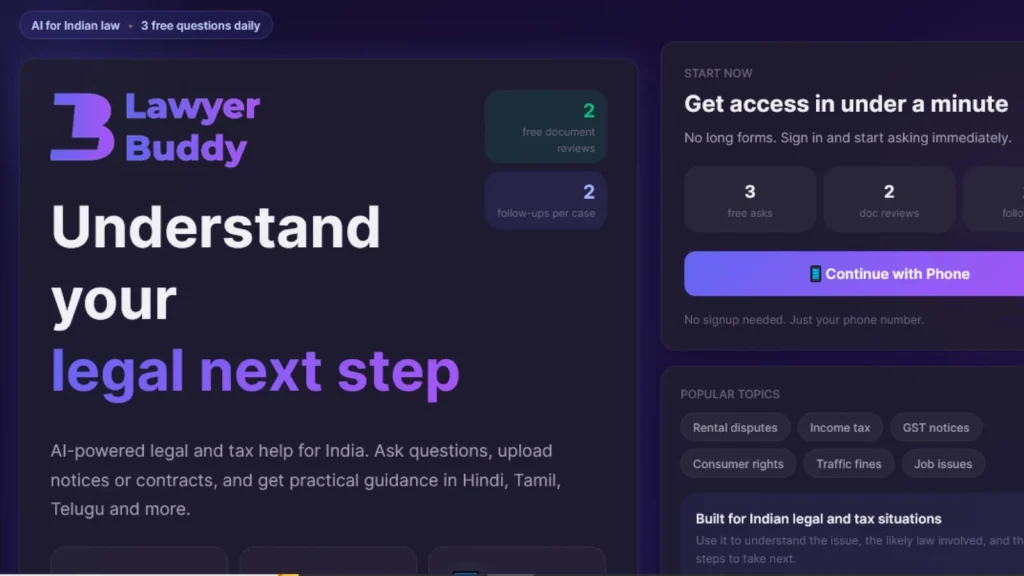
Understanding intellectual property law can feel confusing at first. Getting quick, clear answers shouldn’t be difficult or expensive.
LawyerBuddy helps you start without the usual friction. Instead of immediately hiring an intellectual property lawyer, you can first understand your situation and next steps.
Key features:
- Ask legal questions: Get clear answers in your language with 5 free daily questions
- Review documents: Upload contracts or notices for 5 free daily reviews
- Follow-up support: Continue the same case with 2 follow-up questions
- No delays: Sign in and start instantly, no long forms
- India-focused guidance: Covers legal, tax, and intellectual property law issues
- Practical help: Understand notices, disputes, and real-world legal problems
It’s a simple way to get clarity first, then decide if you need an intellectual property lawyer.
The New Frontier – IP Law in the Age of AI
Artificial intelligence is changing how intellectual property law works.
One major question is ownership. If AI generates content, can it be copyrighted? Current rules say human authorship is required, but this area is evolving quickly.
Another issue involves inventions. Patent systems still require human inventors, even if AI tools are involved in the process.
There’s also a growing debate around training data. Many AI systems use existing creative work, raising concerns about unauthorized use.
For creators and businesses, this creates uncertainty. You might think you own something fully, but the legal position may not be clear yet.
This is where an intellectual property lawyer with modern expertise becomes valuable. The rules are shifting, and staying informed matters.
Your Ideas Are Worth Protecting. Don’t Wait for a Crisis to Find Out
Intellectual property law isn’t just about legal protection. It’s about capturing the value of what you’ve built.
Many people hesitate because of cost or complexity. But waiting often leads to bigger risks.
Whether you’re launching something new or managing an existing business, this is the right time to think about protection.
Start with a conversation. The right intellectual property lawyer can help you understand your position before problems arise.
The strongest IP strategies aren’t reactive. They’re built early, before anyone else tries to take what’s yours.
Frequently Asked Questions About IP Lawyers
Is there a difference between a patent attorney and an intellectual property lawyer?
Yes. Patent attorneys are a specialized part of intellectual property law. They need technical qualifications and must pass a specific patent exam.
Can I file for IP protection without a lawyer?
Yes, it’s allowed. However, mistakes in filings can limit your rights. Many people handle basic copyright themselves, but seek help for patents and trademarks.
How long does registration take?
Trademarks usually take 12 to 18 months. Patents can take two to three years. Copyright registration is faster, often within several months.
What does an intellectual property lawyer charge for startups?
Startups often begin with trademarks and strategy sessions. Costs vary, but early investment helps avoid larger issues later.
Is intellectual property law the same everywhere?
No. Each country has its own system. While global agreements exist, the rules and processes vary significantly.