


Handling documents has always been at the core of legal work. Contracts, case files, client records, court filings every piece of information matters, and even a small mistake can lead to serious consequences. Yet, many law firms still rely on outdated systems that make document handling slow, confusing, and risky.
This is where legal document management comes in. It offers a structured way to store, organize, retrieve, and secure legal files so that nothing gets lost or mishandled. Instead of digging through folders or searching endless email threads, legal professionals can access exactly what they need in seconds.
As law firms grow and cases become more complex, the need for a reliable system becomes even more critical. A well-implemented legal document management approach not only improves efficiency but also strengthens compliance and data security two areas that no legal practice can afford to overlook.
What Is Legal Document Management?

It’s a structured way for law firms to store, organize, and secure important files like contracts, case records, and client documents.
Instead of scattered folders or endless email threads, everything lives in one centralized system. This makes it easier to find documents quickly, control who can access them, and keep track of updates without confusion.
A good setup also helps teams avoid using outdated files, reduces manual errors, and keeps sensitive information protected.
Why Traditional Document Handling Fails Law Firms
Many law firms still rely on shared drives, email attachments, and physical files to manage important documents. While this may work at a small scale, it quickly becomes inefficient as the number of cases and clients grows.
One major issue is time loss. Searching for the right version of a contract or case file can take minutes or even hours when documents are scattered across different folders and inboxes.
Another common problem is version confusion. Multiple edits from different team members often lead to duplicate files, outdated drafts, and uncertainty about which document is the final one.
Security is also a concern. Sensitive legal information stored in unsecured folders or shared via email can be exposed to unauthorized access, creating serious compliance risks.
Collaboration becomes difficult too. When multiple lawyers or paralegals are working on the same case, tracking changes and updates without a structured system often leads to miscommunication.
This is why modern firms are shifting toward more structured systems instead of relying on traditional methods that slow down operations and increase risk.
Key Benefits of a Legal Document Management System
A well-structured system brings order to what is often a fast-moving and detail-heavy workflow in law firms.
The biggest benefit is faster access to information. Instead of digging through folders or emails, teams can locate files in seconds using smart search and filters.
It also improves accuracy and version control. Everyone works on the latest document, reducing mistakes caused by outdated drafts or duplicate files.
Security is another major advantage. Sensitive client data can be protected with access controls, ensuring only authorized team members can view or edit specific documents.
Collaboration becomes smoother as well. Multiple users can work on the same case files without overwriting each other’s work, making teamwork more efficient.
Overall, it helps law firms save time, reduce errors, and maintain better control over critical information.
How Legal Document Management Improves Daily Legal Workflows
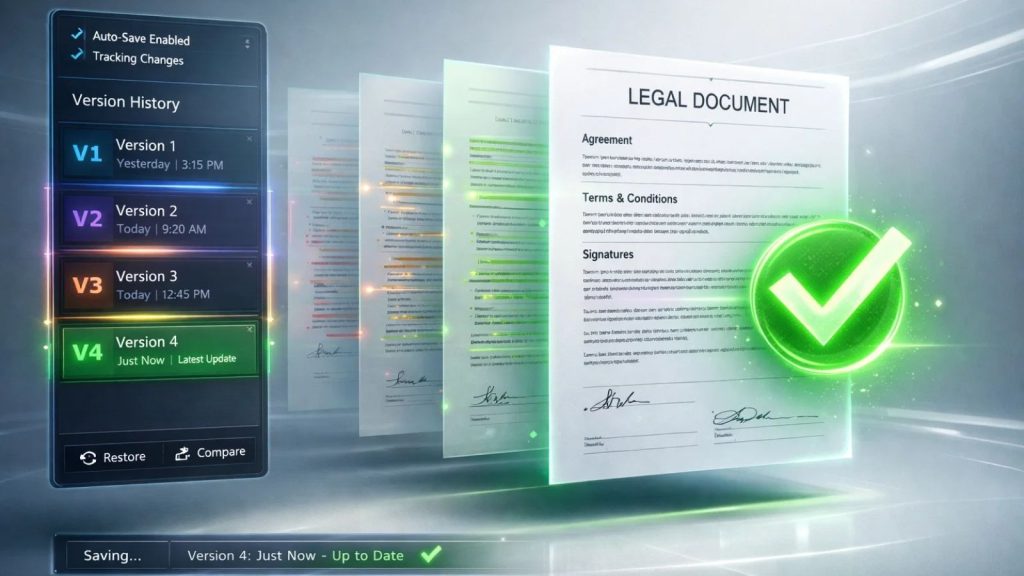
Daily legal work involves constant drafting, reviewing, sharing, and updating of documents. Without a structured system, these tasks can easily become repetitive and time-consuming.
A streamlined setup helps lawyers and staff find files instantly, instead of wasting time searching across folders or inboxes. This alone improves productivity across the entire team.
It also makes document updates more organized. When changes are made, they are automatically tracked, so there’s no confusion about which version is the most recent.
Tasks like sharing files with clients or internal teams become smoother and more secure, reducing dependency on manual email exchanges.
Over time, this leads to fewer delays, better coordination, and a more predictable workflow across cases.
Common Challenges Without a Proper System
When law firms don’t use a structured setup for managing documents, small inefficiencies quickly turn into bigger operational problems.
One of the most common issues is lost or misplaced files. Important case documents can end up scattered across devices, email threads, or personal folders, making them hard to retrieve when needed most.
Another challenge is poor collaboration. When multiple people work on the same case without a shared system, updates can get missed, overwritten, or duplicated, leading to confusion within the team.
There’s also the risk of security gaps. Sensitive client data stored in unsecured locations or shared informally increases the chances of unauthorized access or accidental leaks.
On top of that, firms often face delays in case handling simply because time is wasted searching, verifying, or correcting documents instead of focusing on legal work itself.
These challenges highlight why relying on manual methods is no longer sustainable for modern legal practices.
Features to Look for in a Good Legal Document System
Choosing the right setup can make a major difference in how smoothly a law firm operates. Not all tools offer the same level of efficiency, so it’s important to focus on features that actually solve daily challenges.
A strong system should have advanced search capabilities so documents can be found instantly using keywords, tags, or case details.
Version control is equally important, ensuring everyone always works on the latest draft without confusion or duplication.
Security features like role-based access help protect sensitive client data by restricting who can view or edit specific files.
It should also support easy collaboration, allowing multiple team members to work on documents without overwriting each other’s changes.
Finally, cloud access and scalability ensure the system grows with the firm and allows secure access from anywhere.
These features together create a more reliable and efficient way to manage legal work.
How Lawyerbuddy Helps Law Firms Manage Documents Better

Modern law firms don’t just need storage they need a system that actively supports how they work every day.
That’s where Lawyerbuddy fits in. It helps firms organize, access, and manage case-related files in a structured environment designed specifically for legal workflows.
Instead of juggling multiple tools or scattered folders, teams can keep everything in one place, making it easier to track updates, share files securely, and reduce manual work.
It also supports better coordination between team members, ensuring that everyone is working with the same updated information without confusion.
For firms looking to reduce administrative load and improve efficiency, it offers a more practical and focused approach to document handling.
Conclusion
Managing legal files efficiently is no longer optional for modern law firms it’s essential for accuracy, speed, and compliance. As case volumes grow and client expectations rise, relying on manual methods only increases the risk of delays, errors, and security issues.
A structured approach to legal document management helps firms bring order to their daily operations. It ensures documents are easy to find, properly versioned, and securely stored, which directly improves productivity and reduces operational stress.
With the right system in place, teams can focus more on legal work and less on administrative tasks, leading to smoother workflows and better client service.
Tools like Lawyerbuddy further simplify this shift by offering a more organized and practical way to handle legal documents without unnecessary complexity.
In the long run, adopting a smarter approach to document handling is not just about efficiency it’s about building a more reliable and scalable legal practice.
FAQs
1. What is legal document management in simple terms?
It’s a system that helps law firms store, organize, and access legal files in a structured and secure way instead of relying on scattered folders or emails.
2. Why is legal document management important for law firms?
It reduces errors, saves time, improves collaboration, and ensures sensitive client data is stored securely and accessed only by authorized users.
3. What is a legal document management system used for?
It is used to centralize case files, contracts, and legal records so teams can easily search, update, and manage documents without confusion.
4. How does it improve law firm efficiency?
By making documents easier to find, track, and share, it reduces time spent on manual searching and improves workflow coordination.
5. Is cloud-based document management safe for legal firms?
Yes, when properly implemented with encryption, access controls, and secure authentication, it can be even safer than traditional storage methods.