
Introduction: The $400-an-hour problem most small businesses quietly ignore
An AI contract generator often enters the picture after something goes wrong. A freelancer skips a formal agreement, trusting a quick email thread, and later struggles to get paid. A startup founder delays contracts because legal fees feel out of reach.
Most people or small businesses don’t ignore contracts out of carelessness. Friction gets in the way. Legal language feels dense, and hiring a lawyer for every agreement isn’t always practical.
A project starts smoothly, expectations feel clear, and both sides trust each other. Then scope creeps in, deadlines shift, and suddenly the agreement feels vague. Without a clear contract, even small misunderstandings turn into payment disputes or strained relationships.
This is exactly the gap an AI contract generator is trying to fill. Not by replacing legal thinking, but by removing the friction that stops people from creating agreements in the first place.
Listen Aloud!
Quick Answer: What Is an AI Contract Generator?
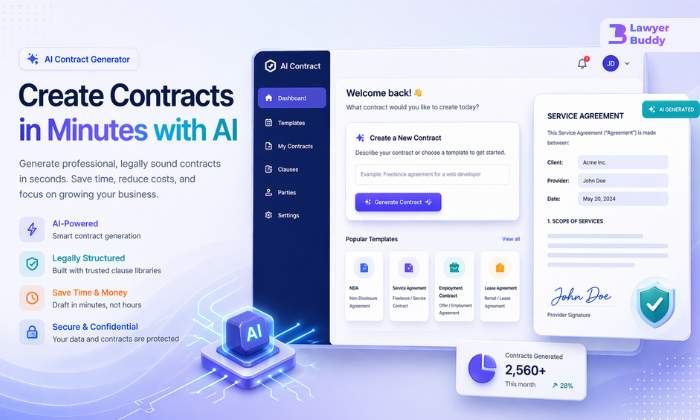
A contract AI generator is software that creates legally structured agreements using simple inputs like prompts or guided forms. It relies on AI models combined with curated legal clause libraries to produce drafts in seconds.
These tools combine pre-built clause libraries with smart logic that adjusts based on contract type and jurisdiction. The result is a document you can edit, customize, and send for signing.
The main appeal is speed, lower cost, and consistent structure for everyday agreements. Still, for complex or high-risk deals, human review remains essential.
From Blank Page to Signed Agreement: How AI Contract Generators Actually Work
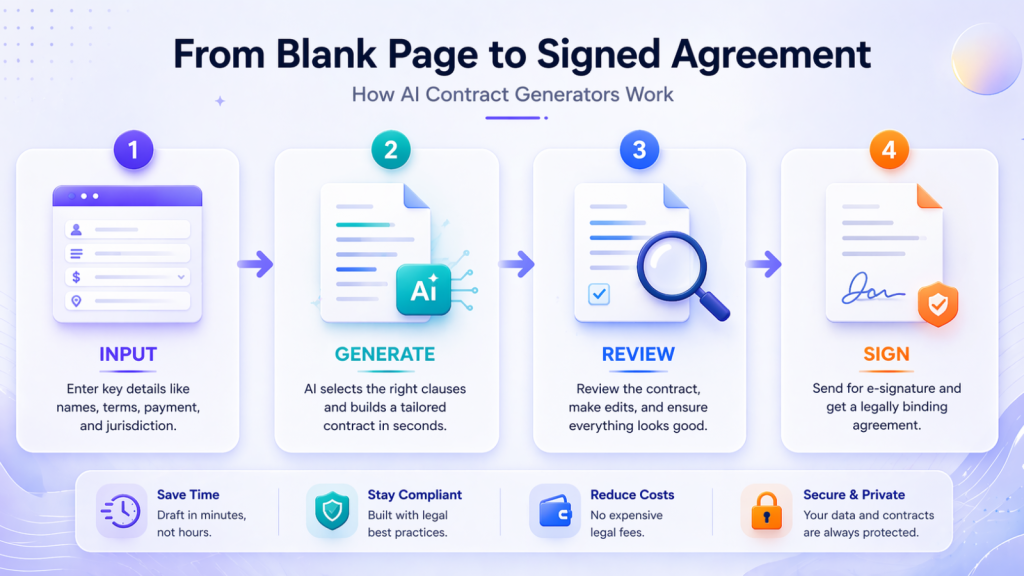
At a basic level, it has learned patterns from thousands of real contracts. It doesn’t “think” like a lawyer, but it recognizes how agreements are typically structured.
The process usually follows a simple flow:
Input → Generate → Review → Sign
You start by entering details like names, payment terms, and location. The tool then selects a base structure and inserts relevant clauses.
Next, it assembles everything into a clean draft within seconds. Some platforms go further by adjusting clauses based on context, such as industry-specific confidentiality terms.
Finally, you review the document, make edits, and send it for signature. The best tools feel less like templates and more like guided drafting assistants.
What makes modern tools more useful is how they adjust based on your inputs. For example, a freelance contract for a designer will include different intellectual property language than one for a software developer. The tool isn’t guessing randomly. It’s selecting from structured clause options based on context.
Still, it’s worth understanding the limitation. The system does not fully understand your business relationship. It works with patterns and rules. If your inputs are vague, the output will be too. That’s why clear details matter more than most people expect when using an AI contract generator.
The Contracts These Tools Handle Best (and the Ones Where You Still Need a Lawyer)
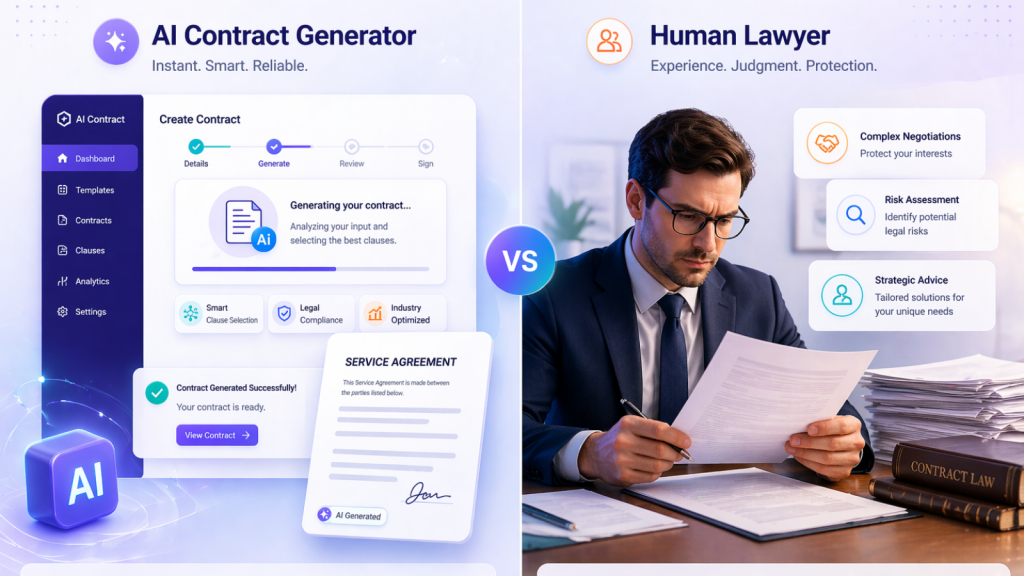
Routine Agreements Where AI Truly Shines
An AI contract generator performs best with predictable, standardized contracts. These include:
- NDAs
- Freelance service agreements
- Basic employment contracts
- Lease agreements
- Vendor contracts
- Partnership MOUs
These agreements follow familiar structures. That makes it easier for AI to assemble accurately and quickly.
For most freelancers and small businesses, this covers the majority of daily legal needs.
High-Stakes Situations Where Human Oversight Is Non-Negotiable
Some contracts demand more than structured drafting. They require judgment, negotiation, and risk assessment.
Use a lawyer for:
- Investor agreements
- Intellectual property transfers
- Multi-party enterprise deals
- Cross-border contracts with complex laws
An AI contract generator isn’t unreliable here. It’s simply not designed for strategic legal thinking.
Understanding this boundary makes you a smarter user, not a cautious one.
Who Gets the Most Out of an AI Contract Generator?
If you’re a freelancer onboarding a new client, a contract generator AI helps you lock in payment terms and ownership rights quickly. It removes the awkward delay before starting work.
Startups often use it for early-stage agreements. Think co-founder NDAs, advisor contracts, or simple SaaS terms. Speed matters when you’re moving fast.
Small business owners benefit from an AI business contract generator for vendor deals, rental agreements, and contractor terms. These are recurring needs that shouldn’t require starting from scratch each time.
Legal teams also use these tools differently. They rely on them for first drafts, freeing time for negotiation and complex advisory work.
Are AI-Generated Contracts Actually Legally Binding? (The Honest Answer)
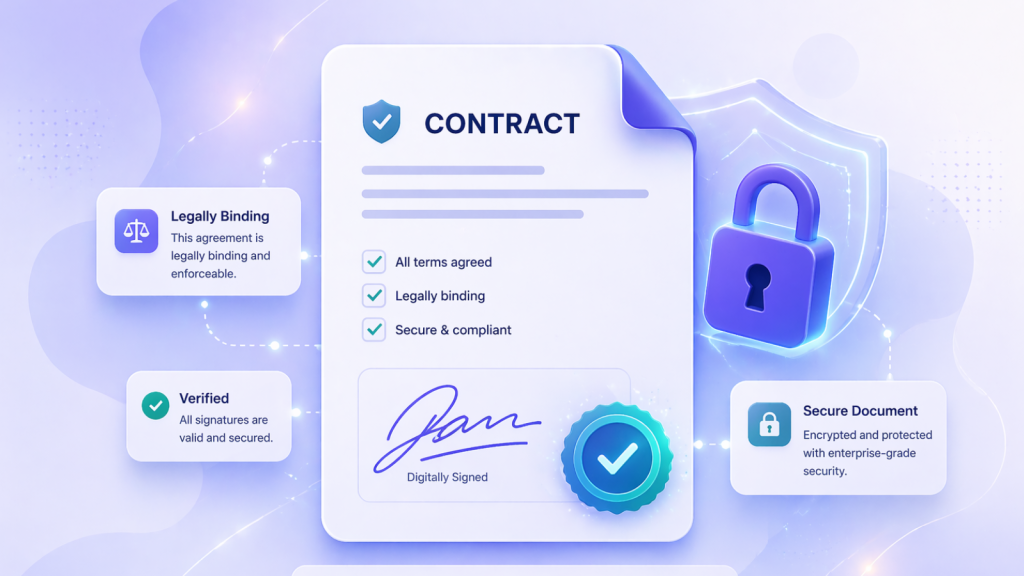
Yes, contracts created by an AI contract generator can be legally binding. What matters is the content, not who or what drafted it.
For a contract to hold up, it needs four elements: offer, acceptance, consideration, and mutual assent, meaning both parties clearly agree to the same terms. If those are present, the agreement is valid.
Laws like the ESIGN Act in the US and eIDAS in Europe recognize digital agreements. That includes contracts generated and signed electronically.
The real risk lies in quality. Poor inputs or skipped reviews can lead to vague terms or missing clauses. Always read carefully before signing, no matter how the document was created.
The 5 Features That Separate a Good AI Contract Generator from a Risky One
Not all tools are built the same. A strong Artificial Intelligence contract generator should offer more than fast output.
Look for:
- Clause quality: Does it use vetted legal language or generate everything from scratch?
- Jurisdiction awareness: Can it adapt to local laws and requirements?
- Editing flexibility: Are you free to customize the draft fully?
- E-signature support: Can you complete the process in one place?
- Data privacy: Does the tool protect your information and avoid training on your contracts?
Choosing carefully here saves time and reduces legal risk later.
Why LawyerBuddy Stands Out
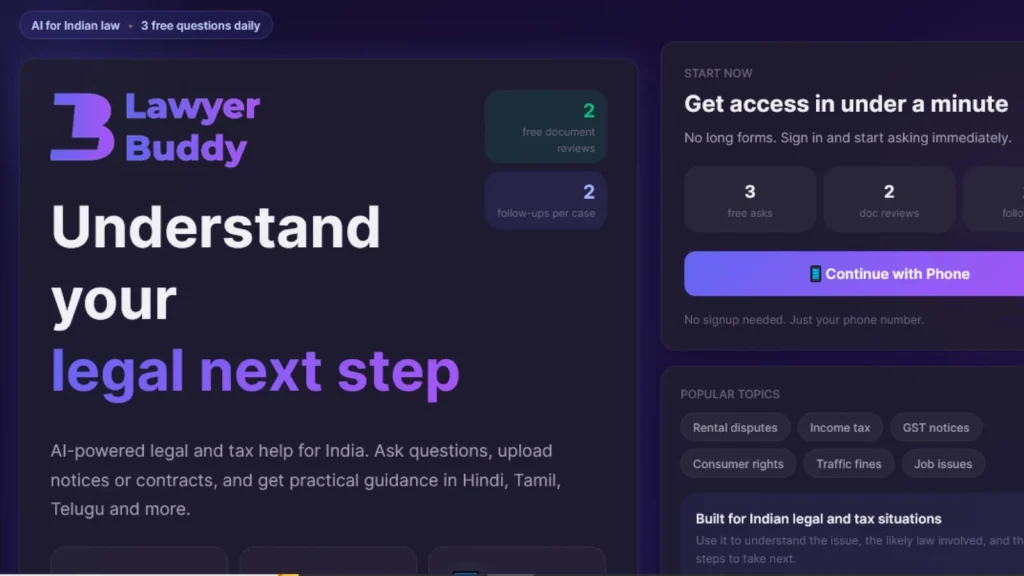
Many tools promise fast contracts, but LawyerBuddy focuses on usability without cutting corners. It’s designed for people who need protection without legal complexity.
Here’s where it stands out:
- Generates contracts from simple prompts with no legal background required
- Covers a wide range of common agreements for freelancers and businesses
- Offers clause suggestions and flags potential risks
- Includes built-in e-signature functionality
- Keeps the interface clean and easy to navigate
- Protects your data without reusing it for training
If you want an AI contract generator that balances speed with reliability, it’s worth exploring.
The Mistakes People Make (And How to Avoid Them)
Skipping the review step is the most common mistake. Always read the draft and check if it reflects your actual agreement.
Relying on a generic free tool for a high-value deal can backfire. Use better tools or seek legal input when the stakes are high.
Details often get overlooked. Double-check names, payment terms, and jurisdiction before sending anything.
Assuming one contract works everywhere is risky. Laws vary, so adjust accordingly.
Finally, then store signed contracts properly. Keep organized records to avoid confusion later.
The Bigger Shift: What AI Contracts Tell Us About the Future of Legal Work
An AI contract generator doesn’t replace lawyers. It changes how their time is used.
Routine drafting is becoming faster and more accessible. That frees legal professionals to focus on strategy and complex issues.
Regulations are also evolving. New laws, like the Colorado AI Act, focus on high-impact AI decisions in areas like hiring and lending, but they signal a broader shift toward AI accountability.
For everyday users, the takeaway is simple. These tools will improve, but responsibility stays with you. Understanding what you sign will always matter.
Read Also!
How to Choose the Right Divorce Lawyer for You (Without Costly Mistakes)
What Happens When You Ask AI Lawyer Tools for Legal Advice?
Conclusion: Your contracts should protect you, not intimidate you
Contracts aren’t meant to slow you down. They exist to protect your work, your time, and your business relationships.
Using an AI contract generator puts you back in control. You no longer have to choose between expensive legal help and risky shortcuts.
The balance is simple. Let AI handle the drafting, and apply your judgment during review.
If you’re ready to simplify your workflow, start with the contract you use most often or explore tools like LawyerBuddy to get moving.
Frequently Asked Questions
Is a contract generated by AI enforceable in court?
Yes, as long as it meets the basic elements of contract law. The method of creation does not affect enforceability.
What types of contracts can AI generate?
A contract generator can create NDAs, service agreements, employment contracts, lease agreements, and vendor contracts.
Can I use a free AI contract generator for my business?
Free tools work for simple agreements. For anything involving significant risk or money, consider a paid solution or legal review.
Do AI contract generator tools store my data?
It depends on the platform. Always check the privacy policy before uploading sensitive information.
How long does it take to generate a contract with AI?
Most tools produce a draft within one to two minutes. The full process can take under fifteen minutes.
Do I still need a lawyer if I use an AI contract generator?
For routine agreements, usually not. For complex or high-value contracts, legal expertise is still important.