


Yes, ai legal question answering in indian languages now gives rural users clear, basic legal guidance in Hindi and Tamil on any smartphone. Ask about land, family, labour, jobs, or tax and get step-by-step, law-backed actions within seconds, without jargon. Start with instant free answers today →
In 2026, you can ask about land, family, labour, jobs, or tax and receive step-by-step, law-backed actions within seconds, without jargon.
According to the National Legal Services Authority (NALSA), about 80% of legal needs in rural areas go unmet. That is huge, and it is why tools that speak your language matter. In 2026, cheap data and the rise of budget smartphones make these services usable even in small towns and villages.
Here is what “AI legal advice” means. The tool listens to your question, maps it to Indian laws, and gives you an easy-to-read answer. It may point to acts and sections, like Section 138 of the Negotiable Instruments Act, RERA rules for flat buyers, or EPFO rules for workers. However, it is legal information, not a lawyer standing with you in court.
For background on how such assistants work, you can read this simple guide on ai legal assistant. If you are curious how lawyers search laws fast with machines, this overview on ai for legal research is also helpful.

Can You Really Get Legal Advice in Hindi or Tamil Through AI?
Yes, you can. The tools are built for India and now support Hindi, Tamil, Telugu, and more. In plain words, they guide you on common issues using Indian laws and court logic. You can ask in your own style, even in Hinglish or code-mixed Tamil.
For example, a farmer can ask in Hindi: “Mere khet ka mutation kaise hoga? Pura process batao.” The tool can explain land mutation rules and point to your state’s revenue office steps. A woman in Tamil can ask about domestic violence protections and learn about immediate relief under the Protection of Women from Domestic Violence Act. A daily-wage worker can ask about EPFO withdrawals and nomination rules.
However, there are limits. AI is not your vakil. It does not represent you in court or create an attorney-client relationship. It gives legal information so you can take the next step with more confidence. For urgent police or court matters, you still need a human lawyer.
Moreover, the services are now practical in Tier-3 towns because phones are common and data plans are cheap. Many tools are “AI-powered legal and tax help for India,” answer fast, and work fine even on older phones. On some platforms, you also get “5 free legal questions answered daily,” which is helpful when money is tight.
- Typical issues AI can explain:
- Tenant rights and rent control basics
- Land mutation, encroachment, and boundary disputes
- Family law: marriage, maintenance, domestic violence, guardianship
- Labour and EPFO rights
- Consumer complaints and GST/Income Tax notices
According to NALSA, a large share of India’s people still lack timely legal help. AI can be your first step, not your last.
Also Read!
Best AI Legal Advice in Hindi & Tamil for Rural India in 2026
Step-by-Step: How to Ask a Legal Question in Hindi or Tamil Using AI
You do not need a laptop. Your phone is enough. Follow these steps at your pace.
-
Step 1: Open the tool
Open the AI legal tool in your phone browser or its app. It works even on 3G/4G if the signal is steady. -
Step 2: Pick your language
Select Hindi, Tamil, Telugu, or another Indian language from the menu. Many tools show “Support for multiple languages including Hindi, Tamil, and Telugu. -
Step 3: Describe your problem in your own words
Type as you speak. No legal jargon needed. For instance: “Varanasi mein padosi ne 2 bigha zameen par kabza kiya hai. Kya karna chahiye?” or “Chennai-la house owner advance return pannalai; enna rights irukku? -
Step 4: Add key details
Mention your state or Union Territory. Laws differ by state for land, rent, and stamp duty. Add dates, names of documents (sale deed, patta, FIR, notice), and the timeline. These small facts change the advice a lot.
Clarify and confirm your next steps
-
Step 5: Read the answer and note the law
The AI will point to sections like “Section 138 NI Act,” “RERA registration,” or “EPFO para rules.” Read slowly. If you do not get a word, ask a follow-up in the same chat. Many tools allow “2 follow-up questions per case. -
Step 6: Ask follow-ups till you are clear
Use your next two follow-up questions to confirm steps and deadlines. Save the chat. Screenshots help later. -
Step 7: For serious issues, connect to a real lawyer
If you have a court notice, police complaint, or property fraud, do not wait. Use the platform’s lawyer-connect feature. On some services, you also get “5 free document reviews daily,” useful before you sign a rent agreement or a sale deed.
What to have ready before you ask — Aadhaar details, any notices or documents received, and a simple timeline of events.
Furthermore, typing in Hinglish or mixed Tamil-English works fine on most platforms. For instance, “DV Act la enakku immediate protection epdi kidaikum?” will still get mapped to the right law.
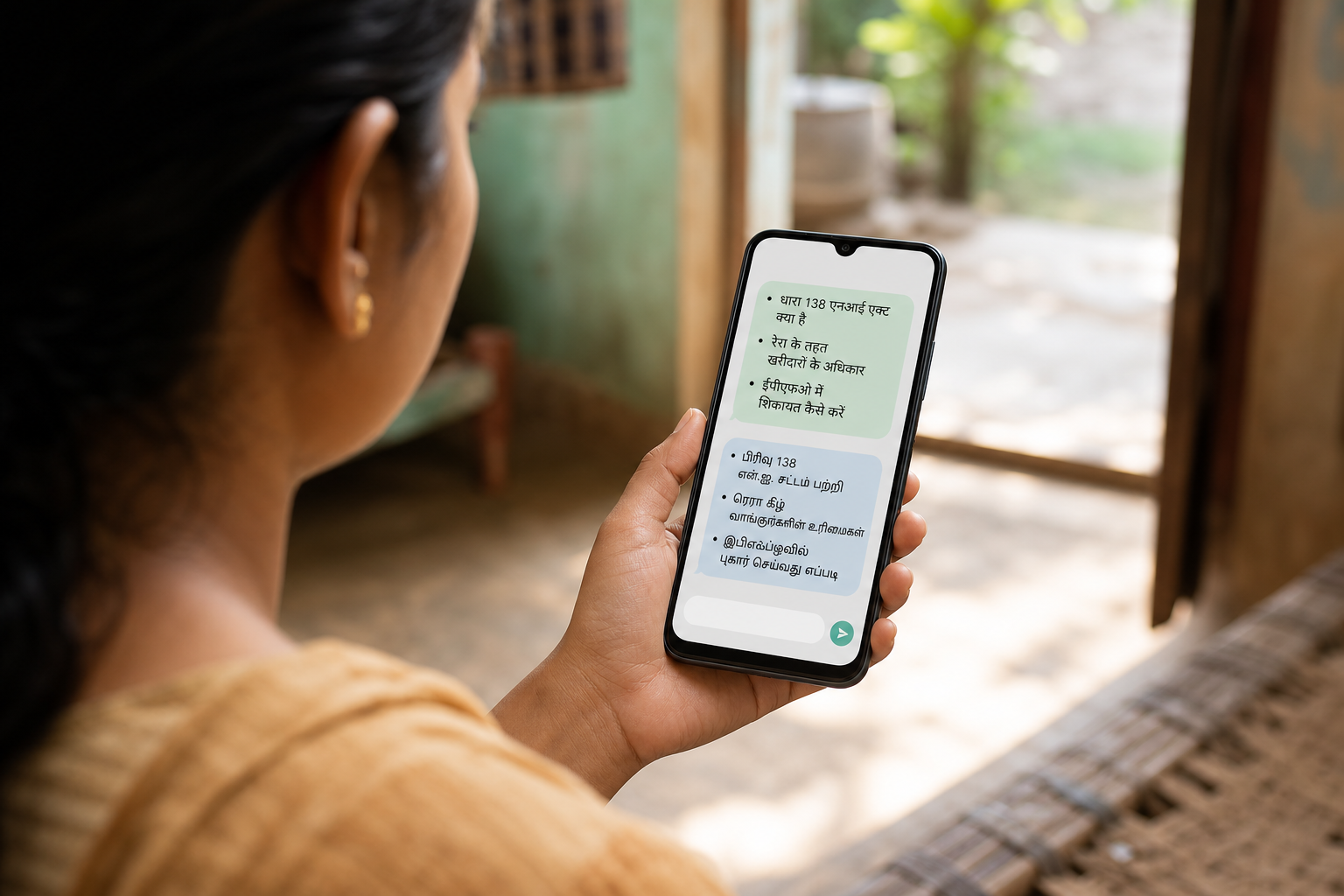
- Pro tip:
- Keep each message short and clear.
- Share state and dates up front.
- Upload clean photos of documents if the tool allows it.
5 Mistakes Rural Users Make When Seeking AI Legal Help Online
-
First, asking vague questions. Saying “I have a land problem” is too broad. Instead: “My neighbour has encroached 2 bigha of my inherited agricultural land in Varanasi, UP. I have a mutation record from 2019.” With this, the AI can guide you on encroachment, revenue officials, and evidence.
-
Second, treating AI text as final legal opinion. The tool gives legal information, not a signed legal advice. For a cheque bounce case or a property dispute near the court stage, you still need a lawyer to draft and file. Think of AI as your first teacher, not your vakil.
-
Third, ignoring state-specific laws. Land and rent rules change by state. For example, stamp duty and mutation steps in Uttar Pradesh differ from Tamil Nadu. Always mention your state in the first line. Otherwise, you may read a process that does not fit your area.
Safety and verification
-
Fourth, not saving the chat. A farmer might chat on Sunday, but by Friday forget the section numbers. Save or screenshot the AI response. When you meet a lawyer, these notes save time and reduce cost.
-
Fifth, trusting scam WhatsApp groups or unknown sites. Some groups sell fake “legal advice.” Before you share details, check if the platform verifies lawyers through Bar Council enrolment. On credible services, you will see claims like “100% Bar Council verified panel,” and you can view profiles before you proceed. Also, look for “AI-structured case mandates with jurisdiction, issue, budget, and documents pre-organised.” This saves you from back-and-forth and keeps all files neat.
- Quick check before you trust a platform:
- Does it show Bar Council enrolment for advocates?
- Can you see a clear price or “Free to register, no subscription fee”?
- Is there a secure chat and document space?
Also Read!
LawyerBuddy vs LegalKart for Advocates: Which Is the Better Lawyer Bidding Marketplace?
How to Choose a Secure Lawyer-Client Portal as a Bar Council Advocate
Tools and Resources for AI Legal Help in Indian Languages
Start with government options. The Tele-Law service under the Department of Justice connects you to lawyers through village Common Service Centres. You can learn more on the official Tele-Law portal. For free legal aid based on income and category, you can also check the National Legal Services Authority (NALSA) and your State Legal Services Authority site.
Next, AI-powered platforms can give instant answers. Tools like LawyerBuddy offer AI-powered legal and tax help for India, support Hindi, Tamil, and Telugu, and answer “5 free legal questions answered daily.” They also include “5 free document reviews daily,” which is handy for rent agreements, sale deeds, or legal notices. If you choose to hire a lawyer, the panel is “100% Bar Council verified,” and payments run through a “Secured escrow payment system ensuring payment after regulatory cooldown.” It is “Free to register, no subscription fee,” so you can try without risk.
You can also explore other categories. The Nyaya Mitra app supports legal awareness. Some district court websites host simple chatbots in local languages. NGOs like Commonwealth Human Rights Initiative (CHRI) publish legal literacy material in Indian languages. These won’t give you a case strategy, but they are good for learning your rights.
Here is how they compare in 2026:
| Option | Speed | Depth | Cost | Best For |
|---|---|---|---|---|
| Tele-Law via CSC | Slower (queue) | Human nuance | Free/subsidised | Those who want a govt-backed call |
| AI platforms | Instant | Good for basics | Free tiers, paid lawyer connect | First step, document checks |
| NGOs/Guides | Anytime reading | General | Free | Learning rights and processes |
In addition, use these reading guides to understand the tech side without jargon: an overview of legal ai tools and a friendly walkthrough of ai legal assistance.
- Mid-article CTA for advocates:
- **Join as a Lawyer →
What to Do Next: From AI Answer to Real Legal Action
-
First, use the AI to learn your rights and note the relevant law and deadlines. Write them in a small notebook. Clarity reduces fear.
-
Second, gather proof. Keep land records, mutation entries, patta, agreements, FIR copies, and any notices in one folder. Clean photos from your phone also work.
-
Third, if you want a government-backed route, visit your village Common Service Centre and ask for Tele-Law. The operator will help you connect for a phone or video consult. This is useful if you do not trust private platforms yet.
-
Fourth, if you need a private advocate, pick a platform that verifies Bar Council enrolment and uses an escrow payment system. Therefore, your money stays safe until work starts after any regulatory cooldown. A secure 1-on-1 workspace for document exchange reduces leaks and keeps your case private. AI-structured case mandates with jurisdiction, issue, budget, and documents pre-organised also cut confusion.
-
Fifth, act fast in emergencies. For arrest risk, eviction threats, or domestic violence, call 112 and go to the District Legal Services Authority. Do not wait for chat-based answers when your safety is on the line.
-
Finally, build digital confidence in your family. Show your parents how to ask a simple question in Hindi or Tamil. As a result, the next time there is a doubt on rent, they can check the basics first. Teach one, reach one, this is how a whole village learns.
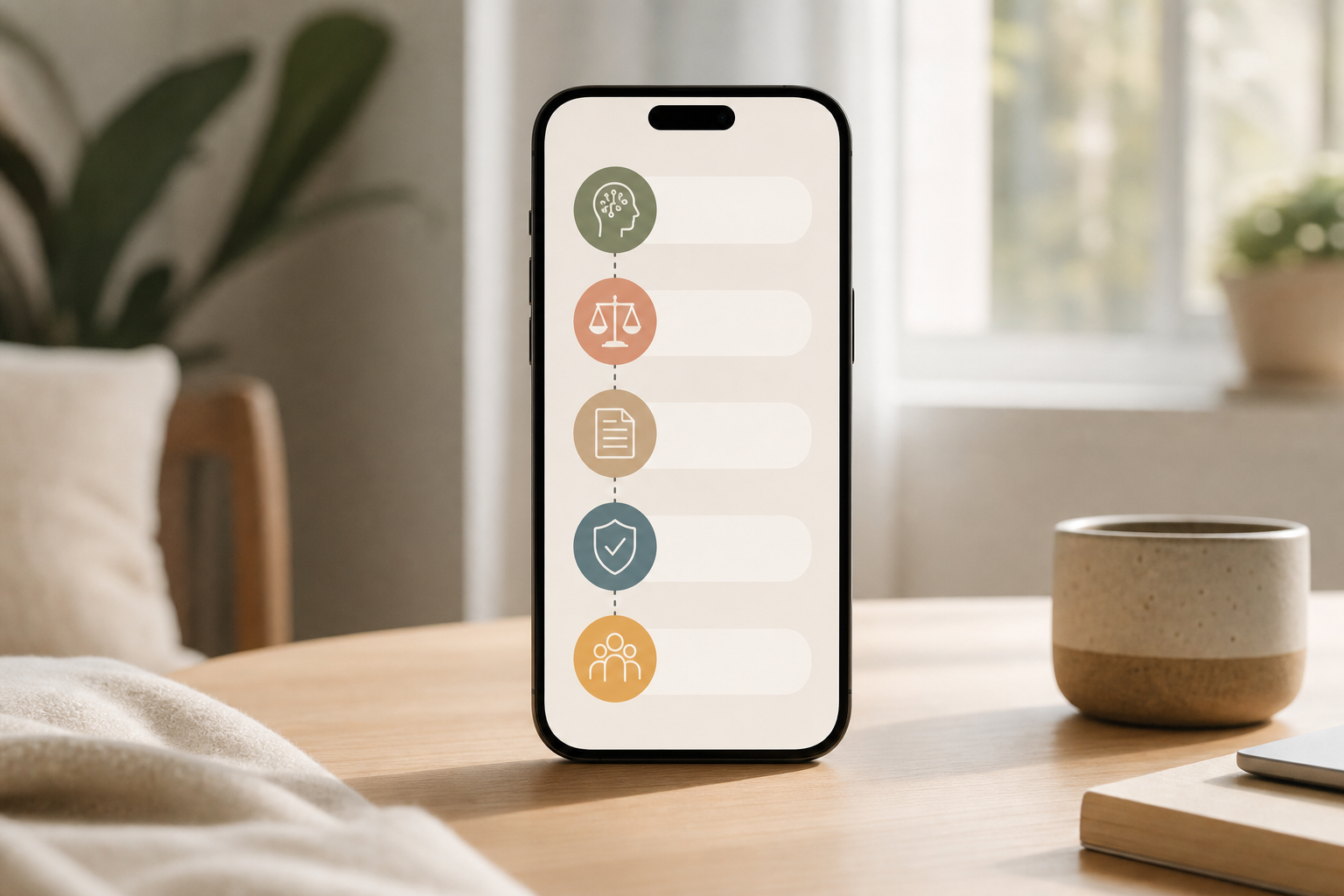 , collect documents, visit CSC Tele-Law, choose verified lawyer with escrow, act fast for emergencies; rural iconography; clean, high-contrast text)
Key Takeaways
- Yes, ai legal question answering in indian languages now works well for basics like land, family, labour, and consumer law.
- AI gives legal information, not representation; for court or police matters, speak to a lawyer after your initial AI check.
- Adding your state, dates, and document names leads to better, more precise answers in Hindi or Tamil.
- Government Tele-Law and NALSA are good free options; AI tools give instant answers and can connect you to verified lawyers with escrow.
- Save the AI chat and documents; they speed up your first meeting with any advocate.
What to Do This Week
Start small. Ask one clear legal question in Hindi or Tamil and save the answer. Then, sort your documents and visit your CSC if you want a Tele-Law call. If you prefer private help, shortlist one platform with Bar Council-verified lawyers and escrow. Finally, show one elder at home how to ask a question, your five minutes could save them hours later.
Start your legal plan today →