
You just got a job offer. Or maybe a client sent over a freelance agreement, or your business partner pushed a partnership document across the table. You skim it, the numbers look right, and you sign. That’s how most people handle contracts. A contract lawyer exists precisely because that approach is risky. The clauses that matter most are rarely the ones you notice on a quick read.
Legal language hides things on purpose, not maliciously, but because precision requires specificity, most of us aren’t trained to catch. A single sentence about automatic renewal or liability can change everything months later. This guide walks through what they actually do, when hiring one makes sense, and how to avoid the mistakes that turn a routine signature into a costly problem.
Read Aloud!
What Does a Contract Lawyer Do?
A contract lawyer drafts, reviews, negotiates, interprets, and enforces legally binding agreements. Their job is to spot legal risks, clarify what each party actually owes the other, protect their client’s position, and stop disputes before they start. Some people call this person a contract attorney, and the title is interchangeable depending on which state or country you’re in.
That’s the simple version. The real value shows up in the details most people skip.
Behind Every Signature: The Real Role of a Contract Lawyer
A contract lawyer’s work doesn’t begin and end at “reading the document.” It spans the entire life of an agreement, from the first draft to what happens if someone breaks their word.
Drafting Contracts That Prevent Future Problems
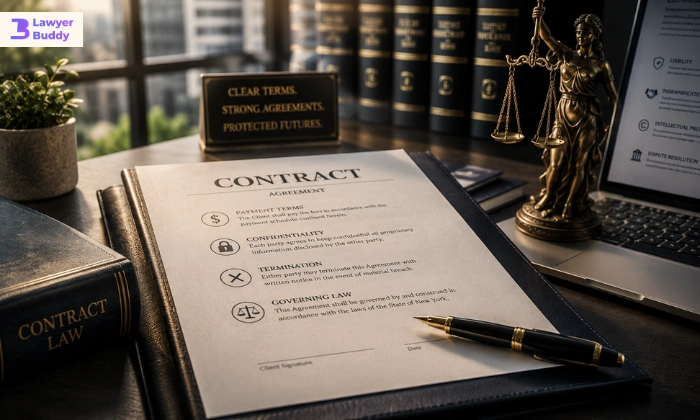
Writing a contract isn’t just filling in names and dates. A lawyer builds custom contracts around your specific situation, choosing language that holds up if challenged later. Generic templates use broad wording that sounds fine until a dispute forces someone to interpret it literally. A well-drafted contract anticipates disagreements and answers them in advance, which is what makes it enforceable when it actually matters.
Reviewing Existing Contracts

This is where most people first interact with a contract lawyer. Maybe you’re a freelancer reviewing a client’s terms, or someone who needs a lawyer to review employment contract details before accepting a new role. The lawyer looks for risky clauses, obligations buried in dense paragraphs, and protections that should exist but don’t.
Think about a clause limiting how much you can sue for if something goes wrong. On paper, it reads as routine. In practice, it can cap your recovery at a fraction of actual damages.
Negotiating Better Terms
Once risks are identified, a contract lawyer negotiates changes. This often touches payment schedules, termination rights, liability limits, and confidentiality obligations. Good negotiation isn’t about being aggressive. It’s about knowing which terms are standard, which are unusual, and which ones quietly favor the other side.
Resolving Contract Disputes
When an agreement breaks down, a contract lawyer steps into dispute resolution. That might mean proving a breach occurred, attempting mediation, pursuing arbitration, or, if nothing else works, taking the matter to litigation. Most disputes never reach a courtroom, but having someone who understands the escalation path changes how seriously the other side treats your claim.
Not Every Contract Needs a Lawyer, but These Do
A casual rental agreement between friends probably doesn’t need a professional review. A six-figure business deal almost certainly does. Here’s where legal input genuinely pays off:
- Starting a business or choosing a legal structure
- Accepting an employment offer with equity, bonuses, or non-compete clauses
- Buying or selling a business
- Entering a partnership agreement
- Signing SaaS or software licensing contracts
- Negotiating commercial leases
- Making high-value purchases with long-term commitments
- Drafting freelance or vendor agreements involving recurring payments
If you’re weighing a job offer with unusual terms, an employment contract lawyer can flag issues most candidates wouldn’t think to question, like restrictive non-competes or vague termination language. An employment contract review lawyer specifically focuses on this niche, which matters because employment law varies significantly by jurisdiction.
The Hidden Clauses That Cause the Biggest Legal Problems
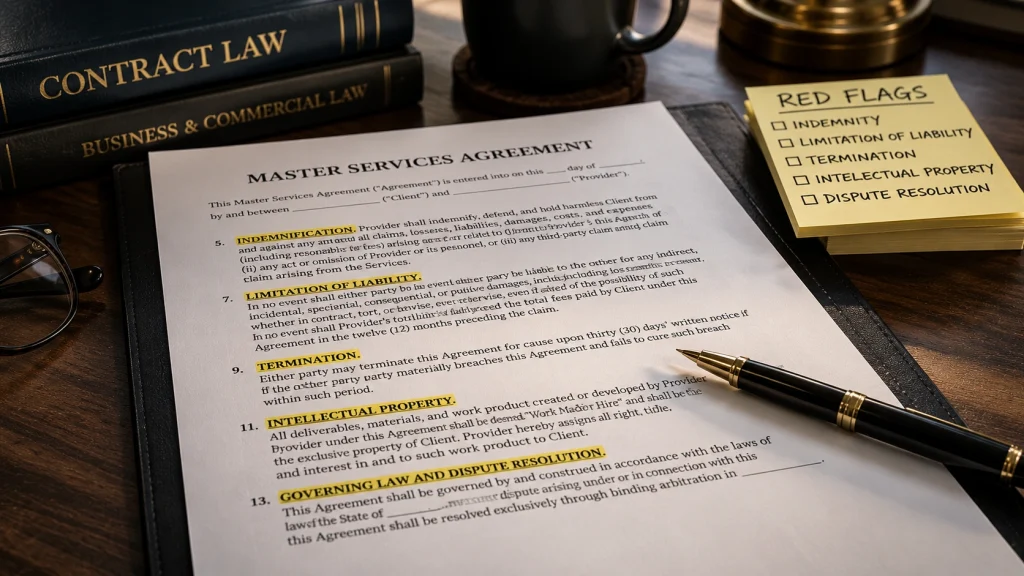
Most contract disputes don’t come from obvious issues. They come from clauses nobody bothered to read carefully.
Red flag clauses to watch for:
- Automatic renewal: locks you into another term unless you cancel within a narrow window
- Indemnity: makes you financially responsible for certain losses, even ones you didn’t directly cause
- Limitation of liability: caps how much you can recover if the other party fails to deliver
- Exclusivity: restricts you from working with competitors or similar clients
- Intellectual property: determines who owns work created during the agreement
- Termination terms: sets the conditions and notice period for ending the deal
- Governing law and dispute resolution: decides which state’s laws apply and whether disputes go to court or arbitration
Each of these can be perfectly reasonable or quietly damaging, depending on the wording. That’s exactly the judgment call a lawyer for contract review is trained to make.
Read More!
What Does an Intellectual Property Lawyer Do? (And Do You Actually Need One?)
AI Tools for Lawyers: Everything You Need to Know (Top Tools)
Should You Hire a Contract Lawyer? A Simple Decision Framework
Ask yourself these questions before signing anything significant:
- Is meaningful money involved?
- Does the agreement create a long-term commitment?
- Are multiple parties or stakeholders involved?
- Does it touch intellectual property or proprietary work?
- Is confidential or sensitive data being shared?
- Could it affect your employment rights?
- Does it involve international parties or cross-border obligations?
If you answered yes to two or more, getting a contract lawyer involved is worth the cost. The earlier the review happens, the cheaper it tends to be compared to fixing problems after signing.
Common Mistakes People Make Before Signing a Contract
- Trusting a downloaded template without adjusting it to the actual deal
- Skipping the definitions section, where key terms quietly get redefined
- Avoiding negotiation because asking for changes feels awkward
- Not reading attached schedules or appendices, where real obligations often live
- Assuming a verbal promise carries the same weight as written terms
- Signing under time pressure without asking for an extra day to review
Each of these mistakes is avoidable, and each one shows up repeatedly in real disputes.
How Lawerbuddy Helps Simplify Contract Review
Tools like Lawerbuddy are changing how people approach the first pass of contract review. Instead of starting from zero, you get a head start.
- AI-assisted contract analysis that flags unusual or risky language
- Highlights for clauses that deserve a second look
- Simplified explanations of dense legal phrasing
- Organized document handling so nothing gets lost in email threads
- Faster preliminary review before you ever talk to an attorney
- A clearer list of questions to bring into a consultation
It’s worth being clear that this kind of tool supports the process. It doesn’t replace the judgment of a licensed contract lawyer, especially for high-stakes agreements.
The Future of Contract Law: Why Lawyers Are Using AI but Not Replacing Judgment
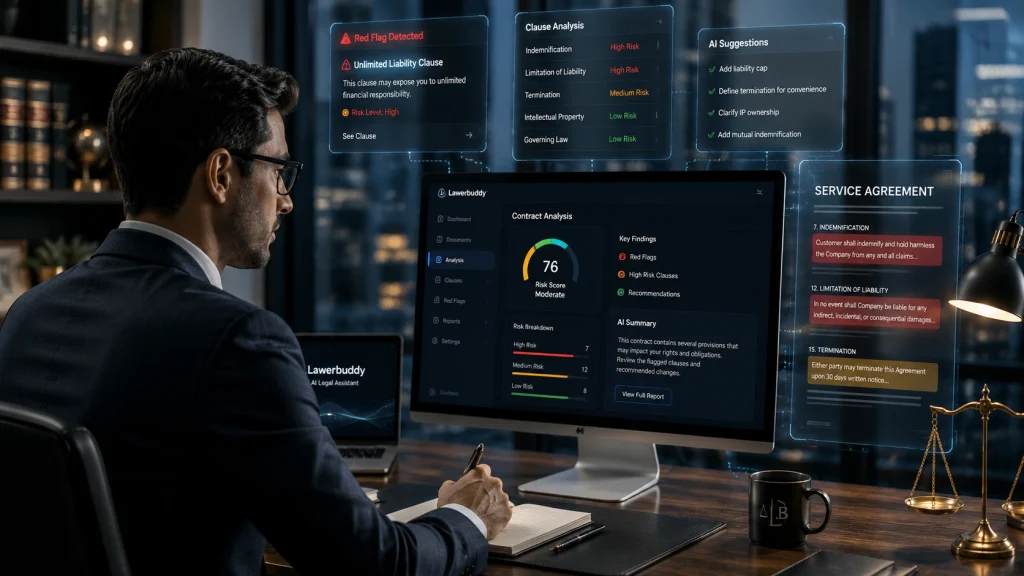
AI has made document review noticeably faster. Software can scan hundreds of pages and surface anomalies in minutes, work that used to take hours. But speed isn’t the same as judgment. A lawyer still has to weigh context, understand what a client actually needs, and make strategic calls during negotiation that no algorithm can fully replicate.
The pattern emerging across the legal industry isn’t replacement, it’s collaboration. Lawyers increasingly use AI for the heavy lifting of initial review, then apply human expertise where it counts most: interpreting ambiguity, negotiating terms, and representing a client’s interests with real accountability.
Conclusion
Contracts aren’t just formalities. They’re preventive tools that decide how a relationship plays out if things go wrong. A careful legal review costs far less than untangling a dispute after the fact. Before you sign your next significant agreement, take the time to understand what you’re actually agreeing to, and consider bringing in a contract lawyer to make sure the fine print works in your favor, not against it.
Frequently Asked Questions
What do they actually do?
They draft, review, negotiate, interpret, and enforce legally binding agreements, working to protect their client’s interests and reduce future legal risk.
When should I hire a contract lawyer?
Whenever significant money, long-term obligations, intellectual property, or employment rights are involved. The decision framework above helps clarify borderline cases.
Can a contract lawyer review an employment contract?
Yes. A lawyer specializing in employment contracts specializes in spotting issues such as restrictive covenants, unclear bonus structures, and unfavorable termination terms.
How much does contract review typically cost?
Costs vary widely by complexity and location, but a flat-fee review for standard agreements is often more affordable than people expect.
Can I write my own legally binding contract?
Yes, but enforceability depends on clear language, proper structure, and compliance with relevant laws, which is exactly where mistakes tend to happen.