
If you’re trying to find lawyer through bidding in rural India in 2026, this guide is for you. In plain language, it explains how to compare verified advocates, use escrow safely, and manage everything from your phone without leaving your village.
If you live outside a district town in 2026 and want to find lawyer through bidding, this guide shows you, step by step, how to compare verified advocates and pay safely without leaving your village. In minutes you can post a case, receive clear bids in your language, and use escrow to release funds only after work is delivered.
What Is a Lawyer Bidding Marketplace and Why Does It Matter for Rural India?
For a long time, the rule in rural India has been “go to town and ask around.” You take a bus to the district court area, meet whoever is free, and hope you can afford the fee. There is little price clarity. If you speak Santali or Maithili, and the lawyer is more comfortable in English or Hindi, you may struggle to explain the full story.
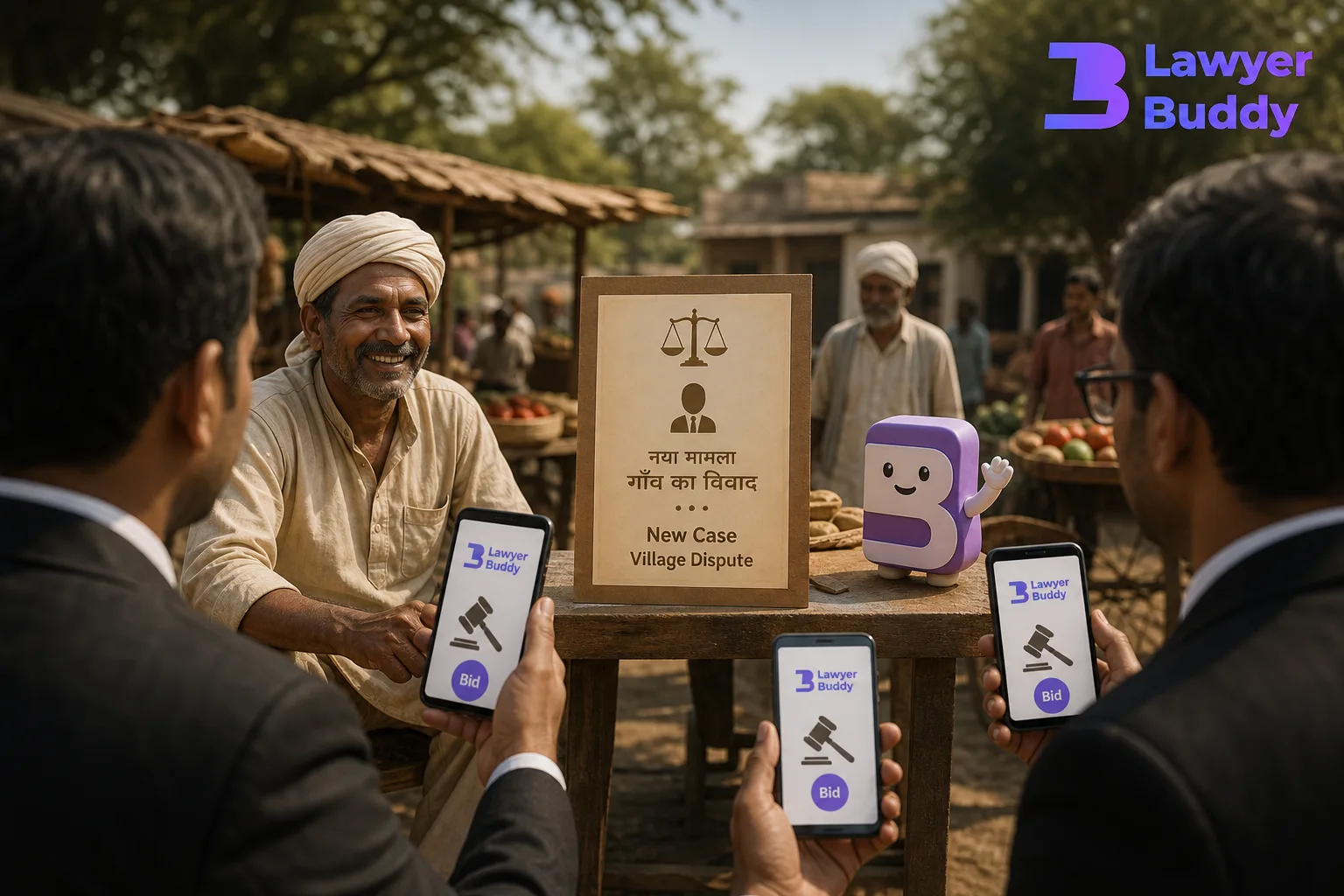
By contrast, a bidding marketplace flips the power. You describe your issue once. Then verified lawyers send bids: each bid shows their fee, steps they plan to take, and their experience. You pick the person who fits your budget and speaks your language. Many platforms support Hindi, Tamil, and Telugu, and they run well on entry-level Android phones.
According to the National Legal Services Authority, a huge share of rural citizens have never consulted a lawyer. You can learn about legal aid at NALSA.
Key terms you will see
- Bid: an offer from a verified advocate describing fees, steps, timeline, and relevant experience.
- Escrow: a protected wallet that holds your money until the lawyer finishes a milestone or a cooldown period ends.
- Milestone: a specific piece of work such as “draft notice,” “file complaint,” or “prepare for first hearing.
- Cooldown window: a fixed time after delivery when you can review work and raise a dispute if needed.
- Workspace: a secure 1‑on‑1 chat and file area that keeps your messages and documents organized with an audit trail.
So, the idea that you can sit at home, post your case, and compare 3–5 advocates is a real shift. Importantly, escrow holds your money. The platform keeps the funds safe until the lawyer hits the agreed step or a cooldown period ends.
In addition, some marketplaces add AI-powered legal and tax help for India. That AI does not replace a lawyer. Instead, it structures your problem, suggests the right jurisdiction, and groups your documents. Most are also free to register, with no subscription fee. You only pay when you choose a lawyer.
- Traditional path: one lawyer, unclear price, travel to court town
- Bidding model: many lawyers, clear fee upfront, choose from home
- Protection: escrow holds funds; you release after work is done
- Access: works on basic smartphones; supports key regional languages
Therefore, if you want to find lawyer through bidding, think of it as a village haat, but for legal help, many sellers, one buyer, and clear prices.
Plainly put: you post once, lawyers compete fairly, and escrow keeps both sides honest.
Also Read!
Step-by-Step: How to Post a Case and Choose the Right Lawyer Online
Posting your case is not hard. You do NOT need to visit a court town just to find a lawyer. Follow these steps, even with a low network.
Prepare your case brief
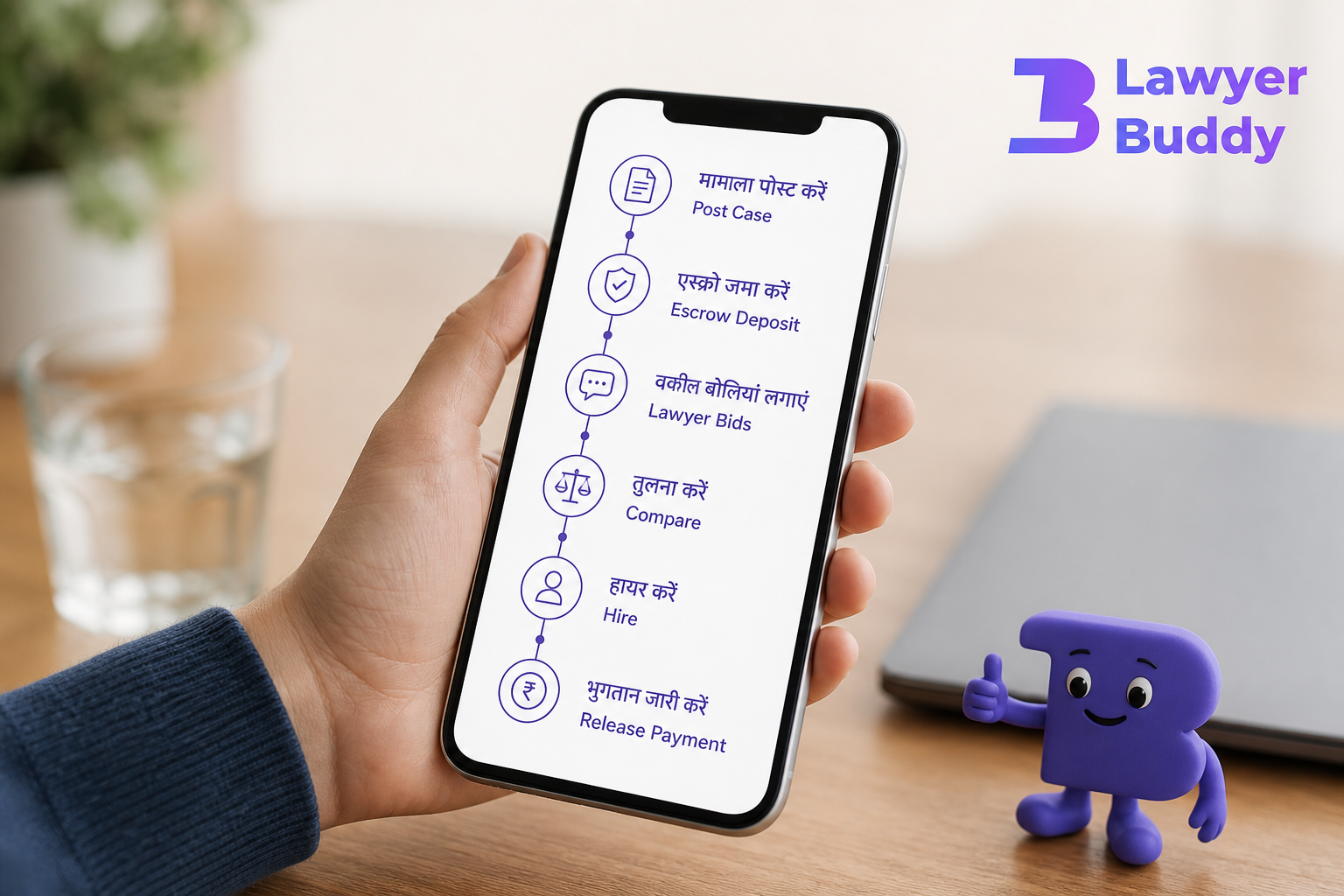
Step 1: Describe your problem in your own words
Write in your language. Keep it simple: what happened, when, and who is involved. On most platforms, AI will structure it for you. It will suggest the correct jurisdiction (which court or office), set the issue type (for example, land, family, or consumer), and help you set a fair budget. It can also group your documents so each lawyer sees the same clear brief.
Quick checklist for your first post:
Write two or three short paragraphs: timeline, people involved, and what you want as an outcome. – Upload copies of key records (FIRs, land papers, notices, receipts, photos). Scans or clear photos are fine. – Add local details: village, police station, tehsil/district, and language preference for calls or chats.
Set an initial budget range so advocates can bid realistically. – If relevant, note any deadlines such as a reply date on a notice or a limitation period you’re worried about. – Mention if you prefer phone calls or chat, and specify the best hours for contact to avoid missed calls.
Fund and attract bids
Step 2: Pay into escrow
Add funds to escrow so lawyers see you are serious. Your money stays protected. With a secured escrow payment system ensuring payment after a regulatory cooldown, the lawyer is paid only when a milestone is done, or after the time window passes without a dispute. If a bid asks you to pay “direct UPI,” decline and stay within the platform.
Step 3: Wait for bids
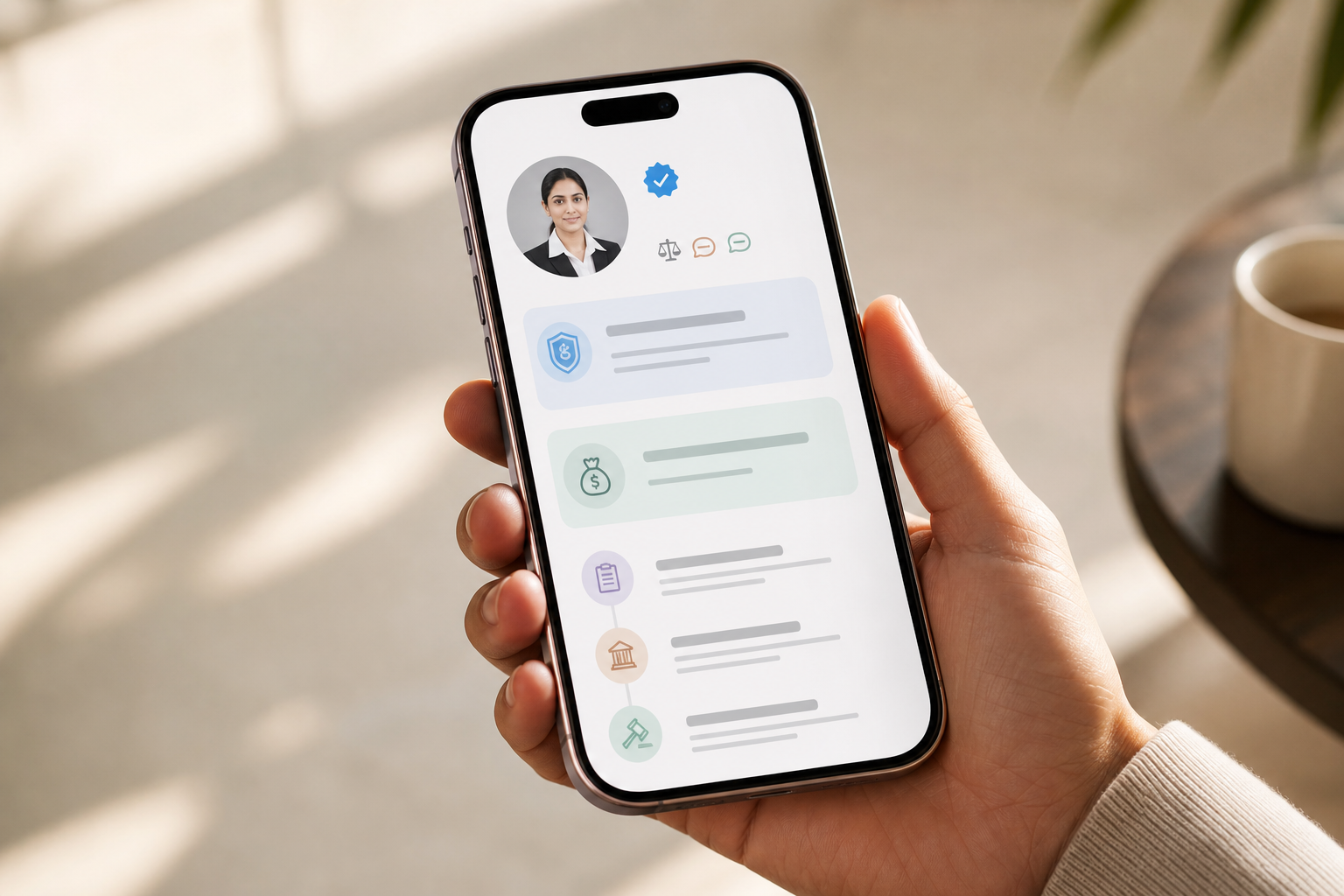
You will start to receive bids. A bid usually shows the advocate’s Bar Council verification, years of practice, languages they speak, their proposed fee, and a short plan. Many panels are 100% Bar Council verified; check that badge.
Evaluate and hire
Step 4: Compare bids fairly
Look at four things: verification, case-type experience, language match, and price. For example, a land dispute should go to someone who has handled land and RERA issues. If you speak Telugu, pick someone who can talk to you in Telugu. As a bonus, several services include 5 free legal questions answered daily, so you can test clarity before you hire.
A simple comparison lens when you find a lawyer through bidding:
- Verification: 100% Bar Council verified and active enrollment.
- Relevant wins: examples of similar matters (land mutation, consumer defects, maintenance).
- Communication: can explain next steps in your language in 2–3 sentences.
- Value: fee tied to clear milestones, not vague hourly blocks.
Step 5: Accept the bid and start work
Once you pick a lawyer, use the secure 1-on-1 workspace for all messages and files. Do not shift to WhatsApp for key documents. A built-in workspace keeps an audit trail and protects your data. Also, some tools prepare AI-structured case mandates with jurisdiction, issue, budget, and documents pre-organised, which saves back-and-forth.
Pay and close safely
Step 6: Release payment after the milestone or cooldown
After the agreed-upon step, draft notice, filing, or hearing prep, review the work. If all is fine, release payment. If not, raise a dispute within the platform window. Because funds sat in escrow, you are not left chasing refunds.
Moreover, if your phone network drops, try these tips:
- Use Wi‑Fi at your nearest Common Service Centre (CSC).
- Download key documents when online, read them offline later.
- Keep your phone number active; advocates may call for quick clarifications.
- Save PDFs with short names like “FIR_2025-09-18. pdf”.
- Ask the platform’s support to place a reminder call or SMS if you’re missing notifications.
- Keep a small notebook of your mandate ID, advocate name, and milestones in case you change phones.
For steady results, describe your facts clearly, choose a verified advocate, and find lawyer through bidding using escrow, not direct payments.
Common Mistakes Rural Clients Make When Using Online Legal Platforms
These mistakes are normal. You are not alone if you made one. Learn them once, and you will save time and money next time.
Mistake 1: Choosing the cheapest bid only
It is tempting to pick the lowest fee. However, the lowest fee is not always the best value. Check the Bar Council verification badge and experience in your case type. A verified advocate who has handled five land mutation disputes may solve your issue faster than a cheaper generalist.
Mistake 2: Paying outside escrow
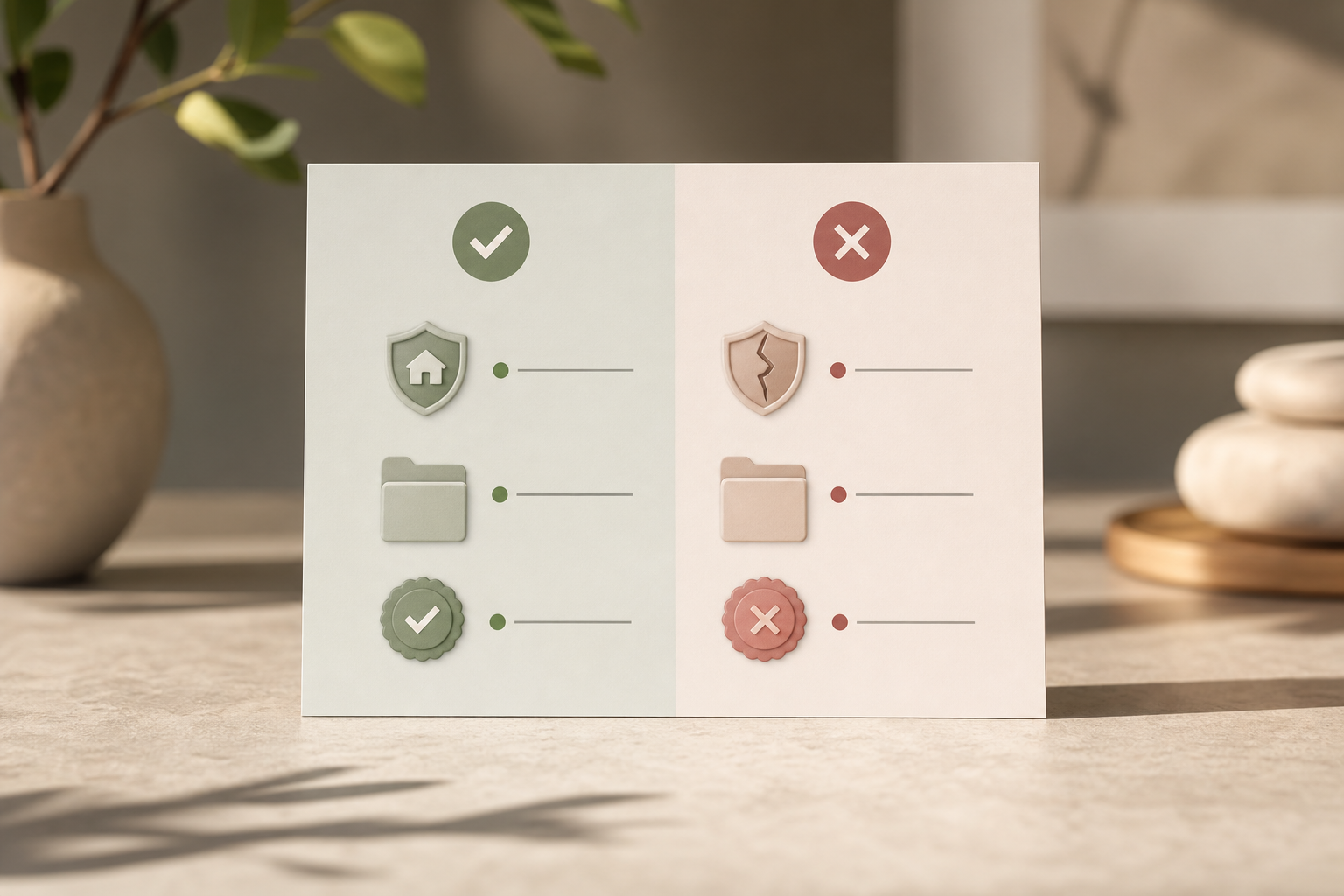
Some clients move to WhatsApp and pay by UPI to “save fees.” As a result, they lose all buyer protection. If the work stalls, there is no platform record, and no support team to help. Always fund the secured escrow inside the platform and keep chats in the official workspace.
Pro tip: If anyone pushes you to hurry and “pay right now on UPI,” pause. Tell them you only release funds through escrow after a clear milestone.
Mistake 3: Sharing documents on WhatsApp
WhatsApp is handy, but it is not your case file. If your phone is lost, your data goes with it. Furthermore, you lose the audit trail of who sent what and when. Use the secure 1-on-1 workspace for document exchange and communication, so you can track every step.
Mistake 4: Posting a thin case brief
AI helps with structure, but it can only work with what you upload. Garbage in, garbage out. Upload land records, FIRs, notices, rent receipts, or photos; regional language is fine. AI-structured case mandates will group them neatly so lawyers can bid with a clear plan and fair price.
Mistake 5: Thinking “online lawyer” means less skilled
Many district and High Court advocates use online platforms to get work beyond their home court. On the other hand, clients gain choice. You may meet an advocate who speaks your language and has done 30 consumer cases, all without leaving your village. This is exactly why you should find lawyer through bidding, more choice, clearer prices, and documented service.
Quick checks before you accept a bid:
- Is the advocate 100% Bar Council verified?
- Did you fund escrow inside the platform?
- Are all key files in the workspace, not on WhatsApp?
Also Read!
How To Understand A Return And Exchange Policy Before You Buy
Tools and Platforms That Serve Rural India for Legal Bidding
Government pathways
First, use government options. Tele-Law under the Digital India effort gives free or low-cost legal consultations through CSCs.
You can read about the program at the Department of Justice site: doj.gov.in. If you qualify for free legal aid (for example, based on income or specific categories), contact NALSA, their site explains who is eligible and how to apply.
For case status tracking, the e-Courts portal is here: ecourts.gov.in.
Many CSCs can help you scan and upload documents, which makes it easier to prepare a solid brief before you start to find lawyer through bidding online.
Private directories
Second, understand private choices. Legal directories like Advocatekhoj and LawRato list lawyers by location, reviews, and practice area. They help you find phone numbers, but they do not offer bidding or escrow. You still have to call, ask for fees, and compare on your own.
Bidding marketplaces
Third, look at bidding marketplaces. Tools like LawyerBuddy connect Bar Council enrolled advocates with citizens who have paid into escrow. On such platforms, advocates see AI-structured cases across India in a 24/7 live mandate feed, place bids, and manage work in a secure workspace. For you as a client, that means clear offers, a secured escrow payment system ensuring payment after a regulatory cooldown, support for multiple languages including Hindi, Tamil, and Telugu, and a free-to-register account with no subscription fee. Some also include 5 free legal questions answered daily and 5 free document reviews daily, which is a low-risk way to test the water in 2026.
Here is a simple comparison to help you decide:
| Tool Type | Bidding Available | Escrow Protection | Regional Language Support | Free Tier |
|---|---|---|---|---|
| Tele-Law (Govt via CSCs) | No | No | Yes (through CSC help) | Yes |
| NALSA Free Legal Aid | No | No | Yes (as arranged) | Yes (eligibility-based) |
| e-Courts (Case Status) | Not a hiring tool | Not applicable | English/Hindi UI | Yes |
| LawyerBuddy (Marketplace) | Yes | Yes | Yes (Hindi, Tamil, Telugu) | Yes (free to register) |
| Directories (e. g., Advocatekhoj, LawRato) | No | No | Varies by lawyer | Yes (browse) |

Therefore, if you want price transparency and a safe way to choose among several verified advocates, a bidding marketplace is practical. Start free, read a few bids, and only then decide.
To get even more value:
- Shortlist 3 bids and ask each advocate one clarifying question about next steps.
- Check whether drafting and one revision are included in the quoted milestone.
- Confirm how hearings will be handled if your matter requires in-person representation.
- Use a marketplace to find a lawyer through bidding so you can compare price, plan, and language before you pay.
- Keep your money safe with escrow and release only after milestones or the cooldown window.
- Check for a 100% Bar Council-verified panel, not just low fees.
- Post a full brief. Upload FIRs, land records, or notices so bids are accurate.
- Prefer platforms that support Hindi, Tamil, and Telugu, and that are free to register.
- Work in the secure 1‑on‑1 workspace, not WhatsApp, to protect files and keep an audit trail.
- Test the water with 5 free legal questions answered daily if the platform offers it.
Also Read!
Frequently Asked Questions
How does “find lawyer through bidding” work in 2026 for rural users?
You post a short case brief from your phone, set an initial budget, and verified advocates submit bids with fees and a plan. You compare offers by experience, language match, and milestones, then hire and pay through escrow so funds release only after work is delivered.
Is it legal for Indian advocates to bid for work online?
Yes. Advocates enrolled with a State Bar Council may offer services online subject to professional conduct rules. A marketplace simply enables transparent offers and does not replace the advocate–client relationship or court procedures.
How does escrow protect my money if the lawyer delays or disappears?
Your payment sits in a protected wallet and is not sent to the lawyer until a milestone is completed or the cooldown period ends without a dispute. If work stalls, you raise a dispute within the platform window, and support reviews the audit trail to decide on refund or reassignment.
What if I have low data or a basic Android phone?
Most marketplaces are optimized for low bandwidth and work on entry-level Android devices. Use your nearest CSC for Wi‑Fi to upload documents, keep chats inside the workspace, and download PDFs for offline reading when your signal is weak.
Can I post my case in a regional language or dialect?
Yes. You can write in Hindi, Tamil, Telugu, or your local dialect; many advocates specify the languages they speak. Platforms with AI assistance will structure your brief regardless of language so every bidder sees the same facts and documents.
Which documents should I upload for a land or property dispute?
Share what you have now rather than waiting to collect everything later. Common items include sale deeds, land records, mutation entries, notices, photos of boundaries, and prior correspondence, even if they are in a regional script.
How many bids should I compare before hiring?
Aim for at least three bids so you see a spread of fees and plans. Shortlist the top two or three, ask each a clarifying question about next steps, and choose the one with the clearest milestones and language match rather than the lowest fee alone.
What if a lawyer asks me to pay by direct UPI outside the platform?
Decline and keep all payments in escrow to retain buyer protection. Paying outside the platform removes your audit trail and makes refund or support much harder if a dispute arises.
Can an advocate from another district or state represent me?
Often yes, especially for advisory, drafting, and matters that do not require frequent in-person appearances. If your case needs local filing or repeated hearings, confirm how they will collaborate with a local counsel and what each hearing will cost.
How are disputes resolved if I’m unhappy with the delivered work?
Use the in-platform dispute button within the cooldown window and explain what is missing relative to the accepted bid. Support reviews messages, files, and milestones in the workspace and may issue a partial or full refund, or ask the advocate to correct the work.
Can I get initial help for free before I hire anyone?
Yes. Government Tele-Law offers free or low-cost consultations via CSCs, and many marketplaces include a limited daily allowance of free legal questions or document checks. Use these to clarify your issue, then invite bids so you can compare verified advocates with transparent pricing.
How do I keep my privacy and documents safe?
Keep all communication in the secure 1‑on‑1 workspace rather than WhatsApp and avoid sharing personal IDs in public posts. Good platforms provide encrypted storage and an audit trail so you can track who accessed which file and when.
What fees should I expect beyond the advocate’s bid?
The bid usually covers professional fees for agreed milestones like drafting or filing. Court fees, stamp duty, and travel for hearings are typically extra, so ask for a line item note on such costs before you hire.
Can I update my budget after posting if bids are higher than expected?
Yes. You can edit your post or repost with a revised budget after seeing the initial bids and their milestone breakdowns. Use feedback from advocates to set a realistic range for faster, higher-quality responses.
Will using a marketplace affect my eligibility for NALSA legal aid?
No. Posting a case online does not block you from seeking government legal aid. If you qualify for NALSA, you can pursue that pathway and still use marketplaces for general guidance or comparisons before committing.
What happens if no lawyer bids on my case?
Give it 24–48 hours and consider raising your budget slightly or adding more detail to your brief. You can also expand the location radius or allow remote drafting help first, then add a local counsel for filings later.
Can I use a marketplace to find help for criminal matters like anticipatory bail?
Yes, you can receive advisory and drafting support for criminal matters. For urgent filings or appearances, confirm the advocate’s availability and how they will coordinate with local counsel for quick action.
How long does it usually take to get the first bid?
In busy districts, you may see the first bid within 30–90 minutes during working hours. In smaller towns or late nights, expect the first bid within a few hours, with most responses arriving inside one business day.
Are e-signed documents and scanned affidavits acceptable?
For many steps like notices, drafts, and internal reviews, e-sign is acceptable. For court filings that require originals or notarization, your advocate will guide you on when to print, sign, or visit a CSC or notary.
What KYC do I need to use escrow safely?
Typically, you will provide your name, mobile number, and an ID such as Aadhaar or voter ID for KYC. Completing KYC early helps speed up refunds and prevents payment delays.
How do refunds work if a dispute is decided in my favor?
If support rules for a partial or full refund, the escrow amount returns to your wallet or linked bank account. Transfers may take 2–7 business days depending on your bank and the payment method used.
Can I hire more than one lawyer at the same time?
You can engage different lawyers for different milestones, such as drafting first and then hearing appearances. Keep each mandate separate in the workspace so the audit trail and payments remain clear.
Do marketplaces charge a commission or convenience fee, and who pays GST?
Most platforms charge a small platform or convenience fee, and professional fees may attract GST as applicable. Ask the advocate to include GST and any platform fee clearly in the bid so you know the total cost.
Will I get invoices and receipts for what I pay?
Yes. Payments made through escrow generate receipts, and your advocate can issue tax invoices for professional fees. Save these in the workspace so you have a clean paper trail for future reference.
How can I make sure my language needs are respected on calls?
Choose an advocate who lists your language and confirm in chat before hiring. If a call becomes hard to follow, request a quick written summary in the workspace so nothing is missed.
This week, pick one legal task you have been delaying, maybe a land boundary doubt or a consumer issue. First, book a free Tele-Law consult at your nearest CSC to learn your rights. Next, post the same issue on a bidding marketplace to compare at least three advocates and fees. As of 2026, geography should no longer decide the quality of legal help you receive. Start small, stay on-platform, and let verified lawyers compete for your case.
Moreover, if you are an advocate reading this, you can grow your practice by bidding on structured, escrow-funded mandates and getting paid without chasing fees. **Join as a lawyer →