

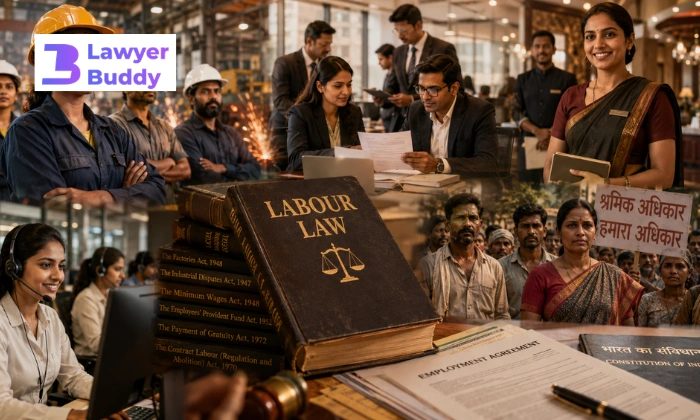
Most people don’t think about labour and employment law until something goes wrong. A paycheck arrives short. A manager crosses a line.
A coworker gets fired without explanation. That’s when the questions start, and that’s exactly when knowing your rights (or your obligations) can change everything. Whether you clock in at a factory, freelance from a home office, or manage a team of twenty, these laws shape nearly every moment of your working life.
What Exactly is Labour and Employment Law?

Labour and employment law is the body of rules governing the relationship between workers and the people or organisations that hire them. It sets the floor for what employers must provide and what workers can legally expect.
That includes minimum wage standards, protections against workplace discrimination, the right to a safe environment, rules on termination, and guidelines for resolving disputes. Some laws apply to every worker regardless of industry. Others are sector-specific or vary by state. But the core purpose is consistent: balance the power between workers and employers so that neither side operates without accountability.
Important Labour and Employment Laws in India Every Worker and Employer Should Know

In India, labour and employment laws protect workers’ rights while defining the responsibilities of employers. These laws promote fairness, equality, and safety in the workplace, and both workers and employers benefit from understanding them. Here are twelve of the most important labour laws in India, including recent legislative updates.
1. The Industrial Disputes Act, 1947
The Industrial Disputes Act, 1947, regulates industrial disputes and lays down procedures for resolving conflicts between employers and employees. It covers:
- Termination and layoffs: The Act defines the process for termination, retrenchment, and layoff, ensuring workers are protected in the event of job loss.
- Union recognition: It outlines the rights of trade unions to organise and represent workers’ interests.
- Dispute settlement: It provides mechanisms for resolving disputes through conciliation, arbitration, or industrial tribunals.
2. The Code on Wages, 2019 (formerly the Minimum Wages Act, 1948)
Minimum wage protections in India were originally governed by the Minimum Wages Act, 1948. That Act has since been repealed and consolidated, along with three other wage-related laws, into the Code on Wages, 2019 — part of India’s broader labour law reform initiative.
Key features of the Code on Wages include:
- Universal minimum wage coverage: Unlike the earlier Act, the Code extends minimum wage protections to all employees across all sectors, not just scheduled industries.
- Floor wage: The Central Government is empowered to set a national floor wage, below which no state government can fix its minimum wage.
- Periodic wage revision: Wages are reviewed at regular intervals to reflect changes in living costs and inflation.
- Equal remuneration: The Code incorporates and strengthens the principles of the former Equal Remuneration Act, 1976 (see Section 8 below).
3. The Payment of Gratuity Act, 1972
The Payment of Gratuity Act, 1972, ensures that employees who have completed five or more years of continuous service with the same employer are entitled to a gratuity payment upon retirement, resignation, or termination. Key points include:
- Eligibility: Workers with more than five years of uninterrupted service qualify for gratuity.
- Gratuity calculation: The amount is calculated based on the employee’s last drawn salary and the total number of years worked.
4. The Employees’ Provident Funds and Miscellaneous Provisions Act, 1952
This Act provides workers with a structured retirement savings plan, requiring both the employer and employee to contribute to the Employee Provident Fund (EPF). Key details include:
- EPF contributions: Employers must deduct a prescribed portion of the employee’s salary and contribute a matching amount to the EPF.
- Pension and insurance: The Act also provides pension and insurance benefits to employees upon retirement, or to their families in the event of untimely death or disability.
5. The Employees’ State Insurance Act, 1948 (ESI Act)
The ESI Act provides social security benefits to workers in covered establishments. It includes:
- Medical benefits: Workers and their families are entitled to medical treatment and healthcare support.
- Sickness, maternity, and disability benefits: Employees receive financial assistance during illness, maternity leave, or disability.
- Unemployment benefits: The Act provides limited financial relief to employees who lose their jobs under qualifying circumstances.
6. The Factories Act, 1948
The Factories Act, 1948, protects industrial workers from unsafe working conditions. Key provisions include:
- Health and safety: Employers must provide a safe working environment, implement safety measures, and ensure adequate ventilation and sanitation.
- Working hours and overtime: The Act regulates daily and weekly working hours and mandates additional compensation for overtime work.
- Child labour prohibition: Employment of children under the age of 14 in factories is strictly prohibited.
7. The Trade Unions Act, 1926
The Trade Unions Act, 1926, provides the legal framework for the formation and registration of trade unions in India. Key provisions include:
- Right to form unions: Workers have the legal right to form trade unions to represent their collective interests.
- Legal recognition: Registered trade unions are recognised by the government and can negotiate on behalf of workers regarding wages, working conditions, and dispute resolution.
8. Equal Remuneration: From the 1976 Act to the Code on Wages, 2019
The principle of equal pay for equal work was originally enacted through the Equal Remuneration Act, 1976. That Act was repealed in 2019, and its provisions have been incorporated into the Code on Wages, 2019, which now governs equal remuneration in India.
Key features under the current framework include:
- Equal pay for same or similar work: Employers are prohibited from paying workers differently on the basis of gender when the work performed is the same or of a similar nature.
- Broader non-discrimination scope: The Code extends protections beyond wages to cover recruitment, conditions of employment, and related matters, offering wider coverage than the repealed 1976 Act.
- Gender-neutral application: Unlike the earlier law, the Code adopts a gender-neutral approach, extending equal pay protections beyond the binary of men and women.
- Stronger enforcement: Enhanced penalties for non-compliance improve enforcement compared to the original legislation.
9. The Maternity Benefit Act, 1961 (as amended in 2017)
The Maternity Benefit Act, 1961, significantly strengthened by the Maternity Benefit (Amendment) Act, 2017, provides maternity leave and related benefits to female workers. Important provisions include:
- Maternity leave — first two children: Female employees are entitled to up to 26 weeks of paid maternity leave for their first and second child, of which no more than eight weeks may be taken before the expected date of delivery.
- Maternity leave — third child onwards: Women who already have two or more surviving children are entitled to 12 weeks of paid maternity leave, of which no more than six weeks may be taken before the expected date of delivery.
- Adoptive and commissioning mothers: Women legally adopting a child below the age of three months, and commissioning mothers, are entitled to 12 weeks of maternity leave from the date of adoption or handover.
- Job protection: Dismissal or discharge of a woman during her maternity leave is unlawful.
- Work from home: After the maternity leave period, women may work from home for a mutually agreed period, where the nature of work permits.
- Crèche facility: Establishments employing 50 or more employees are required to provide crèche facilities within a prescribed distance, and mothers are entitled to visit the crèche up to four times per day.
10. The Shops and Establishments Act
Each state in India has its own Shops and Establishments Act, which regulates working conditions in shops, commercial establishments, and other businesses. Key provisions typically include:
- Working hours: Regulations on daily working hours, overtime, weekly holidays, and paid leave.
- Rest periods: Employees are entitled to specified rest intervals during the workday.
- Conditions of work: Employers must maintain sanitary conditions and provide basic facilities such as drinking water and seating.
11. The Labour Welfare Fund Act
The Labour Welfare Fund Act aims to improve the general welfare of workers in India. It includes provisions for:
- Welfare fund contributions: Both employers and employees contribute to a state-managed welfare fund, which supports workers’ social security, healthcare, and education needs.
- State-level implementation: The Act is implemented by individual states, each administering its welfare fund according to local requirements and notified schedules.
12. The Sexual Harassment of Women at Workplace (Prevention, Prohibition and Redressal) Act, 2013
This Act provides a legal framework to prevent and address sexual harassment at the workplace. Key provisions include:
- Employee protection: All women employees, permanent, contractual, temporary, or part-time, are protected from sexual harassment and can file formal complaints against offenders.
- Internal Complaints Committee (ICC): Every employer with ten or more employees is required to constitute an ICC to receive and resolve complaints and to conduct regular awareness programs on the subject.
Also Read!
What Does an Intellectual Property Lawyer Do? (And Do You Actually Need One?)
AI Tools for Lawyers: Everything You Need to Know (Top Tools)
Why Should Workers Care About Labour and Employment Law?

Without these protections, most workers would have far less leverage than they think. An employer sets the terms of work, but labour and employment law limits how far those terms can go.
Take wage laws. Under the Code on Wages, 2019, your employer cannot legally pay you below the minimum wage notified for your state and employment category, regardless of what any private contract says. If wages are incorrectly withheld, you can file a complaint with the Controlling Authority, typically the Labour Commissioner’s office in your district.
Termination protections are particularly misunderstood. Many workers assume their employer can let them go at any time and for any reason. Indian law does not work that way. Under the Industrial Disputes Act, 1947, workers in establishments employing 100 or more people cannot be retrenched without prior government permission. Even in smaller establishments, workers are entitled to notice or wages in lieu of notice, plus retrenchment compensation. An employer also cannot terminate a worker in retaliation for raising a legitimate grievance; doing so can be challenged before a Labour Court or Industrial Tribunal as an unfair labour practice.
Anti-discrimination protections under the Code on Wages prohibit unequal pay on the basis of gender for the same or similar work. The POSH Act protects all women employees, permanent, contractual, or temporary, from workplace sexual harassment and provides a structured redressal process through the Internal Complaints Committee.
For dispute resolution, workers can approach the Labour Commissioner for conciliation or file claims before Labour Courts, Industrial Tribunals, or the authority designated under the relevant Act. Many states also allow complaints to be filed digitally through the Central Government’s Shram Suvidha portal.
Knowing these rights doesn’t mean you need to become an attorney. It means you know when something feels wrong and what to do about it.
How LawyerBuddy Can Help You Navigate Labour and Employment Law
When dealing with labour and employment law, understanding your rights and responsibilities can often be complex. Whether you’re facing a workplace dispute, need legal advice, or simply want to ensure compliance, LawyerBuddy offers a simple, accessible solution for both workers and employers in India.
LawyerBuddy is an AI-powered legal and tax assistance platform designed to make legal matters more manageable and understandable. Here’s how it can help you:
- Get Clear Answers in Your Language: With LawyerBuddy, you can ask legal questions in Hindi, Tamil, Telugu, and more. Whether you need guidance on labour and employment law or other legal issues, you’ll receive practical, easy-to-understand answers in the language you’re most comfortable with.
- Free Document Reviews: Upload documents like employment contracts, notices, or tax papers and get them reviewed for free. This feature ensures that your documents are in compliance with labour and employment law and helps prevent potential legal complications.
- Follow-Up Support: With LawyerBuddy, you can ask up to 2 follow-up questions per case, giving you the ability to continue your conversation and receive further clarification without starting over.
- Practical Next Steps: LawyerBuddy helps you understand what to do next in legal situations like employment disputes, tax notices, or contract reviews. The platform gives you tailored advice so you can take informed action, avoiding mistakes that could lead to costly consequences.
Whether you’re a worker concerned about your rights or an employer seeking legal guidance, LawyerBuddy makes navigating labour and employment law easier, faster, and more affordable.
How Employers Can Ensure Compliance with Labour and Employment Law
Employment and labour law are essential for maintaining fair and legal workplace practices. Understanding and applying these laws can help prevent disputes and ensure both workers and employers are protected.
- Start with accurate records: Poor documentation leads to many employment disputes. Keep clear records of hours worked, wages paid, disciplinary actions, and accommodation requests. Your records will be your defence in case of issues, ensuring compliance with labour and employment law.
- Employee handbook: Ensure your handbook reflects current labour and employment law. It should outline leave policies, anti-harassment procedures, complaint processes, and conduct expectations. Review it annually with employment counsel and update it as regulations change.
- Training matters: Managers who don’t understand anti-discrimination law create liability unintentionally. Invest in training that explains not just the rules, but why they exist and how violations occur. Proactive training on labour and employment law can prevent legal challenges.
- Build a relationship with an employment attorney: Legal help is more effective when preventive. A quick review of a job offer or termination memo can prevent expensive problems later, especially in navigating complex labour and employment law issues.
Conclusion
Now that you understand the key aspects of labour and employment law, from your rights to protections against unfair treatment, it’s time to take action. As a worker, make sure you know your rights regarding wages, safety, and job security, and don’t hesitate to speak up if something feels wrong. As an employer, ensure your practices comply with these laws to create a fair, safe, and legally compliant workplace. Stay proactive, stay informed, and if in doubt, seek legal guidance to avoid costly mistakes in the future.
Now that you know your rights under labour and employment law, take the next step by consulting LawyerBuddy. With quick access to legal assistance and document reviews, you can ensure you’re always protected and informed.
FAQs
What is the difference between labour law and employment law in India?
In India, the two terms are closely related and often used together. Labour law traditionally covers the collective dimension — trade unions, industrial disputes, collective bargaining, and workers’ rights as a group. Employment law focuses on the individual relationship between employer and employee, covering hiring, wages, service conditions, termination, and discrimination. India’s Four Labour Codes increasingly unify both dimensions into consolidated legislation, making labour law and employment law effectively two sides of the same framework.
What rights do gig workers have in India?
Gig and platform workers are recognised for the first time under the Code on Social Security, 2020. Once fully implemented, it requires aggregator platforms to contribute to a social security fund covering life and disability insurance, health and maternity benefits, and old age protection for gig workers. State-level rules are still being framed, so the existing protections vary. If you work through an app-based platform, check whether your state has issued notifications under the Code.
Can my employer terminate me without notice in India?
In most cases, no. Under the Industrial Disputes Act, 1947, a workman employed for one year or more is entitled to one month’s written notice or wages in lieu before retrenchment. Establishments with 100 or more workers also require prior government approval to retrench staff. If you believe you have been wrongfully terminated, you can approach the Labour Commissioner for conciliation or file a claim before the appropriate Labour Court or Industrial Tribunal.
What should I do if I’m not being paid correctly in India?
Compare your pay slip with your appointment letter and the minimum wage notification applicable to your state and category. If there is a discrepancy, raise it in writing with your employer first. If it remains unresolved, file a complaint with the Controlling Authority under the Code on Wages, 2019, typically the Labour Commissioner’s office or register a grievance through the Shram Suvidha portal. Act promptly, as time limits apply.
Does Indian law protect employees from workplace harassment?
Yes. The POSH Act, 2013, protects all women employees from sexual harassment at work and requires every employer with ten or more employees to constitute an Internal Complaints Committee to receive and investigate complaints. For harassment based on other characteristics such as caste or religion, remedies may be available under separate legislation and constitutional protections. Workers who face harassment should report it to the ICC or the Labour Commissioner as appropriate.