


In 2026, NRIs evaluating AI tools often start with one core question: nris which is better for ai legal advice in hindi tamil? The answer depends on more than quick Q&A, it’s about language precision, verified advocates, escrow-backed payments, and secure document handling tailored to cross-border life.
Visit LawyerBuddy free today →
What NRIs Actually Need from AI Legal Advice in Indian Languages
You do not pick AI legal tools like you pick a chat app. The stakes are real: missed deadlines, wrong filings, and loss of trust with family back home. So, build a simple test that mirrors NRI life. This section gives you that frame before we review any product. It also anchors the key question, nris which is better for ai legal advice in hindi tamil, in facts, not hype.
First, the AI must be grounded in Indian law. That means everyday statutes such as the Indian Penal Code, Code of Civil Procedure for suits and injunctions, the Hindu Succession Act, 1956 for inheritance, the Foreign Exchange Management Act, 1999 for NRI funds and remittances, and the Income Tax Act, 1961 for returns and notices. If the AI cannot cite the rule, section, or process, you risk acting on thin advice.
Second, language support must go beyond translation. You need Hindi and Tamil that get legal words right. For instance, “specific performance” in a sale agreement, or “legal heir certificate” in Tamil (“Uravinmurai Saatchi”). Poor wording can confuse the court clerk or your local tehsildar. Better language means fewer back-and-forth calls at odd hours.
Why language precision matters (Hindi and Tamil examples)
When you ask for property-related advice in Hindi, the difference between a literal translation and legal usage becomes obvious. Terms like “विशिष्ट निष्पादन” (specific performance), “अधिकृत पावर ऑफ अटॉर्नी,” “विरासत प्रमाण पत्र,” and “म्यूटेशन” (mutation) must appear in the correct places in notices and petitions. A reliable AI tool will not just translate these words; it will explain when to include them in a demand notice, how to reference them in a plaint, and which supporting documents strengthen your position. That context is what saves you from re-drafting and re-filing.
The same holds for Tamil inheritance and revenue workflows, where office terminology drives results. Expressions such as “உரிமைச் சான்று” (legal heir certificate), “பட்டா” (patta), “சிட்டா” (chitta), and even transliterated “மியூட்டேஷன்” map to specific government offices and registers. Good guidance clarifies which department issues what, the order in which to apply, and how each document relates to succession and title updates. Without that, families end up making multiple trips to the taluk office.
Drafting often lives in two languages at once. A petition or application may begin in English, but portions meant for local offices benefit from Hindi or Tamil inserts. The best tools anticipate this mixed format and suggest bilingual phrasing that is easy to share with relatives on the ground. This reduces confusion and ensures everyone is looking at language they recognize.
Finally, there is a subtle split between vocabulary for courts and vocabulary for administrative offices. Wording that suits a civil suit may not be the way a tahsildar expects an application to read. An AI assistant that flags the difference, advising court-appropriate terms in pleadings and office-appropriate terms in forms, helps you avoid needless rejections and clarifications.
Language is a workflow tool, not just a translation exercise; precision in Hindi or Tamil prevents desk-level objections and shortens cycles.
The practical checklist for NRIs
Accuracy is the first test. An effective AI should apply IPC, CPC, HSA, FEMA, and ITA correctly to your facts and show its work with citations or procedural steps. If the model cannot explain why a section applies, or how a filing moves from one office to the next, it becomes a guess rather than guidance.
Depth in Hindi and Tamil comes next. You should see precise legal terminology in both languages, placed where clerks and advocates expect it. That means notices and petitions read naturally to professionals, not like literal translations that miss the mark.
Escalation capacity is essential once a matter grows complex. An ideal tool lets you pass the complete conversation, documents, and a structured summary directly to a verified advocate, without retyping. This continuity reduces errors and keeps the momentum you built during research.
Security and payments close the loop. A platform that provides a private, authenticated workspace gives you the confidence to upload Aadhaar scans, sale deeds, and bank letters without spraying them across emails and messaging apps. Escrow-backed payments with a defined release or cooldown period add predictability for NRIs paying from abroad, sparing you from ad‑hoc transfers and refund chases.
Escalation, security, and payments in cross‑border workflows
Third, escalation must be smooth. You will start with a question, but you may end with a vakalatnama. Therefore, the tool should pass your chat, facts, and files to a lawyer without you retyping from scratch. Context continuity is what turns fragmented messages into a coherent brief.
Fourth, cross-time-zone security matters. You will upload documents while you are at work or late at night. Strong, private workspaces help you keep control. Keeping everything inside a single, authenticated channel also creates a clean audit trail that your family and counsel can follow when schedules don’t overlap.
Finally, money. Payment to India-based lawyers from abroad can be risky. An escrow layer that holds funds until work starts adds peace of mind. For you, the core question, nris which is better for ai legal advice in hindi tamil, rests on how each tool meets this full list, not on who answers faster.
Trust signals at a glance (from stated features)
Stated features matter because they are verifiable and practical. Authority comes from access to a 100% Bar Council verified panel of advocates, which ensures you can escalate to a licensed professional when needed. Security appears in a secured escrow system with release after a regulatory cooldown and a secure 1‑on‑1 workspace for document exchange and communication. Risk reversal is clear: registration is free, with no subscription fee; you only pay when you choose an advocate.
“I want the AI to get me started, but I need a verified lawyer to finish the job.” — A common NRI workflow
Trust signals by category (explicit)
Authority (verification)
A 100% Bar Council verified panel of advocates is the backbone of a credible handoff. This means the human professionals you escalate to are licensed, traceable, and operating under recognized standards. For NRIs who cannot sit across a desk to verify credentials, the platform-level assertion of verification provides a defensible first gate. When combined with structured mandates, this reduces miscommunication at the outset.
Security (payments and files)
Security shows up where it counts: in your payments and your paperwork. A secured escrow holds funds and is released only after a regulatory cooldown, guarding against premature transfers or disputes about commencement of work. The secure 1‑on‑1 workspace centralizes chat and document exchange, avoiding scattered email/IM threads and limiting exposure of Aadhaar scans, sale deeds, bank letters, and wills. This kind of compartmentalization is especially important for cross-border families managing sensitive data across time zones.
RiskReversal (low-commitment start)
Starting should not be a gamble. With free registration and no subscription fee, you can try the AI, upload documents for review, and understand your next steps before committing to paid counsel. You only pay when you choose an advocate, which aligns incentives and reduces the pressure to “make it worth it” via monthly fees. For NRIs who might be testing a tool late at night or on a weekend, that low-friction start matters.
Key takeaway: Authority, security, and a low-commitment start combine to de‑risk the jump from research to representation for cross‑border users.
Trust signals summary (mapping to categories)
| Trust signal category | Concrete, stated features present |
|---|---|
| Testimonial | “I want the AI to get me started, but I need a verified lawyer to finish the job.”. A common NRI workflow |
| Authority | 100% Bar Council verified panel of advocates |
| Security | Secured escrow with release after a regulatory cooldown; secure 1‑on‑1 workspace for document exchange and communication |
| Risk Reversal | Free registration; no subscription fee; pay only when you choose an advocate |
Trust badges (explicit labels): Authority — 100% Bar Council verified panel. Security — Secured escrow with release after a regulatory cooldown + secure 1‑on‑1 workspace. RiskReversal — Free registration, no subscription fee, pay only when you choose an advocate.
For more background on how AI helps research step one, see this explainer on ai for legal research.
If you are new to assistants in general, this plain‑English guide to an ai legal assistant helps set terms.
Also Read!
Best Escrow Payment Lawyer Hiring for Small Businesses in 2026
LawyerBuddy Overview — Strengths and Weaknesses for NRIs

LawyerBuddy is a legal service platform built around AI plus a verified advocate marketplace. At its core, it offers AI-powered legal and tax help for India with support for Hindi, Tamil, and Telugu. You can ask 5 free legal questions per day and submit 5 documents for AI review per day. For NRIs, that is enough to sort the basics of an ancestral property query or a rental dispute draft before you involve a lawyer. This is where nris which is better for ai legal advice in hindi tamil starts to feel concrete.
A standout strength is structure. LawyerBuddy turns your chat into an AI-structured case mandate. It pre-organizes your jurisdiction, legal issue, budget, and files. That file then goes to a 100% Bar Council verified panel of advocates who can bid to take the case. You do not have to retype details in email threads.
Quick look: LawyerBuddy in bullets (for scanning)
Indian-language AI support covers Hindi, Tamil, and Telugu for both Q&A and drafting, which means households split across languages can keep one shared flow. Daily allowances are clearly defined: you get five free legal questions and five AI document reviews each day, enough to iterate on facts and paperwork without feeling rushed. The system also captures context automatically; AI-structured mandates pull in your facts, jurisdiction, budget, and attachments so nothing gets lost when you’re ready to escalate.
When you decide to engage a human, there is a verified marketplace ready to receive your case. You can escalate to a 100% Bar Council verified panel of advocates and evaluate responses in one place. Payments are handled through a secured escrow with a regulatory cooldown, and communications stay in a private 1‑on‑1 case workspace designed for ongoing chat and document exchange. Together, these pieces deliver a path from a first Hindi/Tamil answer to a real-world filing with fewer handoffs and fewer surprises.
Payments, escrow, and safety
In addition, payments run through a secured escrow system. Funds are held and released after a regulatory cooldown. For remote clients, that reduces the chance of sending money and hearing nothing back.
As a risk reversal, registration is free, and there is no subscription fee. You only pay a fee when you choose an advocate. As a security signal, there is a secure 1‑on‑1 workspace for document exchange and chat.
However, there are limits. The platform is relatively new, so the pool may be smaller in niche practice areas. AI answers are a start, not a full legal opinion. The escrow cooldown can feel slow if you are in a rush. And there is no dedicated NRI-only onboarding flow listed, so you will rely on the standard steps.
Pro tip: Use the daily Q&A and document reviews to shape a tight mandate before you post—advocates respond faster to well-organized briefs.
What this means in real NRI cases
In Tamil Nadu inheritance matters, you can upload pattas and a will, run up to 5 AI document reviews the same day, and then invite bids from property advocates in Madurai or Chennai. The AI-structured mandate keeps your chain of title, death certificates, and pending objections together so the advocate immediately sees the terrain. That single case file also becomes the running log of questions and clarifications from your family.
For tenancy disputes in Uttar Pradesh, Hindi Q&A helps you shape a notice under local rent law before you talk to a human. Once you are satisfied with tone and citations, you can move to hiring through escrow and avoid ad‑hoc payment disputes. Keeping the draft and final notice inside one secure thread prevents version confusion.
On FEMA or Income Tax questions, you might begin with a high-level exploration of permissible transfers, NRE/NRO handling, or the implications of a specific notice. Uploading bank letters or assessment orders for AI review lets you spot inconsistencies early. If the matter escalates, the same workspace connects you to a tax advocate without retyping facts.

For background reading on the tech behind these features, this guide to legal ai software explains how document review and secure workspaces fit together.
Authority and security: “100% Bar Council verified panel” and a “Secure 1-on-1 workspace” are stated platform features, with “Free to register, no subscription fee” as a clear risk control.
Languages and daily limits (recap)
LawyerBuddy supports Indian-language Q&A and drafting in Hindi, Tamil, and Telugu, giving bilingual families room to work in the language that makes practical sense for each step. You can ask 5 free legal questions per day, which is typically enough to refine facts, try two or three draft phrasings, and clarify a statute citation. On the document side, 5 file reviews per day allow you to triage a small bundle, sale deed, encumbrance certificate, patta/chitta, and identity proofs, without rushing. Together, these allowances support an iterative approach that mirrors how NRIs typically progress from research to action. The structured mandate then acts as the bridge from AI to a verified advocate, without duplication.
Regional snapshots: How Hindi/Tamil depth helps across states
In Hindi-first states such as Uttar Pradesh and Bihar, you can prepare rent notices, Section 138 NI Act demand letters, and mutation applications that use the right legal Hindi from the outset. Getting vocabulary right means tehsil staff understand your intent immediately, and you reduce chances of being told to “come back with a corrected version.” It also keeps relatives aligned when they present documents in person.
In Delhi and Haryana, workflows often move between English and Hindi. You can draft pleadings in English while preparing precise Hindi inserts or annexures for revenue offices, which reduces rework during both e-filing and in-person desk checks. This bilingual clarity helps prevent delays that come from staff informally translating your wording.
Tamil-first regions like Tamil Nadu and Puducherry benefit when you generate patta/chitta update requests and legal heir workflows directly in Tamil. Elders who are coordinating locally understand each step, and VAO staff are more receptive to applications that follow familiar phrasing. As a result, your family spends fewer hours shuttling between desks.
Vidhik. ai Overview — Strengths and Weaknesses for NRIs
Vidhik. ai is a credible AI legal assistant focused on Indian statutes. Its strength is quick legal research. You can ask conversational questions in English and Hindi, and it helps you understand rights, sections, and general next steps. If you are in the research phase, that speed matters.
For example, a Hindi summary of a CPC procedure or a rights overview under a consumer issue can save time. For the narrow question, nris which is better for ai legal advice in hindi tamil. Vidhik. ai does well on Hindi research depth.
Language coverage and handoff
On the other hand, Tamil support appears limited or not native to the same depth as Hindi. If your family members read only Tamil, that gap adds friction. Moreover, Vidhik.
ai is primarily an AI-only tool. It does not include a built-in marketplace to hire verified advocates, no escrow payment layer, and no secure 1‑on‑1 workspace for ongoing case files. You will have to find and vet a lawyer off-platform.
Document review exists, but it is less structured. You may not get auto-built mandates that line up jurisdiction and budget. For you, that means more manual effort when you move from reading to action. To be fair, features can change.
Vidhik. ai may add Tamil or partner with lawyers in the future. You should check current capabilities before you decide.
Research-first advantage: “Fast Hindi Q&A is great when all you want is ‘What does Section X say?’ without starting a case.”
When Vidhik. ai still fits
Vidhik. ai remains a good fit if you mostly want fast Hindi answers to direct questions like “What does Section X say?” without the overhead of opening a case. It also works well if you plan to engage your known family lawyer on your own, by phone or WhatsApp, after doing your initial research. Finally, in the early research stage of 2026, when you are forming a view, comparing sections, or checking what a notice might require, a research-first AI can give you the nudge you need before any formal steps.
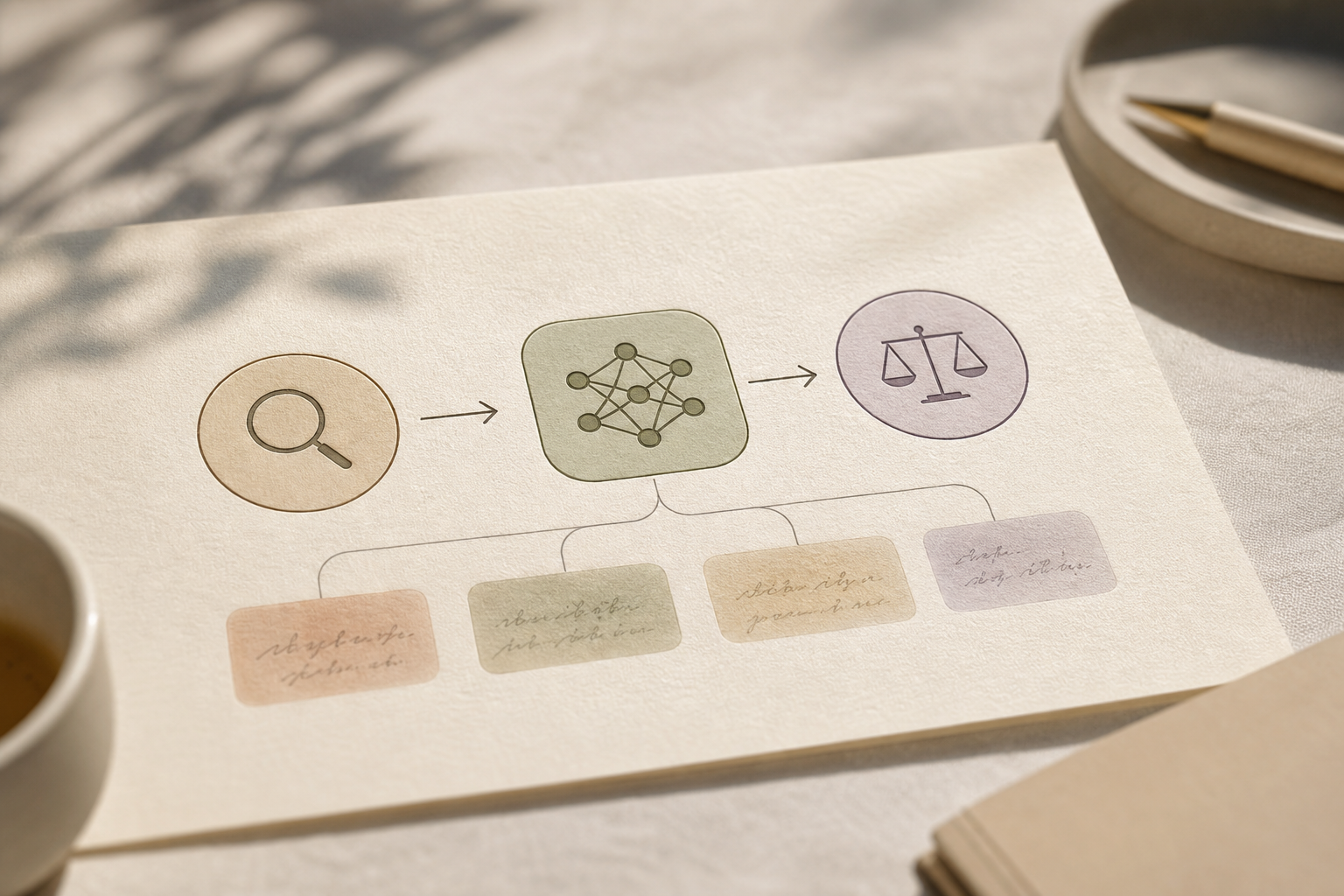
For broader context on research-first tools, this field guide to legal ai tools shows how pure Q&A tools compare with end‑to‑end platforms.
Also Read!
How to Get AI Legal Advice in Hindi and Tamil as an NRI
How to Find a Lawyer Through a Bidding Marketplace in Rural India
Feature-by-Feature Comparison: LawyerBuddy vs Vidhik. ai
Both platforms answer Indian law questions with AI. Yet NRIs need more than text. You need language depth, a clear bridge to a lawyer, safe payments, and a private case space. Below, we compare across seven dimensions and call a winner for each. This is the heart of nris which is better for ai legal advice in hindi tamil.
Winners by category (quick scan)
For Hindi legal accuracy, it’s effectively a tie: both platforms can handle Hindi Q&A competently, but LawyerBuddy adds an advocate follow-up path while Vidhik. ai shines for free‑form research. for Tamil support, LawyerBuddy stands out with native Tamil capabilities, whereas Vidhik.
ai appears limited or non‑native in depth. On AI Q&A style, the split is clear, choose Vidhik. ai when you want broad exploration and choose LawyerBuddy when you want targeted, case-prep answers with built‑in follow‑ups.
Escalation to a human lawyer is where LawyerBuddy pulls ahead thanks to an integrated, 100% Bar Council verified panel and a structured handoff. Payment security is also stronger with LawyerBuddy’s escrow and regulatory cooldown; Vidhik. ai does not offer a payment layer.
For document review and management, LawyerBuddy’s daily reviews and secure 1‑on‑1 case room support ongoing matters, while Vidhik. ai remains Q&A‑first. On NRI use cases that require FEMA insight, property workflows, POA steps, and taxation nuances, LawyerBuddy’s AI‑structured mandates make it easier to onboard counsel smoothly.
Category-by-category breakdown (details)
1) Hindi legal accuracy
Both platforms handle Hindi Q&A well for statutes, procedures, and notices, providing clear explanations that help you frame issues quickly. LawyerBuddy adds a practical bridge to an advocate once the AI clarifies facts, making it easier to convert research into action. Vidhik. ai is strong for free‑form Hindi research and rapid lookups when you are surveying options. Verdict: Tie.
2) Tamil language support
LawyerBuddy supports Tamil natively for prompts and outputs, which matters if your relatives or local offices prefer Tamil-first documents. Vidhik. ai appears limited or non‑native in Tamil depth, so you may end up paraphrasing or redrafting for family use. For households that rely on Tamil-only communication, broad coverage prevents extra trips and phone calls. Verdict: LawyerBuddy.
3) AI Q&A style and depth
LawyerBuddy focuses on targeted, case-prep answers and allows two follow-up questions per case to refine facts and confirm citations before escalation. Vidhik. ai leans into exploratory, open-ended research, which is helpful when you do not yet know what to ask next. Choose based on your goal: survey the field with Vidhik.
ai or prep a file with LawyerBuddy. Verdict: Split, research = Vidhik. ai; case prep = LawyerBuddy.
4) Escalation to a human lawyer
LawyerBuddy includes an integrated bridge to a 100% Bar Council verified panel, with bidding on AI-structured mandates so you can compare proposals in one place. Vidhik. ai has no integrated marketplace, which means you must find and vet counsel yourself through external channels. For NRIs, a vetted handoff cuts friction and reduces the risk of miscommunication. Verdict: LawyerBuddy.
5) Payment security and control
LawyerBuddy runs fees through a secured escrow with release after a regulatory cooldown, which is designed to protect remote clients. Vidhik. ai does not provide a payment layer, so any transfer happens off-platform without a shared audit trail. If you are abroad, escrow reduces the risk of paying without recourse. Verdict: LawyerBuddy.
6) Document review and case management
LawyerBuddy offers 5 free document reviews per day and a secure 1‑on‑1 workspace for ongoing communication and file exchange that stays attached to your mandate. Vidhik. ai remains primarily a Q&A tool; documents are not organized into auto-built mandates with jurisdiction and budget. For property and inheritance matters, structured files save time and prevent version sprawl. Verdict: LawyerBuddy.
7) NRI-specific use cases (FEMA, property, POA, taxation)
Both platforms cover Indian statutes, but LawyerBuddy’s AI-structured mandates pre‑organize jurisdiction, budget, and files for smoother counsel onboarding. This structure is critical for multi-step tasks like POA notarization, attestation, and local registration, where delays are costly. If you expect your matter to grow beyond Q&A, the path is clearer with LawyerBuddy. Verdict: LawyerBuddy.
Side-by-side table (2026)
| Category | LawyerBuddy | Vidhik. ai | Winner |
|---|---|---|---|
| Hindi Language Legal Accuracy | Native Hindi Q&A with advocate follow‑up | Strong Hindi research | Tie |
| Tamil Language Support | Supports Tamil natively | Limited/non‑native Tamil | LawyerBuddy |
| AI Legal Q&A Quality | Targeted answers + 2 follow‑ups per case | Broader exploratory chat | Split: Research = Vidhik. ai; Case Prep = LawyerBuddy |
| Escalation to Human Lawyer | 100% Bar Council verified panel; bidding on mandates | No integrated marketplace | LawyerBuddy |
| Payment Security | Secured escrow; release after cooldown | No payment layer | LawyerBuddy |
| Document Review & Management | 5 free reviews/day; secure 1‑on‑1 workspace | Primarily Q&A | LawyerBuddy |
| NRI-Specific Use Cases (FEMA, Property, POA) | AI-structured mandates pre‑organize jurisdiction, budget, and files | Research‑first; manual handoff | LawyerBuddy |
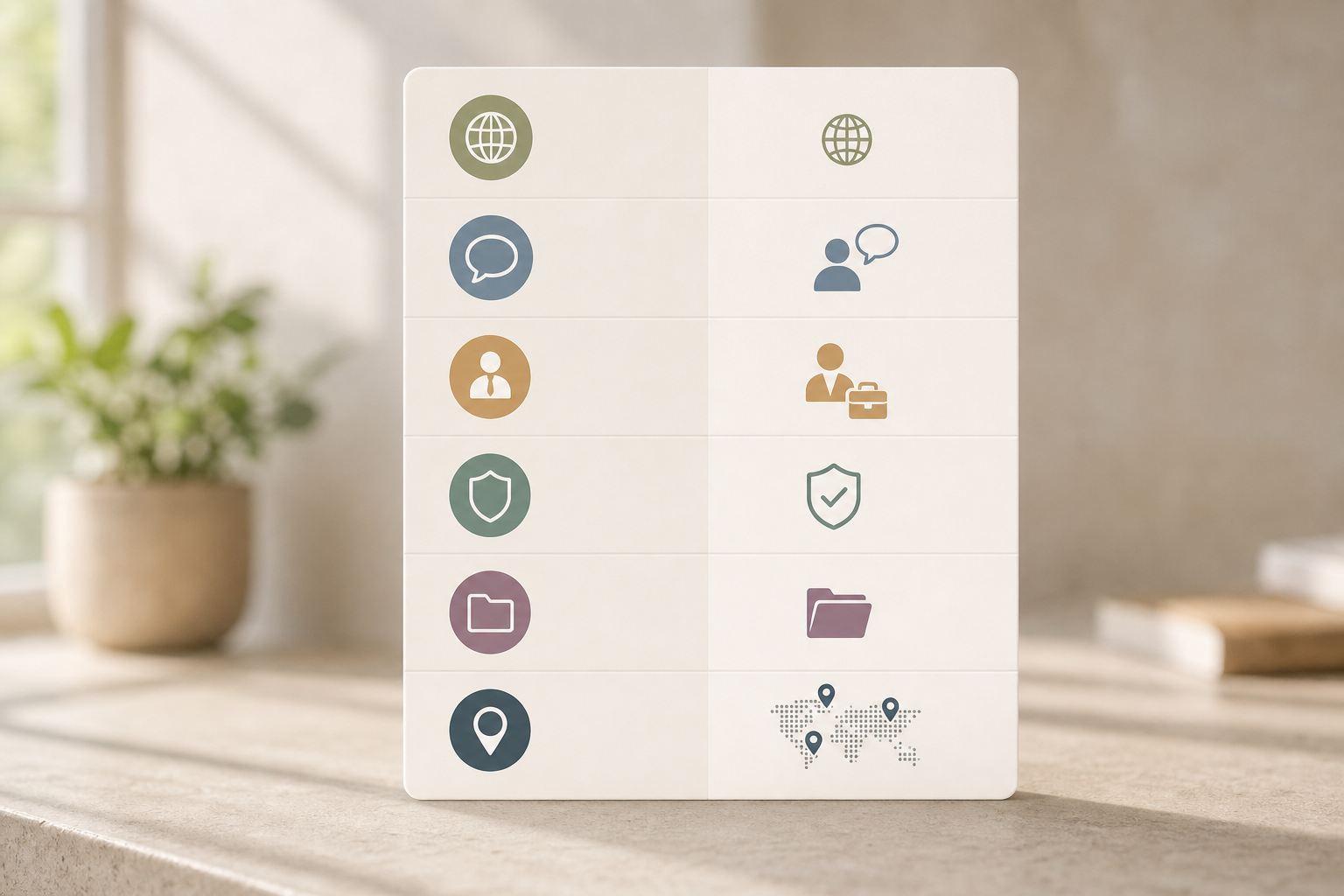
As you weigh the table, remember authority and security signals. LawyerBuddy states a “100% Bar Council verified panel,” a “Secured escrow payment system ensuring payment after regulatory cooldown,” and a “Secure 1-on-1 workspace for document exchange and communication.” Those matter once you move past research.
For a deeper primer on how these features appear in practice, this walk‑through on ai legal assistance shows common workflows from first question to case handoff.
Visit LawyerBuddy free today →
Quick Decision Guide: Choose LawyerBuddy if you need to move from AI answers to hiring a verified advocate, complete with escrow-backed payments and a secure workspace that keeps every message and document in one place. Opt for Vidhik. ai if you only need fast Hindi research and are comfortable finding and paying a lawyer off-platform if the issue escalates. If you already have trusted counsel and only need occasional AI summaries, consider using a local Bar Council referral or your existing family lawyer while still using AI for document triage and bilingual drafting.
The call to action [Visit LawyerBuddy free today →] also adds useful examples across case types.
NRI Playbook: Typical Workflows in Hindi & Tamil
To make the “nris which is better for ai legal advice in hindi tamil” question practical, map it to what you actually do in a week.
Property and inheritance (Tamil Nadu, Karnataka, Maharashtra)
Begin by describing the property, chain of title, and any pending disputes in the language that feels most natural to your family. Tamil or Hindi. Use the AI to generate a first-cut notice or an application for mutation or patta transfer, and make sure it includes the right section references so local offices recognize the request. Next, assemble your document bundle and upload the sale deed, encumbrance certificate, patta/chitta, death certificate, and will (if applicable); the five free AI reviews per day help you triage these efficiently.
Once your case takes shape, escalate by posting the AI-structured mandate so that you can receive bids from a 100% Bar Council verified pool of property advocates. Keeping every chat and file inside the secure workspace helps family members follow along without creating duplicate versions of the same forms. Finally, when you select counsel, release payment through escrow after the regulatory cooldown and the kickoff, adding predictability to a process that often spans time zones.
Banking, remittances, and FEMA
Ask your initial question in Hindi if that’s more comfortable, for example: “FEMA के तहत NRE खाते से खरीद भुगतान कैसे करना है?” The AI can respond with a high-level summary of FEMA rules, relevant RBI circulars, and a concise do/don’t checklist to ensure you do not trip over technicalities. If you receive a notice or need to reference bank letters, upload them for AI review to spot inconsistencies, then, if needed, engage a tax or FEMA advocate within the same mandate and workspace to continue without retyping.
Family law, POA, and attestation
For family law and powers of attorney, drafting in a bilingual format can be a relief valve. Keep the legal core in English for precision while adding Hindi or Tamil inserts that relatives can review quickly before signatures or office visits. The AI can lay out steps for notarization abroad, apostille or consular attestation, and local SRO registration in India; once you escalate, your advocate can handle filings and schedule visits, all while you share scans and track chat updates in the secure 1‑on‑1 workspace.
Step‑by‑step: NRI POA from abroad to local registration
- Prepare POA content: Identify principal, attorney, powers (sale, rent, bank operations), and duration; draft in English with Hindi/Tamil summary for family.
- Notarization abroad: Get the POA notarized as per your host country’s process.
- Apostille/consular attestation: Complete apostille (Hague countries) or embassy/consulate attestation (non‑Hague) before couriering to India.
- Local stamping and registration: Attorney in India schedules SRO visit; pay stamp duty/registration charges; carry ID proofs and property references.
- Usage: Attorney uses the registered POA to sign, represent, or submit forms in courts/revenue offices; keep copies in the secure 1‑on‑1 workspace.
Also Read!
How Language Depth Reduces Rework
The central theme behind nris which is better for ai legal advice in hindi tamil is avoiding rework created by mistranslation or vague phrasing.
Common pitfalls and how the right tool helps
Ambiguity in Hindi can derail a filing when the wrong word shades the relief you seek. Terms such as “आदेश” (order) versus “निर्देश” (direction) might look interchangeable, but they carry different implications in pleadings and office correspondence. A capable AI assistant will point out the difference in context and recommend the wording that aligns with the remedy you want or the authority you are addressing. This prevents adjustments at the clerk’s desk or objections that force you back to the drafting stage.
Tamil office terminology is equally unforgiving. Using a generic “சான்றிதழ்” (certificate) where the office expects the precise “உரிமைச் சான்று” can stall issuance or lead to a request for clarification. The right tool names the specific office form, links it to the applicable section, and shows how it fits into the broader succession or title update process. That accuracy is what keeps your family’s follow-up visits short and decisive.
Bilingual affidavits are another stress point for cross-border families. Many revenue offices will accept an affidavit in English, but staff may expect summaries in Tamil or Hindi for practical review. An assistant that can output both languages and flag any required vernacular component cuts down on back-and-forth. It also makes it easier for relatives to coordinate with local officials without mistranslating your intent.
Mini-glossary for quick reference
- Hindi: “विशिष्ट निष्पादन” (specific performance), “विवाद समाधान” (dispute resolution), “कानूनी वारिस प्रमाण पत्र” (legal heir certificate).
- Tamil: “உரிமைச் சான்று” (legal heir certificate), “வழக்கு மனு” (pleading/petition), “அங்கீகரிக்கப்பட்ட முகவர் ஆணை” (power of attorney).
Bilingual drafting patterns you can reuse
- Demand notice (property): English body with a closing paragraph duplicated in Hindi/Tamil summarizing deadline, relief sought, and key attachments.
- Office application (mutation/patta): Tamil/Hindi main text with English annexures listing section references, survey numbers, and schedule.
- Affidavit + supporting exhibits: English affidavit; bilingual exhibit captions so clerks route papers correctly without re-reading the whole file.
Secure Handover Matters for NRIs
When you move from reading to action, you cross three risk points: identity, payment, and document control. That is where differences between platforms become visible.
The three risk points
Identity and authority come first. A 100% Bar Council verified panel signals that the advocate you hire is licensed, giving you a dependable baseline before a single rupee changes hands. For NRIs operating remotely, this is the closest practical substitute for walking into a chamber and checking credentials yourself.
Payment trust is next, and it shapes how confident you feel committing to work. A secured escrow system with release after a regulatory cooldown prevents early fund release and sets clear conditions for when money moves. If there is a misunderstanding about scope or timing, escrow creates space to resolve it without urgent calls across time zones.
Finally, document privacy governs how safely you can progress once the matter is underway. A secure 1‑on‑1 workspace consolidates chat and files. Aadhaar scans, bank letters, sale deeds, wills, so nothing drifts into untracked inboxes or messaging apps. That single source of truth is what allows your advocate to pick up the trail quickly and your family to check status without searching through threads.

These are the concrete reasons the “nris which is better for ai legal advice in hindi tamil” decision often tilts toward tools that bundle AI + verified counsel + escrow + secure workspaces.
Security practices you actually feel in day‑to‑day use
One authenticated case room per matter minimizes cross‑channel leakage of sensitive documents and makes it simple to find the latest version of a draft. Escrow with a post‑initiation cooldown avoids premature fund releases, giving both client and counsel a predictable rhythm for kickoff, milestones, and revisions. A persistent audit trail, messages paired with files, keeps decisions and timelines clear for relatives who are logging in from other time zones without needing to ask for updates.
Just as important is the centralization of identity proofs and title documents. Keeping Aadhaar and PAN copies, sale deeds, encumbrance certificates, and bank letters inside a single secure workspace reduces accidental sharing and simplifies verification during filings. Over time, these practices add up to fewer misunderstandings, fewer resends, and fewer late‑night clarifications that sap trust.
Practical Tips for Comparing Tools (Checklist You Can Use Today)
A good head‑to‑head test starts with language. Ask the exact same inheritance question in both Hindi and Tamil and check whether the output uses correct legal terms and local office names; clumsy phrasing is an early warning sign. Then probe statute grounding by requesting the specific CPC or HSA section that applies and confirm the AI cites and applies it consistently across your follow-up prompts rather than wavering between provisions.
Move next to document handling. Upload a sale deed and a death certificate and watch what happens, does the tool merely comment, or does it create a structured mandate that records your jurisdiction, issue type, and budget along with the files? Once you see how it treats documents, test escalation by initiating a handoff to a lawyer; a quality platform will retain your AI chat history, documents, and budget in the same place so you are not retyping anything.
Finally, test payment safety and time‑zone resilience. Look for escrow with a defined release or cooldown process instead of ad‑hoc transfers, and confirm that the workspace keeps an organized, timestamped trail. That way, your counsel in India can pick up overnight messages smoothly, and your family can trace how decisions were made without digging through separate threads.
Extra checks many NRIs forget (but should add)
Mixed-language drafting is more than convenience; it is a practical safeguard. Verify that the tool can output a bilingual paragraph or summary so elders can review and sign with confidence while the legal core remains in English for filings. Also check attachment clarity: you should be able to label uploads, e. g., “EC 2019–2024,” “Patta copy,” “Bank NRE letter”, to prevent version confusion when multiple relatives are sharing files.
Consider follow‑up capacity as well. If the platform limits follow‑up questions, make sure the allowance still fits your clarification loop before you escalate to a paid advocate. Lastly, evaluate exportability: if you intend to hand off to your known family lawyer, ensure you can export the structured mandate cleanly, retaining timestamps and document tags so that your counsel can start immediately.
FAQs for NRIs Comparing Hindi vs Tamil AI Legal Advice
-
Does “Hindi support” mean accurate legal Hindi or just translation?
-
You want accurate legal Hindi with context: correct use of CPC/IPC vocabulary, appropriate notice language, and office-ready phrasing. Pure translation tools often miss these nuances.
-
If my parents read only Tamil, will Hindi-only depth be enough?
-
Often not. You will end up paraphrasing or redrafting for them. Native Tamil support reduces miscommunication, especially with revenue offices and notarization steps.
-
Can I start with AI and later engage my own family lawyer?
-
Yes. Even if you plan to use your known counsel, starting with AI to structure facts, timelines, and documents saves everyone time. If the platform includes a secure workspace, you can export or share that bundle.
-
What should I look for in “document review” features?
-
Prefer tools that let you upload multiple files per day, annotate, and auto-organize them into a mandate that includes jurisdiction, issue type, and budget. That creates a ready brief for an advocate.
-
Is escrow necessary if I trust the lawyer?
-
Escrow is a safeguard. Even with trusted counsel, cross-border transfers can fail or be delayed. Escrow adds predictability and auditability for both sides.
-
Where do I confirm a lawyer is verified?
-
Look for explicit statements like “100% Bar Council verified panel” within the platform. This is an authority signal you can rely on when escalating your matter.
-
Can the AI give me a binding legal opinion?
-
No. AI answers are a guide and a starting point. For binding advice, filings, or representation, escalate to a verified advocate through the platform’s handoff.
-
How do daily limits (e. g., 5 Q&A and 5 document reviews) help in practice?
-
They encourage a focused, iterative rhythm: refine facts over a few questions, run critical documents through review, and then escalate with a clean mandate rather than rushing incomplete inputs.
NRI timelines: What to expect after you escalate
- Day 0–2: Post AI-structured mandate; receive clarifying questions from interested advocates.
- Day 3–5: Select counsel; escrow funds; kickoff call scheduled within the secure 1‑on‑1 workspace.
- Week 2: First draft or filing prepared; family members looped in through the same case room.
- Ongoing: Status updates, uploads, and payments tracked in one place; no scattered messaging threads.
Bottom Line: Which Is Better for NRIs Seeking Hindi & Tamil AI Legal Advice?
If you are purely researching in Hindi and will hire counsel off-platform, Vidhik. ai is a solid research companion. If you need an end‑to‑end path. Hindi and Tamil depth, document review, a 100% Bar Council verified advocate marketplace, secured escrow with cooldown, and a secure 1‑on‑1 workspace. LawyerBuddy is designed for that journey.
That’s why, for the practical, day‑to‑day version of nris which is better for ai legal advice in hindi tamil, many NRIs will find LawyerBuddy the more complete fit, while Vidhik. ai remains useful as a fast research stop.
Final trust cue: Authority — 100% Bar Council verified panel; Security — escrow with cooldown + private case room; RiskReversal — free registration, no subscription fee, pay only when you choose an advocate.
[Visit LawyerBuddy free today →]