


If you're an NRI looking for the best ai legal advice in Hindi or Tamil for 2026, this practical guide shows you exactly how to start in minutes, on your schedule and in your language. Start with 5 free Q&As and document reviews here: Start free AI legal help →.
For tax-specific queries, the official Income Tax portal (incometax. gov. in) publishes NRI guidance; search “NRI taxation” on the site for current circulars and FAQs.
Moreover, this guide starts education-first. You’ll see buying criteria, real NRI pain points, and transparent comparisons. Then, you’ll see how LawyerBuddy maps to those needs with concrete features like 5 free daily legal Q&As, 5 free document reviews, and an escrow-funded mandate flow. As a result, you can try the service without risk, and you can still choose another route if that suits your case. We’ve also included language-specific tips, common pitfalls, and verification pointers so you can evaluate any platform with confidence.

Why NRIs Struggle to Get Reliable Legal Advice in Hindi or Tamil from Abroad
Timezone and language hurdles
Timezone friction is the first wall you hit. You finish work in California at 7 p. m.; it’s 7:30 a. m. in India. By the time someone replies, you’re asleep. One missed call stretches a simple query into a 10-day back-and-forth. You need the best ai legal advice on your schedule, not theirs.
Language makes it worse. Plenty of “legal help” pages are English-only. However, your family speaks Tamil or Hindi and wants to understand the plan before signing anything. In practice, you end up translating clauses for your parents while hoping you got the legal sense right.
- Typical translation traps for families:
- Property terms like patta, chitta, EC, mutation, survey number, and sub-division
- Family law terms like coparcener, HUF, and stridhan
- Procedure names like caveat, vakalatnama, and rejoinder
- Tax references under FEMA vs the Income Tax Act that sound similar but act differently
“I can read English, but my mother cannot. If an advocate cannot explain patta or mutation in Tamil clearly, we pause—sometimes for months.”
A final wrinkle is transliteration drift: the same term appears as muttation/mutation, patta/patta chitta, or EC/E. C., creating confusion in searches and in document cross-checks. A good platform normalizes these variants automatically and explains local equivalences in plain words you can share with family.
Verification, payments, and progress gaps
Verification is a big pain. From abroad, you cannot drop by a chamber to check an enrollment number. You Google a name, see a profile photo, and still worry: Is this person Bar Council enrolled? Will they show up in court if needed? Without a simple, trusted check, you’re stuck.
Payments cause anxiety. You know people who wired ₹40,000 to a “consultant” and never heard back. Therefore, you hesitate, even when your matter is urgent. A safe flow needs escrow or a milestone release, not a blind bank transfer.
The distance problem is solvable when two things are true at once: credentials are verified, and your money moves through escrow with milestone control.
Progress tracking is another gap. If you have a property issue in Tamil Nadu, you want to see who filed what, when, and where. Instead, you get scattered WhatsApp chats and PDFs with no structure. As a result, you spend hours rebuilding the timeline for each new update.
- Practical checks NRIs often want but cannot do easily:
- Confirm State Bar Council enrollment and standing
- See a short, verifiable work plan before paying
- Track filings, acknowledgments, and deadlines in one place
- Store identity proofs and GPAs without emailing copies around

Jurisdiction and local nuance
Jurisdiction-specific rules add confusion. For instance, a Canadian NRI may ask Hindi-language guidance for a family dispute in Uttar Pradesh. Which court? What does the Code of Civil Procedure say about where to file?
How does the Hindu Succession Act handle ancestral property? Meanwhile, someone in Dubai may face an ancestral land matter in Thanjavur, property records, patta, and encumbrance searches vary by state. Without local nuance, generic advice misfires.
Here are two real-world patterns you might recognize:
- Dubai-based NRI, ancestral property in Tamil Nadu: You need Tamil support to read the patta and EC, plus a check on a General Power of Attorney drafted years ago.
- Canada-based professional, Hindi guidance for a UP family partition: You need a clear view of the Hindu Succession Act, a workable path to a partition suit, and costs under control.
Local nuance examples: EC (encumbrance certificate) formats differ between states; a “chitta” reference makes sense in TN but not in UP; sub-division entries and survey maps are accessed from different portals and may require village-level identifiers.
- Quick jurisdiction questions to ask yourself before filing:
- Where did the cause of action arise, and does any part of it touch another district/state?
- Which forum has pecuniary and territorial jurisdiction for your relief (e. g., District Court vs. High Court)?
- Do you need any pre-filing steps such as a legal notice, police complaint, or mediation attempt under local rules?
Ultimately, distrust builds from distance. You want someone to explain the law in your mother tongue, show what happens next, and protect your money. Until then, you stall decisions and your file gathers dust.
What this means for you
- You need night-friendly access.
- You need mother-tongue clarity.
- You need verified humans plus a safe way to pay.

Also Read!
Can Small Businesses Trust Escrow Payment Lawyer Hiring? A Compliance Guide
LawyerBuddy vs LegalKart for Small Businesses: Which Is Better for Escrow-Protected Lawyer Hiring?
What to Look for in an AI Legal Platform If You're an NRI
Choosing an AI legal tool is not just about fast answers. It’s about fit for Indian law, your language, and your timezone. It’s also about a safe bridge from AI to a real advocate when needed. The best ai legal advice should balance all of that.
Language and accuracy
First, language support matters. Hindi, Tamil, and Telugu support should be the baseline, not an add-on. Moreover, the tool must understand legal terms like “patta,” “GPA,” “mutation,” “FEMA,” and “HUF,” and explain them in plain words to you and your family.
- Example term clarity the AI should provide in Hindi/Tamil:
- Patta (Tamil land revenue record) vs.
- Mutation entry meaning and how it differs from title; why EC alone doesn’t prove clean title
- GPA scope vs.
- FEMA NRE/NRO distinctions and when TDS on property sale applies for NRIs
Second, accuracy must be grounded in Indian statutes and procedures. You want answers tied to the IPC, CPC, Hindu Succession Act, RERA, FEMA, and the Income Tax Act’s NRI rules. Therefore, look for explanations that cite the right act and point to process steps you can verify.
Third, advocate verification is non-negotiable. A real Bar Council enrollment check beats self-declared profiles. Specifically, the platform should check State Bar Council records and display verified status before you engage anyone.
- How verification typically works on a good platform:
- Cross-check enrollment number and name against State Bar Council rolls
- Validate practice jurisdiction(s), chambers, and years of standing
- Flag any mismatch or suspension indicators for a manual re-check
Safety, payments, and documents
Fourth, payments should be safe from abroad. You should avoid sending money to individual accounts. Instead, you want escrow or milestone-based releases. As a result, you pay for real work, not promises.
Fifth, document review must be built in. Sale deeds, GPAs, rental agreements, tax notices, and court orders all carry small, loaded clauses. AI review can flag red lines and questions before you talk to a human. Consequently, you show up to the first call prepared.
- Examples of what good AI review flags:
- Missing or mismatched survey numbers, boundaries, or extent
- Undated or improperly attested GPA clauses
- Rent escalation and termination traps in tenancy agreements
- Demand calculations and deadlines in tax or TDS notices
- Execution dates that conflict with stamp duty or registration norms
Note: Even if you plan to use a family lawyer, pre-flagging stamp duty, execution gaps, and EC mismatches saves time and reduces round-trips.
Sixth, follow-up is essential. One-off answers don’t solve complex NRI problems. You need a way to ask 1-2 clarifying questions and refine your approach without opening a new ticket or paying more each time.
Seventh, timezone-agnostic access matters. You need 24/7 availability and a way to track progress while you sleep. A live mandate feed and notifications help you move without waiting for office hours.
Quick checklist to keep next to you
- Hindi/Tamil/Telugu support with legal terms explained
- Indian statute grounding (IPC, CPC, FEMA, Hindu Succession Act, Income Tax Act)
- Bar Council enrollment verification
- Escrow or milestone-based payments
- Built-in document review for deeds, GPA, tax notices
- At least 1-2 follow-up questions per case
- 24/7 access and progress tracking
Rule of thumb: if a platform cannot show you language support, statute grounding, and a clear path to a verified advocate with escrow in two clicks, keep looking.
For a deeper look at how AI helps with research and drafting, see this guide on ai for legal research.
If you’re comparing toolsets in general, this walkthrough on legal ai tools can help you map features to your use case.
How LawyerBuddy Delivers AI Legal Advice in Hindi and Tamil for NRIs
Ask in your language; get answers you can share
LawyerBuddy aligns with the buying criteria above by design. The platform offers AI-powered legal and tax help for India, and it works in Hindi, Tamil, and Telugu. So, you can ask in your mother tongue, get answers rooted in Indian law, and share those answers with family members who prefer regional language. That is how the best ai legal advice should feel, clear, precise, and inclusive.
To further support families, answers can include short, shareable summaries in simpler phrasing for elders, plus links to official portals where applicable. This minimizes misunderstandings and ensures everyone stays aligned before money or documents move.
Mini case snapshots from recent NRI use-cases
- Tamil Nadu property sale readiness: An NRI in Muscat uploaded a 20-page sale deed and EC. The AI flagged an unmatched survey sub-division and a GPA without proper attestation. After two free follow-ups in Tamil for the parent, the mandate moved ahead with a verified advocate who fixed both issues before registration.
- UP partition roadmap in Hindi: A Canada-based professional used the AI to map heirs under the Hindu Succession Act, draft a pre-suit notice, and estimate court fee bands. The structured mandate then drew three bids overnight via the live feed.
- Rental dispute triage: A Singapore NRI shared a tenancy agreement with vague termination terms. The AI highlighted the notice period ambiguity and recommended a negotiation script in Hindi, reducing the need for immediate litigation.
From free Q&A to structured mandate
Start free with real value. You get 5 free legal questions answered daily and 5 free document reviews daily. As a result, you can test accuracy on your own facts before you spend a rupee. For example, upload a sale deed or a rent agreement, and let the AI flag key clauses to ask about. Then, use your free Q&As to probe risks, timelines, and costs.
- What the free document review commonly highlights:
- Parties, consideration, and stamp duty consistency checks
- Encumbrance references that do not match EC serials
- GPA authority scope vs actual act of sale/lease
- Forum and jurisdiction clauses that limit your remedies
- Deadlines and notices likely to trigger adverse action
- Registration office details and book/volume references that appear incomplete
- Conflicts between annexures and main-body covenant language
Tip: Treat the free document review as a pre-brief. Bring the flagged items to your first human consult; you’ll spend less time collecting basics and more time on strategy.
From AI to advocate, without miscommunication
When your matter needs a human, LawyerBuddy’s AI structures a case mandate automatically. It organizes jurisdiction, legal issue, budget, and documents. Therefore, by the time you escalate, the brief is crisp and nothing gets lost. If you asked in Tamil, the advocate still receives a structured, translated summary that captures the intent and the facts. You also get 2 follow-up questions per case to sharpen the plan.
- Handoff steps in practice:
- You confirm the AI-summarized facts and goals.
- The platform tags jurisdiction, forum, and likely procedure.
- Documents and red flags attach to the mandate.
- Verified advocates review and bid through a 24/7 live feed.
This structure helps both sides avoid the classic “lost in translation” problem, facts, attachments, and expectations travel together in a single packet that is easy to triage.
Payments and communication built for NRIs
Payment safety is built in through a secured escrow system that releases funds only after a regulatory cooldown. Practically, you deposit the agreed fee into escrow; the advocate completes defined work; then, after the cooldown, funds are released. This removes the fear of sending money to an unknown account in India.
Communication stays in a secure 1-on-1 workspace. You don’t have to scatter documents across email threads and WhatsApp forwards. Instead, you exchange files, chat, and track deliverables in one place. As a result, you always know where things stand.
Every advocate on the platform is checked against State Bar Council records before they can bid. In plain terms, you are not guessing at credentials. You also benefit from a 24/7 live mandate feed across India, which means suitable advocates can see your structured case and compete to take it on. Competition helps you get a fair price and faster attention.
- Inside the secure workspace, you can typically see:
- Work scope and milestones with due dates
- Files exchanged, with version history
- Event logs (who did what, and when)
- Payment status and escrow timeline, including cooldown markers
In addition, registration is free and there is no subscription fee. Compared to alternatives that lock help behind paywalls, this lowers your risk. You can explore the AI layer first, and only fund escrow when you are confident about the next step.
“I wanted Tamil explanations for my mother about a patta issue in Thanjavur. We used the free document checks, set a small budget, and the escrow flow gave me peace of mind.” — An NRI software engineer in Dubai
Unlike generic AI chatbots, LawyerBuddy can review documents, structure mandates, and bridge you to verified advocates with escrow protection. Compared to traditional NRI firms, you don’t pay a big retainer just to start. The result is a clear, safe middle ground that respects your time and your money.

For a broader context on how AI assistants work in law, read this explainer on the ai legal assistant. It shows how human advocates and AI can fit together without gaps.
Also Read!
LawyerBuddy vs Vidhik.ai for NRIs: Which Is Better for AI Legal Advice in Hindi & Tamil?
Best Escrow Payment Lawyer Hiring for Small Businesses in 2026
LawyerBuddy vs General AI Chatbots and Traditional NRI Legal Services
You have three real choices today: generic AI chatbots, traditional NRI legal firms, and Indian legal platforms. Each option has strengths and gaps. Your goal is to match your need to the right path for 2026 and beyond. The best ai legal advice should not be a one-size pitch.
Generic AI chatbots like ChatGPT or Gemini can handle broad queries fast. However, they lack Indian statute specificity, do not reliably parse Hindi/Tamil legal terms, and can’t review uploaded deeds or notices. There is also no path to a verified advocate, no escrow, and no secure workspace for documents.
Traditional NRI legal service firms bring depth and relationships. You may get senior counsel time and a concierge feel. On the other hand, many ask for ₹25,000–₹50,000 upfront retainers, work only in IST office hours, and run communication by email. Case intake is manual. There’s no AI pre-structuring, so you spend time (and money) just to get your file in order.
Indian legal platforms vary. Some connect you to advocates fast, but you still face English-only flows, unclear verification, or direct bank transfers. You also may not get a generous free tier to test fit before paying.
Speed without safety is risk; safety without speed is delay. The balanced path is fast triage, verified humans, and escrow-protected execution.
LawyerBuddy sits in the middle. It gives you multilingual AI Q&A and document checks for free. Then, it provides an escrow-protected bridge to a 100% Bar Council verified panel, visible bids through a 24/7 live mandate feed, and a secure 1-on-1 workspace. That way, you get speed and safety without a heavy retainer.
- Quick pros/cons snapshot:
- Generic AI: Fast and freeform, but no Indian statute grounding or escrow; not ideal for documents
- Traditional firms: Deep expertise, but higher retainers and timezone friction
- Other platforms: Faster matching, but verification/payment clarity can be weak
- LawyerBuddy: Multilingual AI prep + verified advocates + escrow; low start risk
When to choose which path
- Choose a generic chatbot if: You only want a quick definition or high-level orientation and you already know you will not upload documents or seek representation.
- Choose a traditional NRI firm if: You have a very high-stakes dispute, an existing trusted relationship, or need senior counsel strategy sessions and are fine with retainers.
- Choose another Indian platform if: You want a fast connection to any advocate and you are comfortable self-verifying credentials and paying directly without escrow.
- Choose LawyerBuddy if: You want language clarity (Hindi/Tamil/Telugu), AI-backed document review, a 100% verified advocate panel, and escrow protection with a live mandate feed.
Head-to-head at a glance
| Factor | Generic AI Chatbots | Traditional NRI Firms | Other Indian Platforms | LawyerBuddy |
|---|---|---|---|---|
| Indian-language support (Hindi/Tamil/Telugu) | Limited/Unreliable | Varies by firm | Often English-first | Yes (built-in) |
| Indian statute grounding | Inconsistent | Strong | Varies | Yes (AI legal and tax help for India) |
| Document review (deeds, GPA, tax notices) | No | Yes (manual) | Limited | Yes (5 free daily) |
| Advocate verification | None | Opaque | Varies | 100% Bar Council verified panel |
| Payment protection | None | Retainers, no escrow | Direct transfers common | Secured escrow with cooldown |
| Free tier | None | No | Limited | 5 Q&As + 5 reviews daily, free to register |
| Timezone fit | 24/7 but generic | IST office hours | Mixed | 24/7 live mandate feed |

Fair note: If you already trust a long-time advocate for a ₹2 crore property matter, a traditional firm may still suit you. If you only need a quick definition, a generic chatbot might be fine. However, for most NRI issues where you want Indian-language help, safe payments, and a verified escalation path, LawyerBuddy is the balanced choice.
Trust, Verification, and Security for NRIs Using LawyerBuddy
Verified advocates, not guesswork
Trust starts with credentials. LawyerBuddy maintains a 100% Bar Council verified advocate panel. That means every advocate’s enrollment is checked against State Bar Council records before they can see or bid on your case. As a result, you avoid self-reported profiles and guesswork.
Escrow flow at a glance
Money safety comes next.
- You fund escrow for the agreed scope.
- The advocate completes the work tied to that scope.
- A regulatory cooldown period follows to ensure compliance.
- Funds are released after cooldown.
Therefore, you never wire fees directly to someone you do not know. If scope shifts, you can adjust before release. This flow takes the number-one NRI fear, “What if I pay and hear nothing?”, off the table.
- Escrow safeguards you can expect:
- Funds are held in a designated client account until release conditions are met
- Cooldown timers prevent premature withdrawals and support dispute checks
- Milestones keep both sides aligned on deliverables before money moves

Secure workspace and audit trail
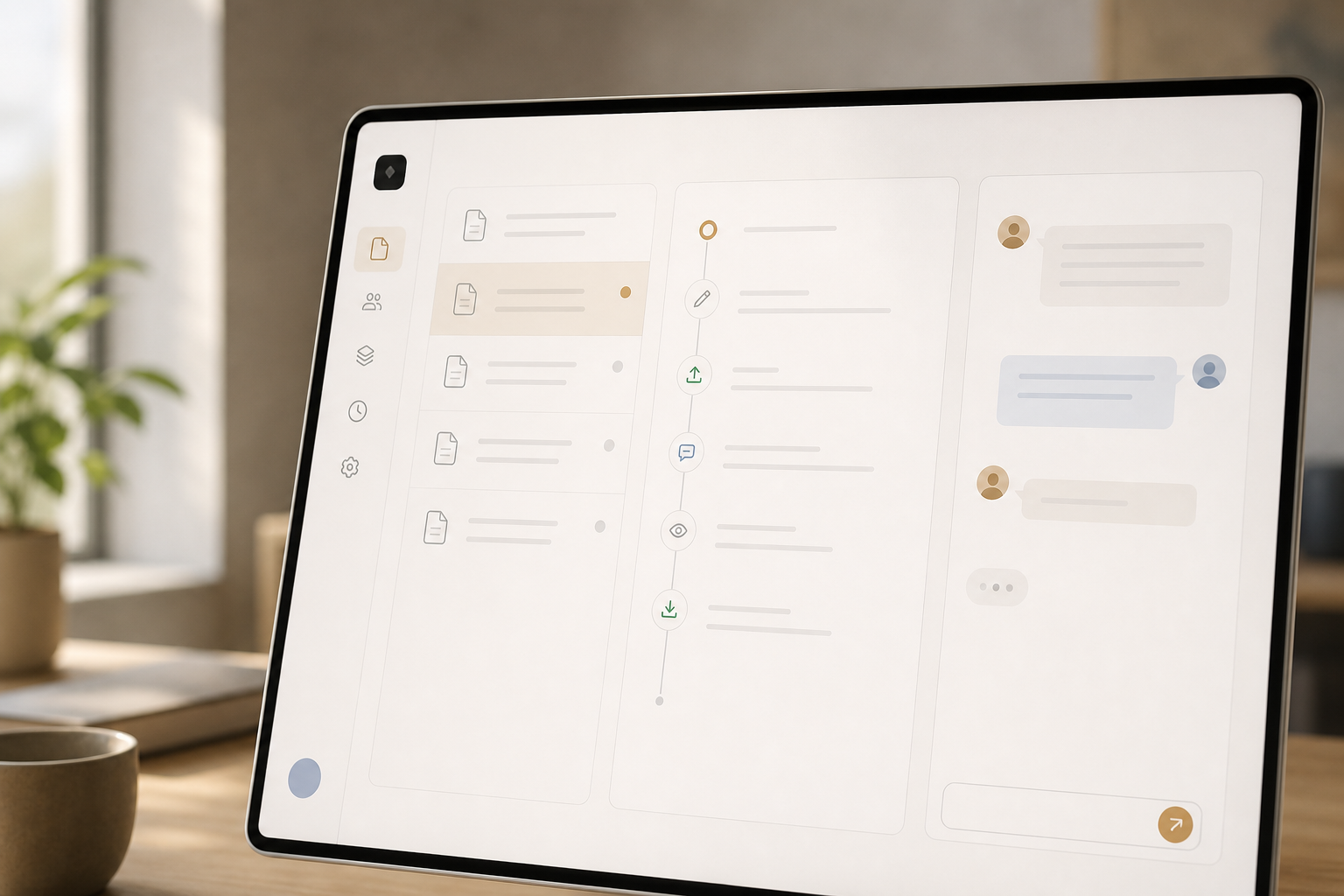
Data security matters for sensitive files. The secure 1-on-1 workspace keeps property papers, tax notices, and court orders out of email and chat apps. Everything sits in one trackable thread, so you can see who did what and when. Moreover, you stay audit-ready if you switch advocates or need to show a timeline.
Accuracy is not just about the first answer. LawyerBuddy’s AI-structured case mandates bundle your facts, documents, jurisdiction, and budget. If you ask in Tamil and your chosen advocate prefers English, the platform preserves meaning across languages. In practice, nothing gets lost.
Low start risk, high clarity
Risk is low to start. It’s free to register, and there is no subscription fee. You also get 5 free legal questions and 5 free document reviews each day to test the waters. Consequently, you can validate fit before you fund escrow.
Bottom line: Verification removes doubt; escrow removes fear; structure removes confusion. Together, they create the conditions for progress.
Also Read!
How to Get Started: AI Legal Advice in Hindi or Tamil from Anywhere
Starting should take minutes, not days. The best ai legal advice is the one you can use right now, from your timezone, in your language. Here’s a clear path you can follow tonight.
Set up and trial (free)
- Step 1: Register for free on LawyerBuddy. There is no subscription and no credit card needed.
- Step 2: Choose your language. Pick Hindi, Tamil, or Telugu so your family can read it too.
- Step 3: Ask your first legal question. You get 5 free questions per day, so start broad and then get specific.
- Step 4: Upload documents for AI review. Use your 5 free daily reviews for sale deeds, GPAs, rent agreements, tax notices, or court orders.
Escalate and execute (when needed)
- Step 5: Let the AI structure your case. If it’s complex, the platform builds a mandate with jurisdiction, issue type, budget, and documents neatly organized.
- Step 6: Fund escrow. Your money stays safe until work is done and the cooldown passes.
- Step 7: Review advocate bids. Verified advocates see your mandate via the 24/7 live feed; choose by experience, reviews, and bid amount.
- Step 8: Work in the secure workspace. Exchange files, chat, and track milestones from your timezone. Use your 2 follow-up questions per case to refine next steps.
Pro tip: Start with the free AI Q&A. Understand your legal position first, then escalate to a paid mandate if needed. This saves money and makes your first call far more productive.
- Common mistakes to avoid in your first week:
- Uploading unreadable scans; use clear, full-page PDFs or images
- Skipping EC or patta attachments for property queries; add them upfront
- Funding escrow without a clear milestone list; define deliverables first
- Not using the 2 follow-up questions; they’re designed to sharpen scope

For rental or tenancy issues in particular, this primer on legal advice ai outlines common disputes and documents to prepare.
If you’re comparing broader tool workflows, see this guide to ai legal assistance.

Frequently Asked Questions
Is AI legal advice in Hindi or Tamil accurate enough for real NRI legal matters in India?
LawyerBuddy’s AI is built for Indian legal and tax contexts, not generic global law. It handles Hindi, Tamil, and Telugu legal terms and explains them in plain language. For complex files, the AI turns your inputs into a structured mandate that verified advocates can take over. This means AI is your accurate starting point, and a human steps in when needed. You also get 5 free daily questions to test accuracy on your facts.
How much does LawyerBuddy cost for NRIs?
Registration is free, and there is no subscription. You receive 5 free legal questions and 5 free document reviews each day. If you escalate to a human advocate, the cost depends on the winning bid for your mandate. Your funds go into escrow first, which protects you from losing money without work delivered.
How do I know the lawyers on LawyerBuddy are real and qualified?
LawyerBuddy maintains a 100% Bar Council verified panel. Every advocate’s enrollment is checked against State Bar Council records before they can bid on cases. This is a key differentiator, because many platforms rely on self-reported details. You see verified status before committing funds.
Can I use LawyerBuddy for property disputes in India while living abroad?
Yes. Property matters are a core NRI use case. Ask your question in Hindi or Tamil, upload your sale deed, patta, or EC for AI review, and, if needed, the AI will structure a mandate that specifies jurisdiction, such as a district court or High Court bench. With a 24/7 live mandate feed, advocates across India can view and bid, regardless of your timezone.
What types of legal issues can the AI handle in Hindi and Tamil?
The AI covers Indian legal and tax topics, including property disputes, succession and inheritance, family law, NRI taxation under FEMA and the Income Tax Act, rental agreements, consumer complaints, and civil litigation. Document review includes sale deeds, GPAs, tax notices, and court orders. You can start free and decide if you need a verified advocate next.
Is my data safe if I upload sensitive legal documents from abroad?
Yes. You work inside a secure 1-on-1 workspace for document exchange and communication with your chosen advocate. Files are not shared over email or messaging apps, which reduces exposure. You also have a complete record of updates and milestones in one place. This helps if you need to show a timeline later.
How is LawyerBuddy different from just using ChatGPT for Indian legal questions?
Generic chatbots do not reliably cite Indian statutes, struggle with Hindi/Tamil legal terms, and cannot review your uploaded documents in context. They also provide no bridge to verified advocates and no payment protection. LawyerBuddy adds document review, AI-structured mandates, a 100% Bar Council verified panel, and escrow-backed payments, which are purpose-built for Indian matters.
Can I ask follow-up questions if the AI answer isn't detailed enough?
Yes. Each case includes 2 follow-up questions to go deeper on your facts. Combined with 5 free daily questions, this lets you test multiple angles before committing funds. Use the follow-ups to refine scope and reduce surprises when an advocate steps in. It keeps costs and timelines predictable.
Can LawyerBuddy help in Telugu or translate between languages for my family?
Yes. While this page focuses on Hindi and Tamil, the platform also supports Telugu. You can ask in one language and share a translated, legally faithful summary in another so everyone, siblings, parents, or a property caretaker, understands the plan before you move to escrow.
Do I get official legal representation through the AI alone?
No. AI is the starting point for clarity and preparation. Representation, filings, and appearances are handled by verified human advocates you choose through the platform. The AI helps you reach that step faster with fewer errors and a cleaner brief.
Does LawyerBuddy cover criminal matters or only civil issues?
LawyerBuddy’s AI can help you understand procedural posture, potential sections involved (for example, IPC references), and immediate next steps for both civil and certain criminal topics. However, representation in criminal matters always requires a qualified advocate, and urgency may be higher. Use the AI for triage and document checks, then escalate to a verified advocate quickly via the mandate flow.
What if my parents don’t use smartphones or email?
You can manage the entire process from abroad while keeping your family informed with shareable, simplified summaries in Hindi or Tamil. If signatures or in-person steps are needed (for example, for registration or notarization), your selected advocate can outline local options, such as an appointment at the sub-registrar’s office or arranging for attestation, so your family only needs to show up with clear instructions.
Can I bring my own advocate onto the platform for escrow protection?
If you already trust an advocate, you may still want escrow and a secure workspace. LawyerBuddy’s team can onboard new advocates subject to Bar Council verification and platform terms. This lets you keep your relationship while gaining payment safety and progress tracking.
Final Takeaways for NRIs Abroad
- Clarity in your language is non-negotiable. Hindi/Tamil support plus Indian statute grounding beats guesswork every time.
- Safety nets reduce stress. A 100% Bar Council verified panel, escrow with cooldown, and a secure workspace protect your money and your documents.
- Start free, then scale. Use 5 free Q&As and 5 free reviews to learn fast, then open an escrow-backed mandate only if needed.
As you weigh options for 2026, pick what matches your risk and time. If you want Indian-language answers, verified humans, and escrow in one place, you’re covered here.